What Tag Should Kids Carry? A Parent’s Guide
By ContactMeTag · · 7 min read
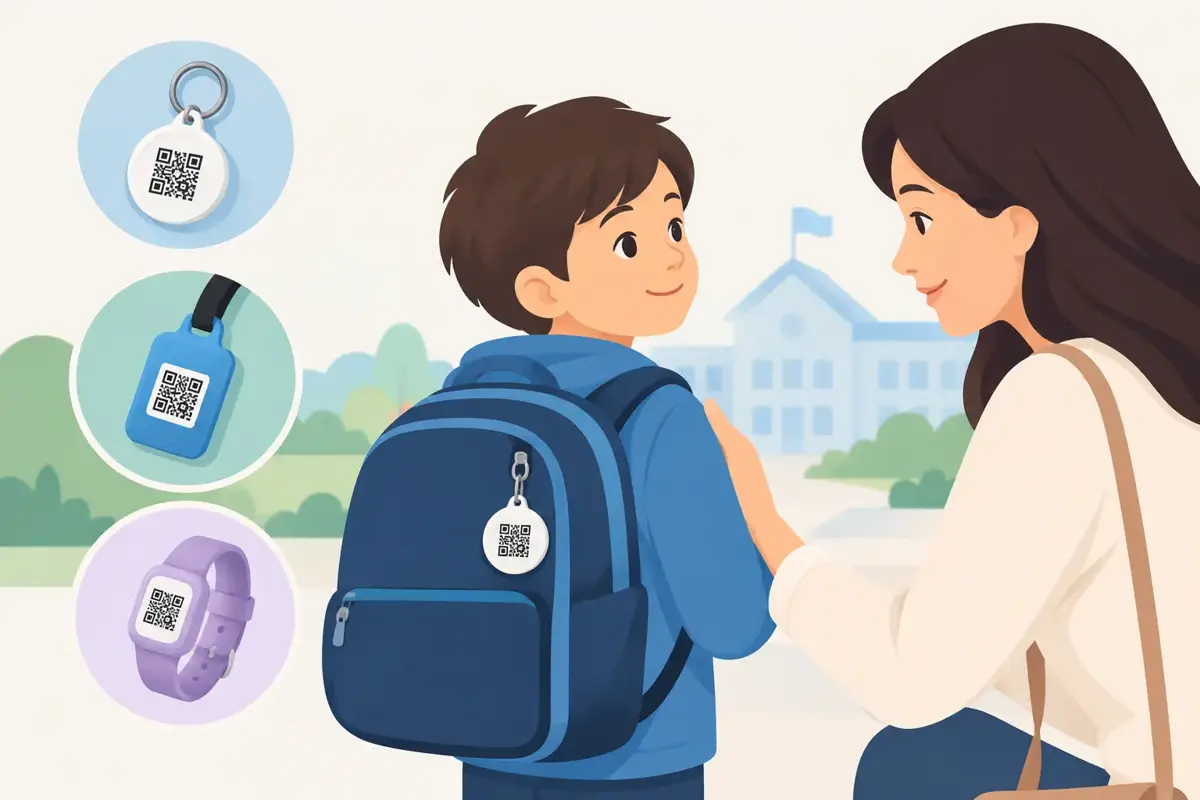
A child can be separated from their class at an excursion, step off at the wrong bus stop, or leave a school bag behind at sport. In those moments, the question of what tag should kids carry is less about adding another item to their bag and more about making it easy for a helpful adult to reach the right person quickly.
The best option is usually a durable, private emergency contact tag attached to something your child already takes everywhere. A QR code contact tag can give a teacher, shop staff member, coach or Good Samaritan a fast way to contact a parent or nominated emergency contact, without printing your mobile number where anyone can see it.
What tag should kids carry for everyday safety?
For most school-aged children, a small QR emergency contact tag on a school bag, lunch bag, keyring or jacket zip is the practical choice. It should be visible enough to find, tough enough for playgrounds and wet weather, and simple enough that another person can use it in seconds.
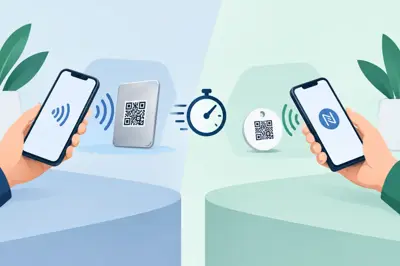
When scanned with a phone camera, the tag should open a secure contact page that lets the finder call or message a parent or carer. The child does not need an app, a charged device or the confidence to explain what has happened. When they cannot speak, their tag can speak for them.
A good tag is not a substitute for supervision, teaching personal safety, or calling 000 in a life-threatening emergency. It is a practical backup for the ordinary situations that can become stressful very quickly: a lost bag, a missed pick-up, a child who is upset in a public place, or a medical concern when you are not nearby.
Avoid tags that reveal too much
A traditional name label can help return a jumper, but it can also display a child’s full name, school or parent’s phone number to anyone who looks at it. That is not ideal on items carried through public places.
For child safety, avoid including a surname, home address, daily routine or personal mobile number on the outside of a tag. A first name may be useful in some settings, but it is not essential for a contact tag to work. The key purpose is to create a safe path to a responsible adult.
A privacy-first QR tag keeps personal contact details off the physical item. The finder scans the code, chooses to call or send a message, and reaches the people you have nominated. Your number can remain masked rather than sitting in plain view on a backpack or keyring.
This matters with older children too. A child may be happy to carry a key to walk home from school or sport, but you may not want that keyring to advertise their address or your contact details. A discreet contact tag gives them a sensible safety layer without oversharing family information.
The features that matter most
The right tag does not need to be complicated. It needs to work when someone is in a hurry. Look for a clearly marked QR code, durable weatherproof materials, and a contact system that works through a standard phone camera rather than requiring a special app.
It should also let you nominate more than one contact. A parent may be driving, in a meeting, on a flight or simply unable to answer immediately. Adding another parent, grandparent, carer or trusted family friend gives the finder another way to get help moving.
Choose a tag that is easy to update online. Children change schools, activities and pick-up arrangements. Emergency contacts change too. You should be able to update the people behind the code without replacing the physical tag every time something changes.
Visibility is a trade-off. A large, bright tag is easy to spot on a school bag, while a smaller tag is less noticeable on a keyring or inside a helmet. For younger children, prioritise easy discovery. For older children carrying keys or travelling independently, a more discreet but accessible placement may suit better.
Where should your child carry it?
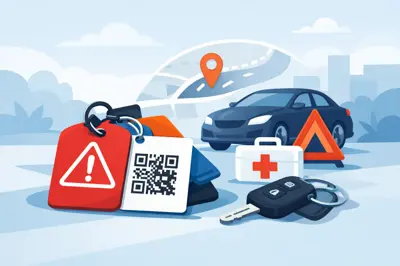
Start with the item least likely to be left behind. For many children, that is their school bag. Attach the tag to a strong external loop where it can be seen without being in the way of the zip. If the bag is lost, the finder has an immediate way to contact you before it is handed to lost property.
A second tag can make sense when a child has a separate sports bag, scooter helmet, musical instrument case or house keys. This is especially useful for children who move between school, after-school care, sport and different family homes.
Avoid placing the only tag inside a bag pocket. It may protect the tag from scuffs, but a finder may never see it. Similarly, a tag on a removable item such as a cap can disappear at the first windy oval session. Put the primary tag on the item that reliably stays with your child.
Set up the contact details before they are needed
The value of an emergency tag comes from the information behind it. Once you have activated it, add contacts who understand they may receive an unexpected call or message about your child. Check that every phone number is current and that each person knows what to do if contacted.
Keep the message simple. Let nominated contacts know your child’s first name, usual school or activity locations if relevant, and any immediate instructions they may need. If your child has a serious allergy, medical condition or communication need, only include information that is genuinely useful in the first few minutes. Do not turn the page into a full medical history.
Then scan the code yourself. Test it from another person’s phone, not only your own. Confirm that the call and message options work, and review the wording a finder will see. ContactMeTag is designed for this exact moment: a fast scan can connect the person holding the bag, helmet or keyring with the people who can act.
Review your details at the start of each school term, before holidays and whenever family arrangements change. It takes only a moment, but an outdated contact can slow down the help the tag is meant to provide.
Teach your child what the tag is for
A tag works best alongside a clear family plan. Tell your child that if they are lost, worried or unable to find you, they should look for a safe adult such as a teacher, police officer, transport staff member, shop employee or another parent with children nearby.
Show them their tag and explain that the adult can scan it to contact you. For younger children, practise this at home using a simple sentence: “Please scan my contact tag and call my mum, dad or carer.” Rehearsing it makes the instruction easier to remember when they are upset.
Older children should know that the tag is also for their belongings. If a wallet, sports bag or set of keys goes missing, a finder can contact the family without gaining access to private details. That small distinction encourages children to keep the tag attached rather than treating it as just another label.
When a different tag may be better
For children with a diagnosed allergy, diabetes, epilepsy or another condition, a medical alert tag may be needed as well. Emergency responders need fast access to critical medical information, and a wearable medical tag can be more appropriate than a bag tag if the child may be separated from their belongings.
For very young children at daycare, a bag tag is often enough for pick-up confusion or lost property. If a child is prone to wandering, however, consider a wearable option that stays with them. The right choice depends on the child’s age, independence, routines and specific risks.
GPS trackers can also have a role, particularly for families managing complex travel or safety needs. But they rely on battery, network coverage and someone checking the location. A QR contact tag solves a different problem: it helps the person already with your child or their belongings reach you directly.
A small tag can make the next step clear
Parents cannot prevent every wrong turn, forgotten bag or unexpected separation. They can make the response easier. Choose a durable, privacy-protecting tag, place it where it will be noticed, and keep the contact details ready to use.
When a helpful person finds your child or their belongings, they should not have to guess who to call. Every scan can give them a clear next step - and give your family a faster way back to each other.