Why a Weatherproof QR Safety Tag Matters
By ContactMeTag · · 6 min read
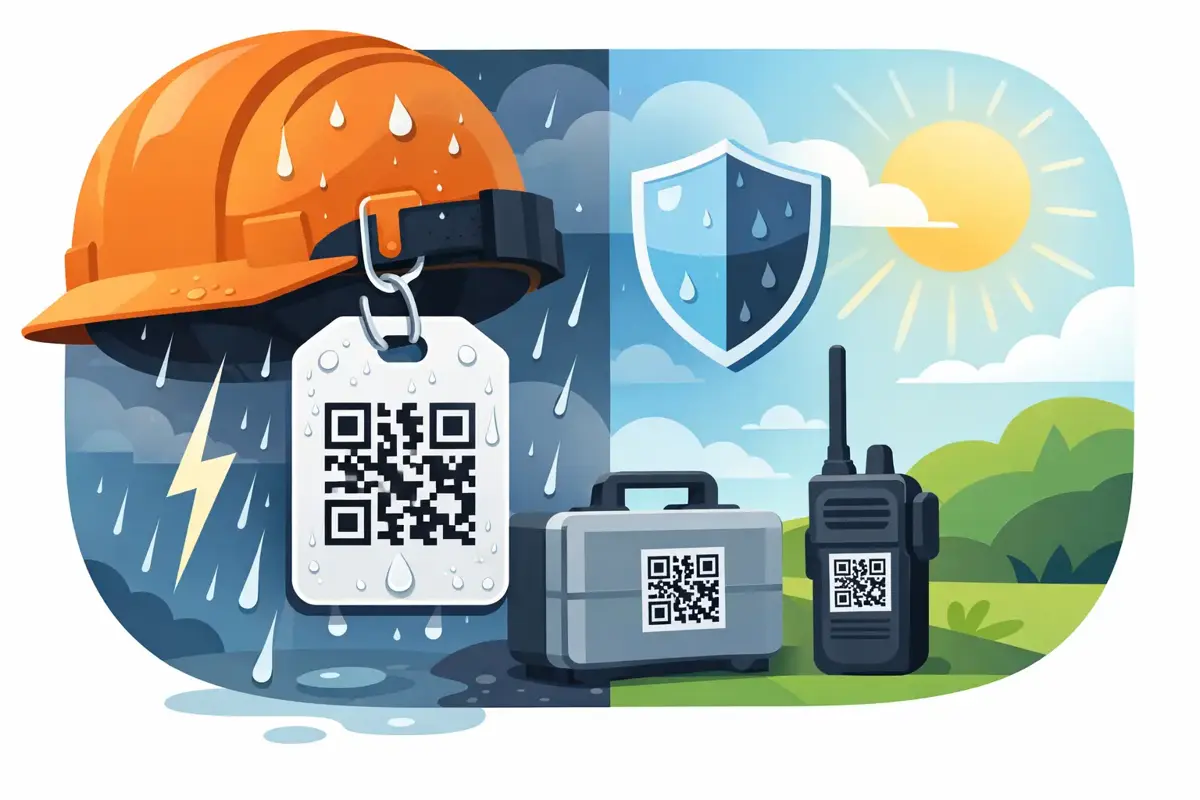
Rain on a motorbike helmet, full sun on a parked car, salt air on a boat bag, mud on a school backpack - this is where a weatherproof QR safety tag either proves its value or fails when it matters most. If a tag is meant to help in an emergency, after an accident or when something important goes missing, it has to keep working outside, not just look good when it arrives.
That is the real test. A safety tag is not decorative. It is there for the moment you cannot explain, answer your mobile or speak for yourself. In those moments, the material, print quality and scan reliability matter just as much as the QR code itself.
What a weatherproof QR safety tag actually does
At its simplest, a QR safety tag gives a finder, bystander or responder a fast way to reach the right person. They scan the code and are taken to a contact pathway that helps them act straight away. That might mean alerting a parent that a child has been separated, helping return lost luggage, reaching the owner of a wandering pet, or contacting an emergency person after a road incident.
The weatherproof part is what makes that system dependable in everyday Australian conditions. Heat, sudden storms, dusty work sites, coastal moisture and constant handling can all wear down ordinary labels and cheap tags. Once the surface fades, peels, cracks or stops scanning cleanly, the whole point of the tag is lost.
A proper tag needs to survive the same conditions as the item it is attached to. A bike helmet sits in sun and sweat. A keyring gets dropped, scraped and soaked. A pet tag is exposed to puddles, dirt and rough play. A travel case is thrown, dragged and stacked. If the code cannot be read after that, it is not a safety product. It is just a sticker with good intentions.
Why weatherproofing is not a bonus feature
People often focus first on the digital side - how the scan works, who gets notified, whether personal phone numbers stay private. Those are important questions. But the physical tag is the front door to that whole system.
If the printed code blurs after rain, if the adhesive lifts on a car window, or if the face scratches so badly that a phone camera cannot pick it up, the digital platform never gets a chance to help. That is why weather resistance is not an upgrade. It is the minimum standard for a tag expected to work on vehicles, bags, helmets, homes or outdoor gear.
Australian conditions are unforgiving. UV exposure alone can ruin low-grade print over time. Add moisture, friction and temperature swings, and weak materials start failing fast. A good weatherproof QR safety tag is built for that reality, not for a neat product photo.
Where weatherproof QR safety tags make the biggest difference
The most obvious use is on vehicles. After a breakdown or accident, a visible tag can help someone reach the owner or emergency contacts quickly, even if the owner cannot access their phone. On a motorcycle helmet, the value is more urgent again. The person wearing it may be injured, disoriented or unconscious. A clear scan path can help first contact happen sooner.
For families, school bags, lunch bags, sports gear and keychains are strong use cases. Kids lose things. They also move between school, sport, friends' houses and public places where a fast contact route can save time and stress. The same applies to elderly relatives, people living with dementia, and anyone managing a condition that could affect communication.
Travellers have a different problem. Luggage labels often reveal too much personal information, and paper tags tear off or become unreadable. A weatherproof QR safety tag gives a finder a better path - contact without public exposure. That privacy piece matters. You want your property returned, but you do not want your personal mobile number hanging from a suitcase handle.
Pet owners also know the weakness of basic tags. Printed details wear down. Engraving can become hard to read. A scannable tag adds another way to reach the owner quickly, especially when a pet is anxious, moving, or found by someone who wants the easiest possible next step.
The features that matter more than gimmicks
Durability starts with materials, but it does not end there. The surface needs to resist fading and abrasion. The print needs enough contrast for quick scanning. The size must suit the use case, because a code that is too small on a scratched keyring may become unreliable. If adhesive is involved, it has to suit the surface and the conditions. A tag for a hard helmet has different demands from a tag attached to fabric luggage.
Then there is the scan experience. A good system should not force the scanner to download an app, sign up for anything or work through confusing prompts. In a genuine incident, every extra step increases the chance that the person gives up. Fast action beats clever complexity every time.
Privacy matters too. Some people still write personal numbers directly on belongings, but that creates its own risk. A better approach is contact routing that lets a finder or responder reach the right person without exposing private details. That gives you speed without giving away more information than necessary.
It also helps if the details behind the code can be updated. Life changes. Phone numbers change, pets are rehomed, children grow older, travel plans shift and emergency contacts get replaced. A fixed printed label becomes outdated. A digital contact layer keeps the physical tag useful for longer.
How to choose the right weatherproof QR safety tag
Start with the situation, not the product category. Ask where the tag will live, what it will go through and who needs to scan it. A tag for a laptop in an office has a different job from one on a surf lifesaving bag, a caravan, or a child’s school hat.
If the item spends time outdoors, weatherproofing should be non-negotiable. If it is likely to be handled roughly, look for materials designed to cope with scuffs, moisture and regular use. If it is meant for emergencies, make sure scanning leads to immediate contact options and not a dead end.
Also think about visibility. A safety tag only helps if people notice it. Placement matters. On a helmet, it should be easy to spot without interfering with use. On luggage, it should be visible enough for a finder to act. On a home access point or lock box, it should be clear what the scan is for.
And keep the audience in mind. Grandparents, neighbours, Good Samaritans and first responders are not there to test a complicated system. The best tags are the ones that make the next step obvious.
Setup should be simple, because urgency leaves no room for confusion
The strongest safety tools are usually the easiest to activate. A weatherproof QR safety tag should be ready to link with your preferred contacts in minutes, not hours. You should be able to decide who gets contacted, what information is shown, and how privacy is handled without needing technical skills.
That simplicity is what makes the tag practical across a household. One family might use different tags for a car, a bike helmet, two school bags, a pet collar and a travel wallet. If setup is difficult, most people will put it off. If it is quick, they will actually complete it and keep it current.
This is where products like ContactMeTag make sense for everyday Australians. The value is not just the QR code on the surface. It is the combination of durable physical design, private contact routing and a scan process that works without fuss when someone needs help fast.
A small tag can carry a lot of responsibility
It is easy to underestimate a product this small. But in the right moment, it can shorten the gap between a problem and the person who needs to know about it. That might mean a lost wallet returned before cards are cancelled, a pet home before nightfall, or an emergency contact reached while every minute feels longer than it should.
That only happens if the tag still works after rain, heat, handling and time. So when you choose one, do not just ask whether it has a QR code. Ask whether it is built for real conditions, real people and real urgency.
Because when you cannot speak, your tag has to do the job properly.