Why a QR Code Luggage Tag Australia Needs
By ContactMeTag · · 7 min read
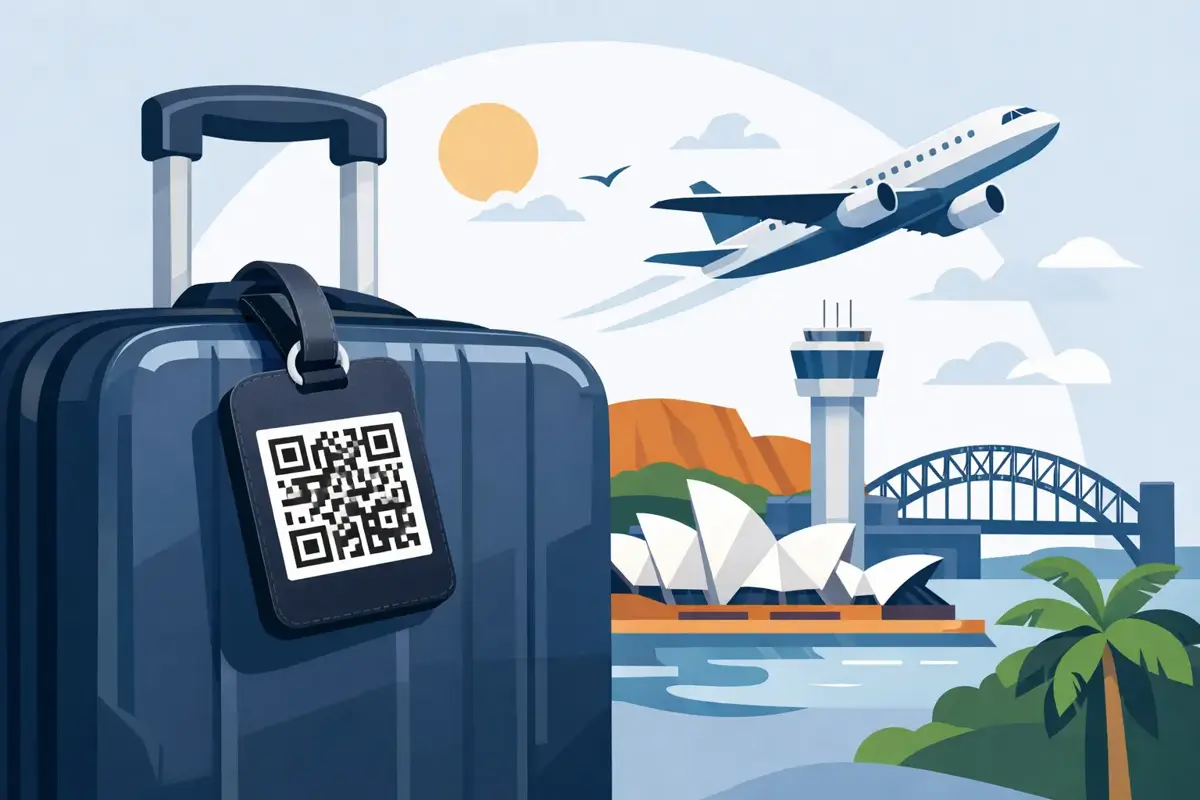
Airports are hectic places to lose track of a bag. One moment it is on the carousel, the next it has been picked up by the wrong traveller, left near a transfer gate, or sent somewhere it should not be. A QR code luggage tag Australian travellers use can turn that moment from a drawn-out headache into a fast, practical recovery - without putting your phone number on display for everyone who handles your bag.
What makes a QR code luggage tag different?
A standard luggage tag does one job. It shows your name, phone number, and sometimes your address. That can help, but it also leaves your personal details visible to strangers, baggage handlers, hotel staff, and anyone standing close enough to read them.
A QR code luggage tag changes how the contact happens. Instead of publishing your private information on the outside of your bag, the tag gives a finder one clear action - scan the code. Once scanned, they can call or message you, or reach your nominated contact, without seeing your actual number. That matters when your luggage is moving through public places and multiple hands.
This is where the practical value becomes obvious. If your suitcase is left in a taxi rank, taken off the carousel by mistake, or found at an accommodation desk, the person holding it does not need an app, an account, or technical know-how. They just scan and act.
Why Australian travellers are switching to QR code luggage tags
Travel in Australia often means more than a simple city-to-city flight. It can involve domestic transfers, regional airports, cruise terminals, train stations, road trips, family holidays, and long-haul international connections. The more movement involved, the more chances there are for a bag to be misplaced or separated from you.
A QR code luggage tag Australian families choose is not just about modernising an old tag. It is about reducing friction in the exact moment you need help. If your bag lands in the wrong destination, the ideal outcome is immediate contact, not a chain of delays caused by unread handwriting, outdated details, or a finder who does not want to ring an exposed personal number.
There is also a privacy advantage that matters more than many people realise. Traditional tags can reveal where you live and whether you are away. For frequent travellers, that is not a detail worth advertising. A QR-based contact system keeps the focus on returning the bag, not exposing the owner.
QR code luggage tag Australian buyers should look for
Not every QR tag is built for travel conditions. Luggage gets dragged, stacked, soaked, crushed, and thrown around. A tag for real travel use needs to be durable enough to survive baggage systems and weather shifts, not just look clever when it arrives in the post.
Material quality matters first. If the print fades after a few trips or the tag cracks under pressure, the code becomes useless at the one moment it is needed. Weatherproof construction, clear print contrast, and secure attachment all make a difference.
The second point is how contact is handled after the scan. A QR code on its own is only part of the solution. What happens next is what counts. The best systems let a finder reach you quickly without forcing them through extra steps. No app should be required. No payment should be involved. The path from scan to contact should be immediate and obvious.
Privacy should sit right alongside speed. A well-designed system masks your number and personal details while still making communication easy. That balance matters because convenience should not come at the cost of security.
Finally, setup needs to be simple. If activation takes too long or feels overly technical, people put it off. A travel safety tool is only useful once it is live and attached to your bag.
Real-world moments where a QR luggage tag helps
The most obvious use case is lost baggage, but that is only one scenario. Sometimes a suitcase is not officially lost at all. It is just delayed, mixed up, or found by someone who wants to do the right thing quickly.
Imagine your carry-on is left in an airport lounge after a rushed boarding call. A cleaner spots it. With a standard tag, they may need to hand it to lost property and let the process crawl forward. With a QR code, they can scan it and contact you or your emergency contact straight away.
Or picture a family holiday where a child pulls the wrong bag from the carousel because it looks nearly identical. By the time anyone notices, both families are already heading in opposite directions. A fast scan can sort out that mistake before it turns into a full day of calls and airport forms.
The same applies beyond airports. Bags are left in hotel lobbies, rideshare boots, cruise terminals, train racks, and sports change rooms. The easier it is for an honest finder to act in the moment, the better your chances of getting your belongings back quickly.
Setup should take minutes, not a weekend
The strongest argument for this kind of tag is not the technology itself. It is how little effort is required to make it useful.
In most cases, setup is straightforward. You activate the tag online, enter the contact details you want linked to it, nominate emergency contacts if needed, and attach it to your luggage. Once that is done, the tag is ready for travel.
That simplicity matters for busy households. Parents preparing for school holiday travel, older travellers who do not want another app, and anyone managing multiple bags for a trip need something that works without fuss. If someone scans the tag while you are in transit, delayed, or out of battery, the system should still give them a clear path to reach the right person.
That is why physical tag quality and digital response flow must work together. One without the other is only half a solution.
It is not just for frequent flyers
A QR luggage tag is easy to dismiss as something for business travellers or people constantly in airports. In reality, it is often more useful for occasional travellers, because they are less likely to have a well-rehearsed system for keeping track of bags.
Families travelling with prams, backpacks, and shared suitcases can benefit because there is more gear moving at once. Older Australians may value the simplicity of a clear scan-to-contact option. Students heading overseas, grey nomads moving between stops, and cruise passengers tagging multiple bags all have the same practical need - if something goes astray, make it easy for someone to reach the owner.
There is also peace of mind in knowing the tag can support more than one contact path. If you miss a call while flying or driving, a nominated family member may still be reachable. That small detail can save hours.
A smart tag still needs the basics done right
There are trade-offs, and it helps to be realistic. A QR code luggage tag is not a tracking device. It cannot show your bag on a live map, and it cannot force someone to scan it. Its strength lies in what happens when a bag is found by someone willing to help.
That means it works best as part of a sensible travel setup. Keep your luggage visually identifiable. Make sure your contact details are current. Attach the tag securely. If you are checking a bag, place identifying details inside the case as well. Smart preparation still matters.
But when those basics are already covered, a QR tag fills a gap that traditional tags leave wide open. It gives finders a safer, faster, more private way to get in touch.
Why this small upgrade matters
Travel problems rarely feel small when they happen to you. A missing bag can mean lost medication, missing clothes, disrupted plans, and hours spent trying to reach the right person. The value of a QR luggage tag is not that it looks modern. The value is that it shortens the distance between a found item and the person who needs it back.
That is why this category is growing in Australia. People want practical safety tools that work in real life, not gadgets that create extra steps. A well-made tag backed by a clear contact system does exactly that. ContactMeTag is built around this same principle - when someone finds what matters to you, every scan counts.
If you are preparing for your next trip, a luggage tag should do more than label your bag. It should help the right person reach you fast, protect your privacy while they do it, and keep working when travel gets messy.