Wallet QR Code Tag: Why It Matters
By ContactMeTag · · 7 min read
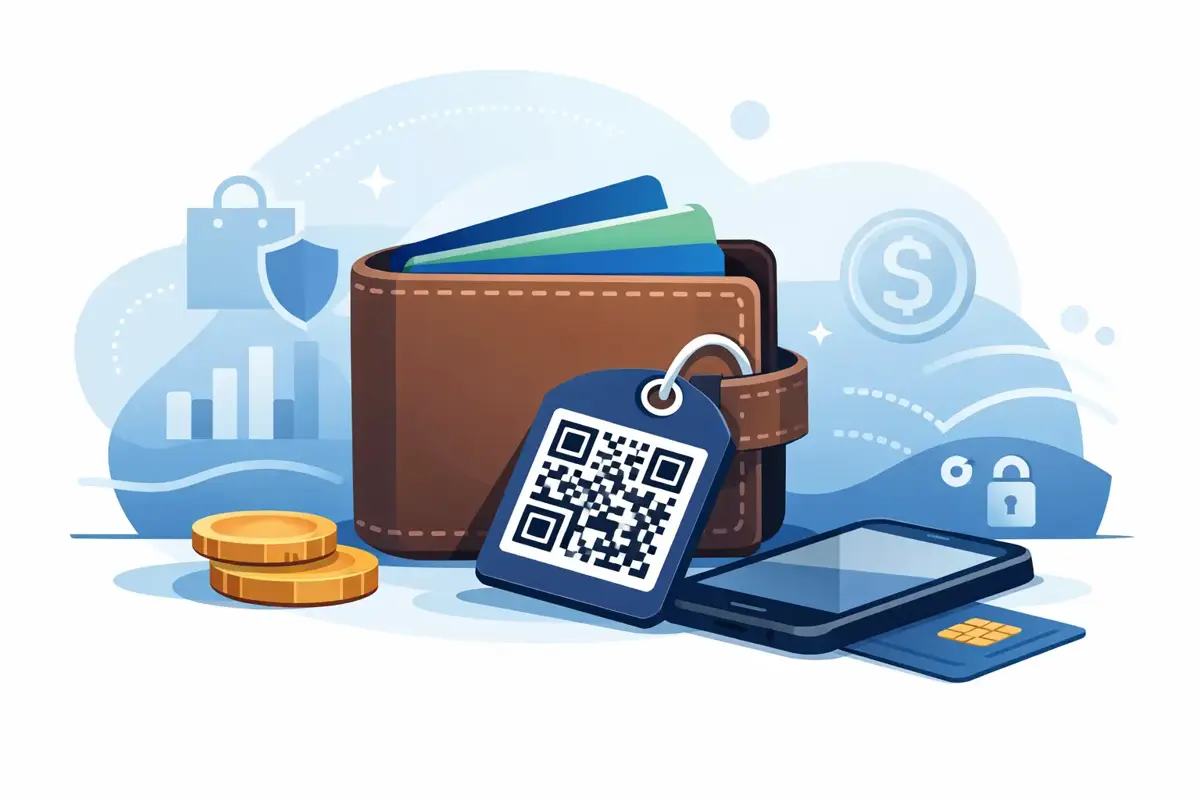
A lost wallet is rarely just about cash. It is your licence, bank cards, Medicare details, travel plans and, in some cases, the only clue someone has to help you quickly. That is where a wallet QR code tag earns its place. When your wallet goes missing, a simple scan can give an honest finder a direct path to contact you or your nominated person without putting your private phone number on show.
What a wallet QR code tag actually does
A wallet QR code tag is a small physical tag or card designed to sit inside your wallet. When someone scans the QR code with their mobile, they are taken to a contact page that helps them reach you straight away. The key difference is privacy. Instead of printing your personal details where anyone can read them, the tag acts as a secure contact bridge.
That matters more than most people realise. If a wallet is found at a shopping centre, on a train, at the footy or in an airport lounge, the person holding it usually wants to do the right thing quickly. They do not want to guess who to call, and they should not need an app, an account or a long set of instructions. A scan needs to lead to action in seconds.
Why a wallet QR code tag makes sense in real life
Most people have had at least one close call with a wallet. It slips out at the servo, drops from a handbag in a car park, or gets left behind after paying for coffee. In those moments, speed matters. The longer a wallet is out of your hands, the more likely it is that cards get cancelled, travel plans get disrupted, and identity documents become a bigger headache to replace.
A wallet QR code tag shortens the gap between lost and returned. Instead of relying on a finder to hand the wallet to centre management or the local police station, it gives them a simple next step there and then. That can mean a call or message within minutes rather than hours or days.
There is also a second use case people often overlook. If you are injured, unwell or unable to speak, your wallet may be one of the first places someone checks for identification or emergency contact clues. A QR tag can help the right person be reached quickly without exposing your details to everyone who sees the wallet.
The privacy problem with old-school contact cards
A handwritten note with your phone number might seem like the easy answer, but it creates a trade-off. Yes, it can help a finder contact you. It also leaves your personal number, full name and sometimes home address sitting in a wallet that may pass through several hands.
That is not ideal, especially for teenagers, older Australians, solo travellers or anyone carrying home address details on their licence. If your wallet is lost in a public place, privacy stops being a nice extra and becomes part of the safety equation.
A better wallet QR code tag keeps the contact process simple while masking personal numbers. That way, a finder can still help, but your information is not publicly displayed on the tag itself. For many families, that balance is the whole point.
What to look for in a wallet QR code tag
Not every QR tag is built for the same job. For a wallet, size and durability matter because space is tight and everyday wear is constant. The tag should sit flat, survive friction, and remain easy to scan after months of opening and closing the wallet.
It should also work without forcing the finder to download anything. In a genuine lost-and-found moment, every extra step reduces the chance of follow-through. If the process is scan, tap and contact, that is far more effective than scan, install, register and then maybe send a message.
The contact flow matters just as much as the tag itself. A good setup lets you update your contact details online if you change numbers, travel overseas or want messages redirected to a partner or family member. That flexibility turns a simple tag into a practical safety tool rather than a fixed printed label.
Who benefits most from a wallet QR code tag
The obvious answer is anyone who carries a wallet, but some people get more value from it than others. Frequent travellers are a strong example. Losing a wallet interstate or overseas can derail an entire trip, so fast contact is far more useful than relying on a good deed to make its way through an airport lost property desk.
Parents often use wallet tags for older kids and teenagers as well. A young person may not always answer unknown numbers or may panic if they realise they have lost their wallet on the way to school, sport or part-time work. A QR tag gives the finder a straightforward way to reach a parent or nominated contact.
Older Australians also benefit, particularly those who live independently and carry important identification. In some situations, the wallet is the first item checked when someone needs urgent help. A QR code that routes contact discreetly can save precious time.
Then there are the everyday practical users - commuters, tradies, cyclists, uni students and anyone who spends their day moving between places. Wallets get misplaced in ordinary moments. The solution should fit ordinary life.
How setup should work
A wallet QR code tag should not feel technical. The best systems are simple enough to complete in minutes. You activate the tag online, enter the contact details you want used, and decide who should be reached if the wallet is found or if there is an urgent issue.
For some people, that means their own mobile. For others, it may be a spouse, parent or travel companion. The important part is that the setup matches the real-world scenario. If you are often on flights, working underground, riding long distances or simply hard to reach during the day, a backup contact makes sense.
It is also worth checking your details from time to time. A QR tag only works as well as the contact information behind it. If you move, change numbers or want messages routed differently, updating it should be straightforward.
Why material quality matters more than you think
A wallet is a rough environment. Cards rub together, leather flexes, and moisture, heat and daily handling can wear cheap print quickly. If the code becomes hard to scan after a few months, the tag has failed at the one moment it matters.
That is why material choice is not a cosmetic detail. A wallet QR code tag should be made to handle friction and long-term use without peeling, fading or becoming unreadable. Australian-made tags built for real use have an advantage here because they are designed with local conditions and practical durability in mind.
This is one reason products from ContactMeTag stand out. The focus is not just on the QR code itself, but on whether it still works when life gets messy, rushed or unpredictable.
The trade-off: what a wallet QR code tag can and cannot do
It helps to be clear about expectations. A wallet QR code tag cannot guarantee your wallet will be returned. If the person who finds it is dishonest, no tag can solve that. What it does do is improve the odds dramatically when the finder is willing to help but needs a fast, clear way to act.
It also depends on the wallet being accessible enough for someone to notice the tag and having a mobile capable of scanning QR codes. In Australia, that is a reasonable assumption most of the time, but it is still worth recognising that no safety tool covers every situation.
That said, the upside is strong because the barrier to use is so low. No batteries, no charging, no app and no complicated instructions. Just a visible, scannable path to contact.
A small tag with a bigger job
People often think of wallet protection in terms of RFID blocking, zip compartments or where to store spare cash. Those things have their place, but they do not help much once the wallet is already gone. A wallet QR code tag addresses the moment after loss, which is usually when stress spikes and practical communication matters most.
That is why this small addition can carry more value than it first appears. It supports privacy, speeds up contact and gives a good person the confidence to help without delay. When you cannot control where your wallet ends up, you can still control how easy it is for the right person to reach you.
If you carry your essentials in your wallet every day, it makes sense to carry a return plan there too.