Wearable Emergency Tag Review for Real Emergencies
By ContactMeTag · · 7 min read
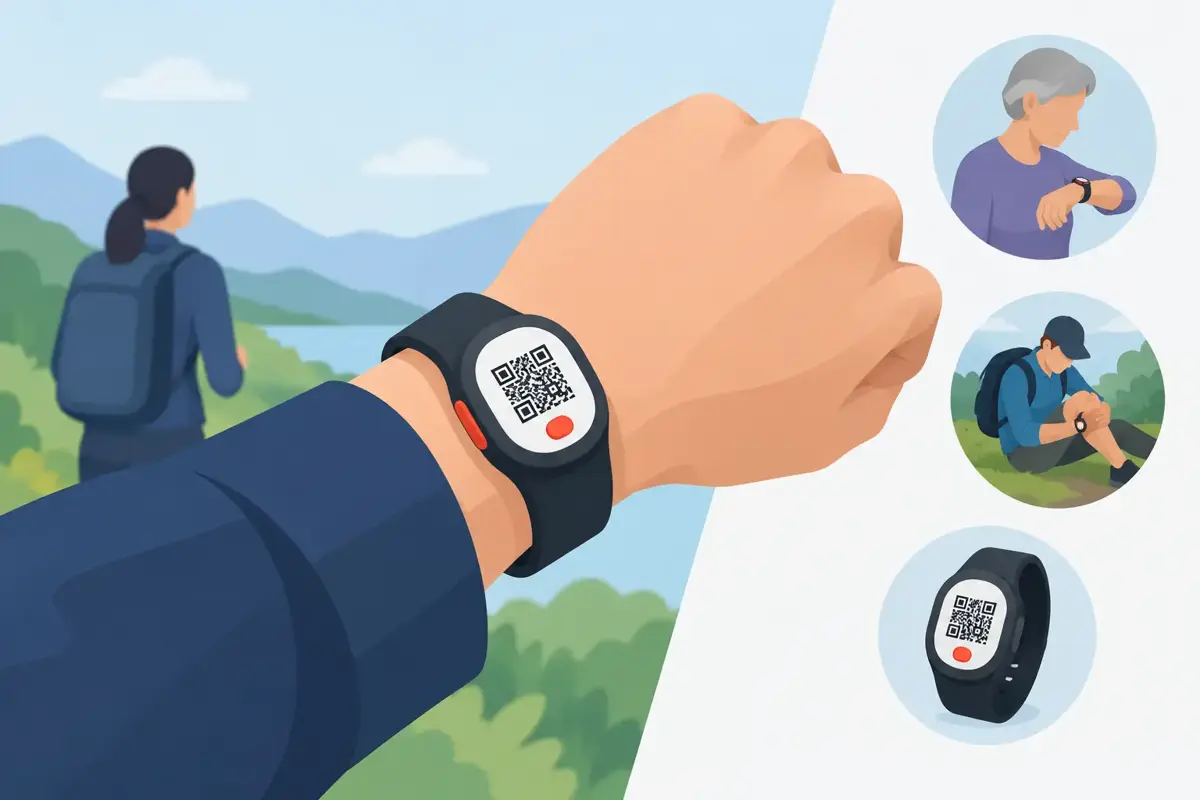
A medical episode on a morning walk. A child separated from family at a crowded event. A cyclist unable to speak after a fall. These are the moments a wearable emergency tag review should focus on - not novelty features, but whether a person can be identified and help can reach the right contact quickly.
A wearable emergency tag is a small item with a big job. Worn on a wristband, attached to a helmet or clipped to a school bag, it gives a responder, passer-by or staff member a direct way to act when the wearer cannot explain who they are or whom to call. The best options make that action simple: scan, choose a contact method and send the message or place the call.
What a wearable emergency tag needs to do
The point is not to turn a wristband or tag into a complicated medical record. In an urgent situation, people need clear information and a fast route to someone who can make decisions. A good wearable tag should help a scanner reach a parent, partner, carer or nominated emergency contact without delay.
For Australian families, this can matter in very ordinary places: the local footy ground, a shopping centre, a bushwalking track, the school drop-off zone or a holiday park. A child may know their name but forget a mobile number. An older person living with dementia may become disoriented. A rider may be conscious but unable to use their phone. In each case, a visible, scannable tag gives another person a practical next step.
QR technology is particularly useful because most current mobiles can scan a code through the camera. There is no app to search for, no account for the finder to create and no need for them to write down a tiny engraved phone number correctly. The experience needs to work for a Good Samaritan who has never seen the product before.
Wearable emergency tag review: the details worth checking
Not every emergency tag works in the same way. Before choosing one, look beyond the appearance of the band, pendant or clip. The value lies in what happens after the scan.
Can a stranger use it in seconds?
A tag should clearly signal its purpose. If someone finds a wristband with a code but no obvious prompt, they may not know whether it is for payment, a fitness profile or emergency contacts. Clear wording such as “Scan for emergency contact” removes the guesswork.
The scan should also lead to a clean, mobile-friendly page. In a stressful moment, a finder should not need to navigate through menus, download software or answer unnecessary questions. They should be able to call or send a message immediately. This is especially relevant for people helping at the roadside, on public transport or in a busy venue where time and attention are limited.
Does it protect private mobile numbers?
A printed phone number is simple, but it is also public. Anyone who sees the tag can copy, photograph or misuse it. That is a genuine concern when the wearer is a child, a person with a disability or someone who regularly travels alone.
A privacy-first QR tag can route calls and messages without displaying the owner’s or contact’s personal mobile number. The finder still gets a direct communication path, while the family keeps their details protected. This is a meaningful difference between a basic identification band and an emergency contact system.
Privacy should not create friction, though. If a platform makes a scanner register before they can call, it may fail at the exact point it is needed. Look for contact routing that is free and straightforward for the person scanning the code.
Will it survive real wear?
Wearable tags get knocked about. Kids drag bags along the footpath, cyclists ride through rain, pets jump into dams, and wristbands live alongside sunscreen, sweat and handwashing. A tag that looks good out of the packet but fades, peels or cracks after a few weeks is poor value.
Check that the physical tag is weatherproof and that its QR code remains readable after everyday use. Material matters, but so does print quality and placement. A code tucked beneath a watch strap, covered by a jacket cuff or printed too small may be hard to scan when it counts.
Australian-made products can be worth considering where quality control and materials are clear. The best choice depends on how it will be worn. A soft wristband may suit a younger child, while a durable helmet tag may make more sense for a motorcyclist or cyclist. Someone with sensory sensitivities may prefer a tag on a keyring, lanyard or bag rather than on their body.
Can the information change as life changes?
Emergency contacts do not stay fixed forever. Families change numbers, children start activities with different pick-up arrangements, and carers may need to be added or removed. A wearable emergency tag should allow the owner to update contacts online without replacing the physical tag.
That flexibility also makes one tag more useful over time. A parent can add both carers for a child. A traveller can temporarily include an overseas contact. A person with allergies or a medical condition can choose what information is appropriate to share, while keeping the page clear enough for a stranger to understand.
Avoid services that make updates difficult or charge unexpectedly just to maintain an essential contact route. A tag is only useful if the details behind it remain current.
Where wearable tags make the biggest difference
Wearable emergency tags are not only for worst-case incidents. They are also useful in the awkward gaps between “everything is fine” and a full emergency response.
For children, a tag can support faster reunification if they wander away at the beach, a festival or a sports carnival. It does not replace supervision, but it gives staff or a helpful adult a safer alternative to asking a distressed child to remember contact details.
For people living with dementia, a discreet wearable tag can give carers another layer of reassurance. If the wearer becomes lost or confused, the finder can contact family without seeing personal numbers displayed in public. The wording and placement should be chosen with dignity in mind - visible enough to help, but comfortable and non-stigmatising.
For riders and outdoor enthusiasts, a tag on a helmet, jacket, pack or wristband can be easier to spot than a phone locked in a pocket. Emergency services follow their own procedures, and a QR tag is not a replacement for calling Triple Zero (000) in an emergency. It can, however, help a bystander or responder alert nominated contacts when the wearer cannot do it themselves.
For travellers, wearable tags can reduce the stress of a lost bag, misplaced wallet or separated family member. The same contact system can be used across several items, provided each code is managed correctly. A wristband is useful because it stays with the person rather than the luggage.
Setup is part of the safety feature
Even an excellent tag cannot help if it is inactive, buried under clothing or connected to an old phone number. Set it up as soon as it arrives, then test it with a family member’s mobile. Check that the page opens, that calls or messages reach the right people and that each contact knows what to do if they receive an alert.
Keep the information focused. Include the wearer’s first name where appropriate, nominated contacts and only the critical notes that could help someone respond safely. Too much detail can slow down the reader and expose more personal information than necessary.
It is also sensible to test the tag after a few months of use. Wipe off dirt, inspect the code for wear and confirm that contacts are still current. Add this check to the same routine as replacing smoke alarm batteries or reviewing family emergency plans.
ContactMeTag is designed around this practical balance: durable physical QR tags paired with online contact management, so a scan can create immediate action without putting private phone numbers on display.
The right tag is the one people will actually wear
A wearable emergency tag is not a substitute for medical identification, supervision, a charged mobile or emergency services. It is a simple communication tool for the minutes when those protections are not enough. Its strength is that it asks very little of the wearer and very little of the person trying to help.
Choose a format that suits the person’s routine, make the code easy to find, keep contacts current and test it before it is needed. When you cannot speak, a well-prepared QR code can speak clearly for you.