Can QR Tags Resist Heat? Australian Conditions
By ContactMeTag · · 6 min read
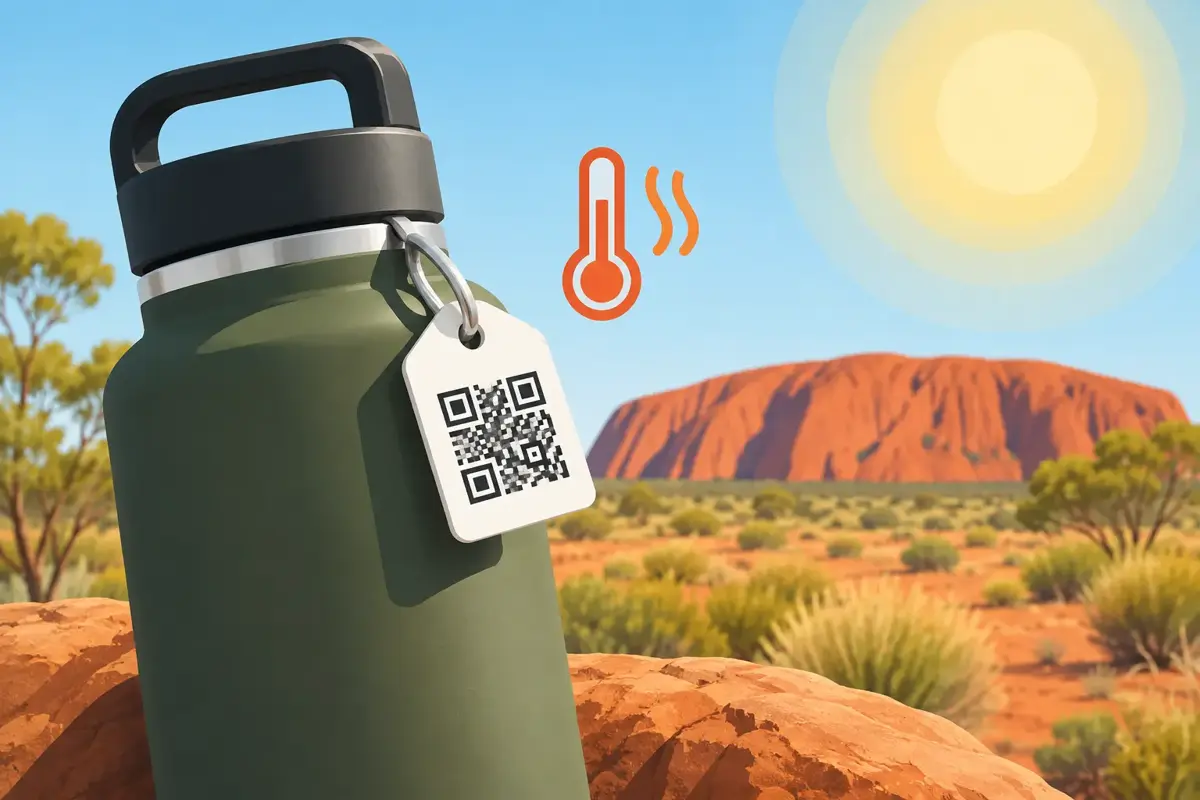
A QR tag on a ute windscreen, motorcycle helmet or set of luggage can face far more than a warm day. It may sit in direct summer sun, inside a locked car or beside a hot engine bay. So, can QR tags resist heat? The useful answer is: many can, but heat resistance depends on the tag’s material, printing method, adhesive and where it is fitted.
For an emergency or contact tag, the standard is not simply whether it survives. It needs to stay securely attached and clearly scannable when somebody needs it. If a Good Samaritan cannot scan the code after an accident, or a finder cannot scan it on a bag after a long trip, the safety benefit is lost.
Can QR tags resist heat in Australian summers?
A quality QR tag can be made to handle normal outdoor and vehicle conditions, including strong Australian sunlight. However, not every QR code label is built for this job. A paper sticker printed on a home or office printer is very different from a purpose-made weatherproof tag.
Heat does not usually damage the QR code itself. A QR code is simply a pattern. What heat can damage is the physical surface carrying that pattern. The print can fade, the surface can distort, the laminate can lift, or the adhesive can soften and let go. Once the contrast between the dark squares and light background is reduced, a mobile phone camera may struggle to read it.
Conditions inside a parked vehicle deserve special attention. Even on a mild day, interior surfaces exposed to direct sun can become much hotter than the outside air. A tag on the dashboard, windscreen or inside glass may experience repeated high temperatures for hours. Motorcycle helmets, bike frames, trailers and outdoor letterboxes also receive direct UV exposure as well as heat.
That does not mean these locations are unsuitable. It means the tag must be selected and placed with the conditions in mind.
What makes a heat-resistant QR tag work?
The best-performing tags combine several practical design choices. Material matters first. Durable plastics, metal tags and weatherproof laminated materials are generally better suited to heat than untreated paper or thin promotional labels. They are less likely to curl, absorb moisture or lose their shape when temperatures rise.
The way the QR code is applied also matters. A code that is properly protected within the tag surface is more dependable than a basic ink print exposed directly to sun, rain and abrasion. UV exposure is often the longer-term problem in Australia. A tag may look fine after one hot day, then gradually become pale or patchy after months of sunlight.
Adhesive is the next weak point. A tag can remain perfectly scannable but still fail if it falls off a helmet, vehicle or luggage case. Adhesive performance changes depending on the surface. Smooth glass, powder-coated metal, textured plastic, fabric and curved helmet shells all behave differently. Dirt, wax, oil, sunscreen residue and moisture can also stop an adhesive bonding properly from the start.
Finally, the QR design needs enough clear contrast and a quiet border around the code. Tiny, crowded codes can be difficult to scan even before heat and wear take their toll. A well-designed tag leaves a mobile camera enough visual information to identify the pattern quickly.
Heat, sun and placement: the real trade-off
You may want your QR tag in the most visible position possible, but maximum visibility can also mean maximum sun exposure. The right placement balances fast scanning with sensible protection.
For a vehicle, choose a clean, smooth surface where a person assisting you can reasonably find the tag without the tag being pressed against a surface that gets extreme heat. For a helmet, place it where it is easy to see but not likely to be constantly scraped against hooks, walls or the ground. On luggage, an external tag makes recovery easier, while a second tag inside the case provides backup if the outer tag is damaged.
This is especially valuable for people who travel, ride, manage allergies, care for an older family member or have children who may need help communicating with an adult. One tag is useful. Two correctly placed tags create a better safety net.
Avoid fitting a tag over deep grooves, sharp curves, rubberised sections or areas that flex repeatedly. The code may still scan, but the edges are more likely to lift. On vehicles, do not place any tag where it could obstruct the driver’s view, cover important safety information or interfere with a control, sensor or camera.
How to help a QR tag last in hot conditions
Good installation gives any tag its best chance. Before applying an adhesive QR tag, clean the surface with a suitable residue-free cleaner and let it dry completely. Do not apply it to a hot panel that has been sitting in direct sun. If possible, fit it in the shade when the surface is cool and dry.
Press the tag down firmly, especially around the edges, then allow the adhesive time to settle before exposing it to rain, washing or a long drive. The exact time varies by product, so follow the supplied instructions rather than assuming every adhesive behaves the same way.
After that, make checking the tag part of your regular routine. Scan it with your mobile every few months, and inspect it after a heatwave, road trip, vehicle wash or hard knock. Look for lifting corners, cracking, fading, bubbling or scratches across the code. A code that scans today is what matters, not one that looked sharp when it was first applied.
If you use a digital contact-routing service, test the complete process as well. Confirm that the scan opens correctly, your nominated contacts are current and the people who need to receive alerts are still available. Physical durability and current contact details work together.
When heat resistance is not enough
A heat-resistant tag is not indestructible. Abrasion, salt air, fuel, cleaning chemicals, high-pressure washing and repeated impacts can shorten its life. A tag on a boat trailer or 4WD used near the coast faces a different environment from one kept on a wallet or laptop.
Extreme locations may call for a different tag type or a backup option. A metal keyring tag can suit keys and bags. A purpose-made vehicle or helmet tag can suit exposed use. A wearable tag may be better for a child, older person or someone managing a medical condition, where immediate access to emergency contacts matters more than long-range outdoor exposure.
It also pays to separate the physical tag from the information it leads to. A QR tag should not force you to print private phone numbers in public view. With ContactMeTag, a scan can route a call or message to the right person while keeping personal contact details private. That means a tag can stay simple and visible, while the important information remains managed online.
A quick scan test is the best proof
The practical question is not whether a tag claims to be durable. It is whether an ordinary person with an ordinary smartphone can scan it quickly in the moment.
Test from a few angles and in normal daylight. Try it while wearing sunglasses, with the tag on its actual surface, rather than flat on a table. If the tag is intended for a vehicle, test it from the position a passer-by or emergency responder would naturally stand. If it is on luggage, test it after it has been handled and rubbed against other items.
A few seconds of checking can prevent a long delay when someone is trying to return your wallet, reach your family after a crash or identify who to call when you cannot speak for yourself.
Heat is part of Australian life, but it does not have to make your safety preparation unreliable. Choose a tag made for its intended environment, fit it carefully, protect it from unnecessary wear and scan-test it regularly. When help is needed, every scan counts.