Emergency QR Code for Car: Does It Help?
By ContactMeTag · · 6 min read
A car accident is chaotic enough without adding one more barrier between the people at the scene and the person who needs help. If your phone is locked, your wallet is out of reach, or you are too shaken to explain who to call, an emergency QR code for car use gives someone a fast, simple way to act.
That matters in more situations than most drivers realise. It is not only about serious crashes. It can help after a low-speed car park prang, a breakdown on a regional road, a medical episode behind the wheel, or even a parked vehicle that needs to be moved urgently. When you cannot speak, your QR code speaks.
What an emergency QR code for car use actually does
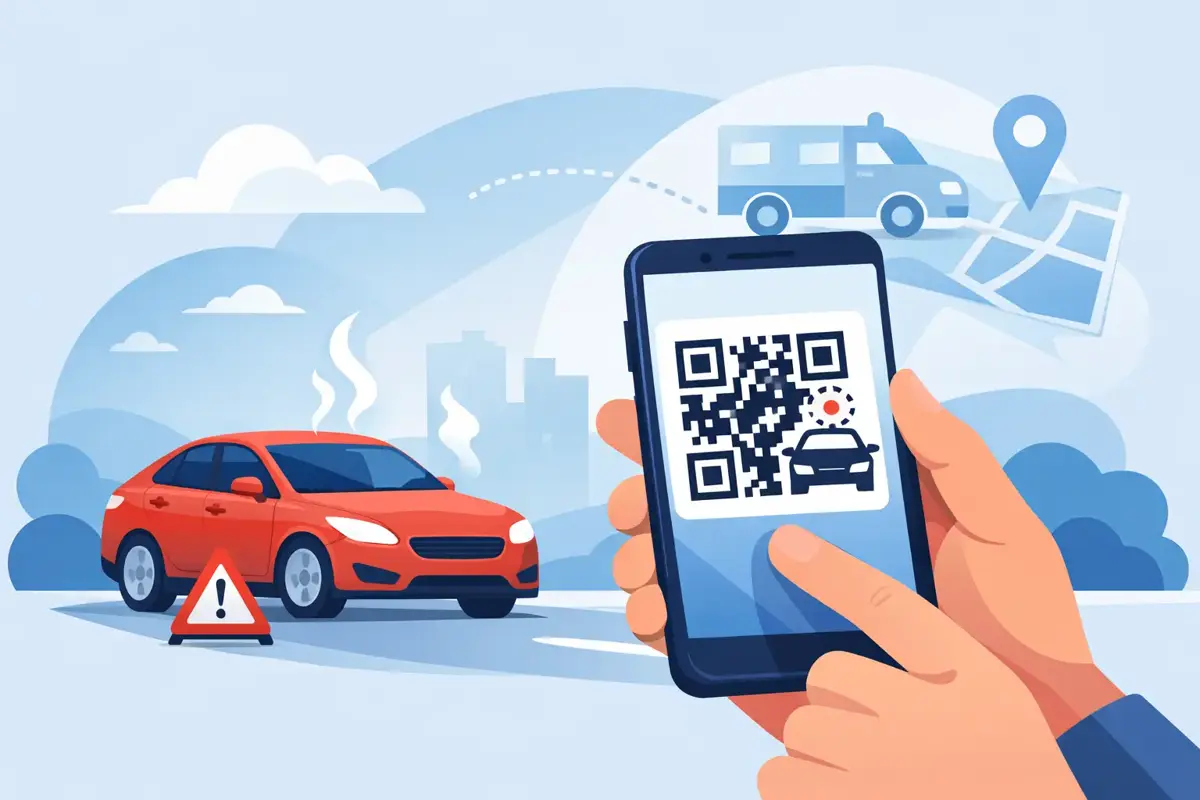
An emergency QR code placed on or in a vehicle lets another person scan the code with a mobile and follow a prompt to contact the driver or the driver’s nominated emergency contacts. The smart part is what happens behind the scenes. Instead of printing your personal mobile number on a sticker for anyone to see, the system routes the communication through a protected platform.
That gives you two things at once - speed and privacy. A stranger, bystander, neighbour or responder can reach the right person quickly, but your direct number does not need to sit in plain sight on your windscreen or dashboard.
For many Australian families, that is the real value. They want to be contactable in the moments that count, but they do not want to hand out personal details to every passer-by in a shopping centre car park.
Why drivers are starting to think differently about contact in an emergency
Most people assume they will always be able to explain their situation. In reality, accidents are messy. Phones get smashed, batteries die, bags end up in the boot, and stress can make even basic details hard to recall.
An emergency QR code for car owners closes that gap. It gives someone at the scene a clear next step. Scan. Call. Message. Reach the right person.
That simple flow is useful in everyday scenarios as well as urgent ones. A parent might want a spouse contacted if they are involved in an incident on the school run. An older driver may want adult children notified after a medical event. A tradie with tools in the ute may want fast contact if the vehicle is damaged while parked on site. It is a practical layer of preparation, not a dramatic one.
Where a car QR code helps most
The strongest use case is when time matters and the driver cannot communicate easily. That could be after a collision, after a sudden illness, or when a vehicle is found unattended in a situation that looks unsafe.
It also helps in lower-stakes moments where quick contact avoids bigger problems. Think of a car left with headlights on at the airport, a vehicle blocking access in an apartment complex, or a parked car that has been clipped and needs its owner notified. In those moments, people are often willing to help, but they do not know how to reach the owner.
A visible code gives them a path forward without forcing the owner to display private information. That balance is what makes the idea work.
Privacy matters more than people think
A handwritten phone number on a note tucked into the windscreen might seem easier, but it creates problems. Your number is public. It can be photographed, misused or shared. If the vehicle is parked regularly in the same place, that detail becomes even more sensitive.
A privacy-first emergency QR code for car use is different. It is designed so the finder or responder can make contact without seeing your actual number. Calls and messages are routed, not exposed. For families, carers and anyone managing personal safety concerns, that is not a small feature. It is the reason the system feels safe enough to use at all.
There is a trade-off here, of course. Any QR-based system depends on somebody having a working mobile with a camera and enough confidence to scan it. In Australia, that is a very reasonable assumption most of the time, but not every time. In a remote area with poor coverage, or with a person who is not comfortable scanning codes, it is not perfect. That is why it should be seen as an extra safety layer, not your only plan.
What to include when you set one up
The best setup is clear and minimal. You do not want to overwhelm the person scanning, and you do not want to publish information that creates risk.
Start with the basics: the best contact path for the vehicle owner and at least one emergency contact. If the platform allows it, add a short note that confirms the tag is for urgent vehicle-related contact. For some drivers, especially older Australians or people with medical conditions, it may also make sense to include a simple instruction such as who should be contacted first.
Avoid turning it into a public medical file. The aim is fast connection, not oversharing. If more detail is needed, that can be handled once contact is made.
Where to place an emergency QR code for car visibility
Placement matters. If a person cannot spot the code quickly, the benefit drops away.
Inside the lower corner of the windscreen is a common option because it is visible from outside without getting in the way of driving. Some drivers also place a tag on the dashboard area or keep one with registration and insurance papers inside the car. If you use more than one tag, keep the message consistent so scanners know exactly what it is for.
The code should be easy to notice, weather-resistant and readable in real conditions, not just at your kitchen table. Glare, dust and heat all matter in Australian conditions. A tag that curls, fades or peels after one summer is not much use when you need it.
Setup should take minutes, not hours
If a safety product is fiddly, people put it in a drawer and forget about it. The appeal of a car QR tag is that setup can be done online in minutes. Activate the tag, add your chosen contacts, check the routing works, and place it in the vehicle.
After that, the main job is keeping your details current. If your mobile changes, if your partner’s number changes, or if you want to update who gets contacted first, do it straight away. The technology only helps if the information behind it is accurate.
That is where a managed platform is better than a static printed sticker. Life changes. Your safety details should be able to change with it.
Is it only for emergencies?
Not at all. The word emergency can make this sound more dramatic than it is. In practice, an emergency QR code for car owners is just as useful for everyday contact issues.
A passer-by can report a parking problem. A witness can let you know your car has been hit. A building manager can contact you if your vehicle is causing access issues. None of those situations are life-threatening, but all of them benefit from quick, direct communication.
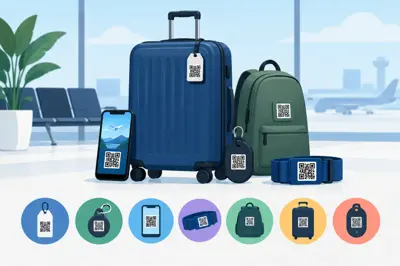
That broader usefulness is why these tags make sense for households, not just individual drivers. Once people see how simple the system is in a car, they often start thinking about helmets, bags, keys, pets and luggage as well. ContactMeTag has built that idea around one simple principle: every scan counts.
Is an emergency QR code for car owners worth it?
If you want a low-cost, low-effort way to make yourself easier to reach when something goes wrong, yes, it is worth considering. It will not replace emergency services. It will not solve every scenario. But it can remove a very common point of friction - nobody knows how to contact the right person fast enough.
That is the value. Not flashy tech. Not another app people forget to open. Just a clear, immediate action that works when the ordinary ways of communicating fall apart.
For Australian drivers and families, that can be the difference between a delay and a response, between confusion and contact, between hoping someone figures it out and giving them a way to do it. The best safety tools are often the simplest ones - the ones that are ready before you need them.