Why a Helmet Emergency Contact Tag Matters
By ContactMeTag · · 7 min read
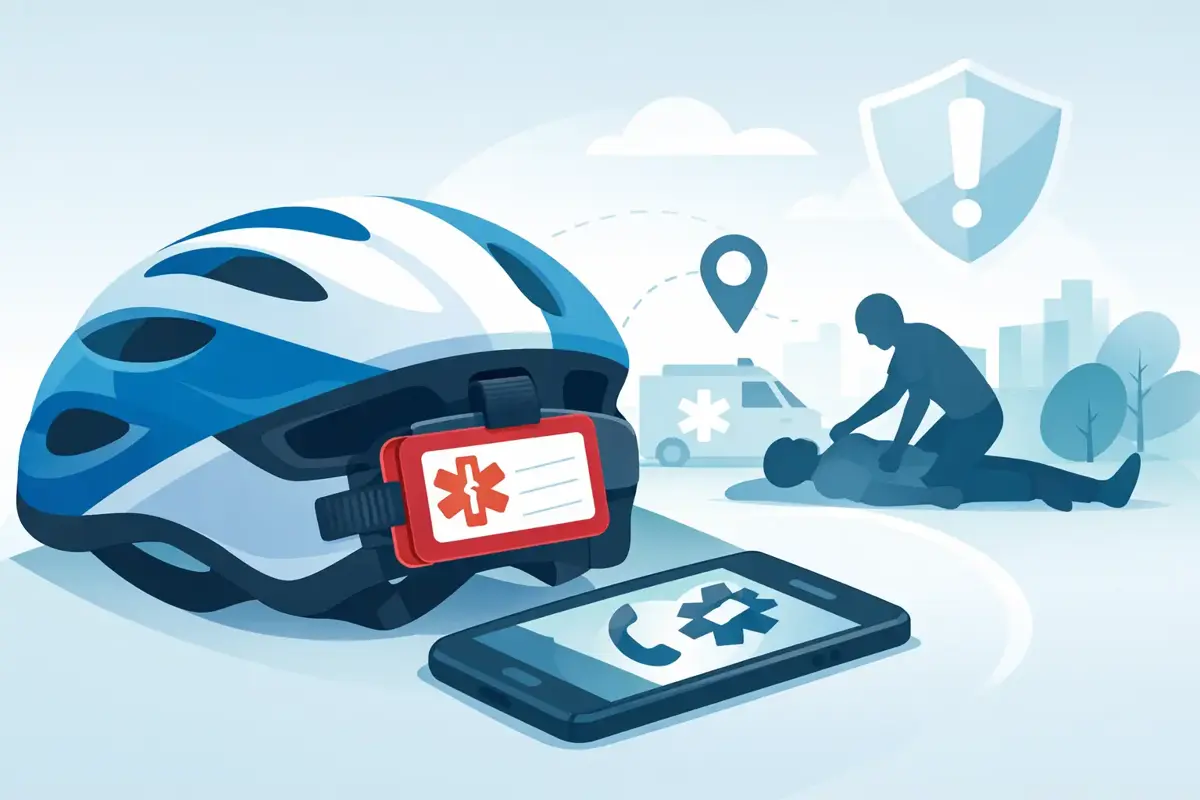
A crash scene is loud, fast and confusing. If you are unconscious or too shaken to speak, a helmet emergency contact tag can do one job immediately - help the right person get contacted without forcing your private number into public view.
That matters more than most riders and cyclists realise. In the first few minutes after an accident, bystanders are trying to help, emergency services are working quickly, and family members often have no idea what has happened. A simple tag on a helmet gives someone a clear next step. Scan. Call. Message. Act.
What a helmet emergency contact tag actually does
A helmet emergency contact tag is a small identifier attached to your helmet that helps someone reach you or your nominated contacts in an emergency. The best versions do more than display a phone number. They create a direct path between the person holding your helmet and the people who need to know where you are and what is happening.
That difference is important. A sticker with a handwritten mobile number can fade, peel, become unreadable or expose personal details every time you park your bike or leave your helmet unattended. A QR-based system gives you a safer option. Someone scans the code and is guided to the contact details or emergency actions you have chosen to make available.
For motorcyclists, cyclists, e-scooter riders and even tradies moving between sites with protective headgear, the principle is the same. When you cannot explain who you are, who to ring or what someone should know, your helmet can carry that information for you.
Why a helmet emergency contact tag matters in real emergencies
A lot of safety gear is built to protect you during impact. A helmet emergency contact tag helps after impact, when communication becomes the problem.
Picture a rider who comes off at an intersection. Their mobile is locked in a jacket pocket. Their wallet has been thrown clear. A passer-by wants to help but does not know who to call. If the helmet has a visible emergency contact tag, the next action is obvious. That small reduction in delay can make a stressful situation more manageable for everyone involved.
The same applies in less dramatic situations. A cyclist might be conscious but disoriented. A child on a bike may not remember a parent’s number. A rider with allergies, diabetes or another medical condition may need a contact reached quickly. In these moments, simple wins. Nobody wants a complicated process at the roadside.
There is also the privacy issue. Many people want emergency readiness, but they do not want their name and mobile number sitting on the outside of a helmet for anyone to photograph. That is a fair concern. A modern contact tag can bridge that gap by allowing urgent communication without publicly exposing personal details.
What to look for in a good helmet emergency contact tag
Not every tag is equally useful. The practical value comes down to visibility, durability, speed and privacy.
First, it needs to be easy to spot. A tag hidden under straps or tucked into the inside lining may technically exist, but it will not help much if nobody sees it. The best placement is visible enough that a bystander checking the helmet can identify it quickly.
Second, it needs to survive the real world. Helmets deal with sun, rain, dust, sweat and frequent handling. If a tag curls up, fades or stops scanning after a few months, it stops being a safety tool and becomes decoration.
Third, it needs to work without friction. In an emergency, nobody wants to download an app, create an account or work through a clunky menu. A fast scan that leads straight to action is the standard to aim for.
Fourth, privacy should be built in rather than treated as an afterthought. You may want emergency contacts reachable, but that does not mean you want to publish their numbers on your gear. A better setup lets contact happen while keeping personal numbers masked.
QR code tags make more sense than handwritten details
Permanent marker on the inside of a helmet used to be the quick fix. It is still better than nothing, but it has limits.
If your emergency contact changes, you have to rewrite it. If the writing smudges or the label wears out, the information is lost. If the helmet is stolen or misplaced, your personal details go with it. And if someone finds the helmet but is unsure whether the number is current, they may hesitate.
A QR-based helmet emergency contact tag is more flexible. Your contact details can be updated online without replacing the physical tag. If you want to switch from a partner to a parent, or add another contact for school pickup hours, that can be changed in minutes. That makes the tag more useful over time, especially for families and riders whose circumstances change.
It also gives you more control over what the scanner sees. Some users want a finder to contact them directly. Others prefer messages or calls to be routed without disclosing personal numbers. It depends on how visible you want your information to be and how much privacy matters in public settings.
Who should be using a helmet emergency contact tag?
Motorcyclists are the obvious group, but they are not the only ones. Road cyclists, mountain bikers, kids riding to school, e-bike riders and scooter users all face the same communication problem if something goes wrong away from home.
Parents often assume a child will know what to say in an emergency. Sometimes they do. Sometimes they freeze. A helmet tag gives a teacher, coach, passer-by or first responder a direct path to the right adult.
For adults, the benefit is often about reducing confusion. You may ride solo, commute in early light, train on rural roads or head out on trails where your family does not know your exact route. If an incident happens, quick contact matters.
This is also useful for people managing health conditions. Even when medical information is kept minimal for privacy, an emergency contact path can still help by getting the right person involved fast.
How to set up a helmet emergency contact tag properly
Setup should be simple enough that you actually do it, not something that sits in a drawer for six months.
Start by choosing the contacts who are most likely to answer. That sounds obvious, but many people nominate someone who is often in meetings, on flights or hard to reach. The best emergency contact is the person most likely to pick up and act calmly.
Next, think about what information is genuinely helpful. In many cases, a contact method is enough. In some cases, a short note about a relevant medical issue may be worth including. The key is not to overload the tag. The goal is fast action, not a life story.
Then place the tag where it is visible and secure. The outside rear or side of the helmet is usually more useful than somewhere hidden. You want it to be noticed without interfering with helmet safety, fit or any existing certification labels.
Finally, test it. Scan it yourself. Ask a family member to scan it. Make sure the steps are clear and the contact flow works exactly as expected. A safety product is only useful when it works under pressure.
The trade-off most people miss
Some riders avoid any form of identification on their helmet because they do not want strangers accessing personal details. Others go the opposite way and print everything in plain view. Neither approach is ideal for everyone.
The better answer is usually controlled access. You want enough information available to help in an emergency, but not so much that your privacy is compromised every day you lock your helmet to the bike or carry it into a café.
That is where a smart, privacy-first system has a real advantage. It gives bystanders and responders a clear way to help while keeping your direct details protected. For many Australians, that balance is the difference between using a tag and avoiding one altogether.
ContactMeTag is built around exactly that idea - quick contact when it matters, without unnecessary exposure of personal phone numbers.
A small tag that changes the next step
A helmet does its main job in the split second of impact. A helmet emergency contact tag does its job in the minutes after, when someone is trying to help and needs a clear next move.
If you ride, commute, train or send your child out with a helmet on, this is one of those small decisions that can quietly carry a lot of weight. When you cannot speak for yourself, the best safety tools are the ones that make action obvious.