7 Travel Bag Identification Alternatives That Work
By ContactMeTag · · 6 min read
A black suitcase on a baggage carousel can look exactly like every other black suitcase. That is why travel bag identification alternatives matter: they help you recognise your bag quickly, while giving the right person a safe way to reach you if it is left behind, misdirected or picked up by mistake.
The best option is not always the brightest ribbon or the most expensive tracker. It depends on whether you need fast visual recognition, private contact details, location support, or all three. For Australian travellers, a practical approach is to use one clear visual marker and one secure way for a finder to contact you.
Why a name tag alone is not always enough
A traditional luggage tag with your name, mobile number and home address has one obvious benefit: almost anyone can read it. It also puts personal information on display in airports, hotel lobbies, cruise terminals and rideshare queues. You may not want a stranger to know where you live, particularly while you are away.
Paper tags can tear, ink can fade, and a tag tucked inside the bag only helps after someone has opened it. Airline baggage labels are useful for the journey they are issued for, but they are temporary and primarily designed for airline handling systems, not for a Good Samaritan who finds your bag in a car park or on public transport.
A stronger setup gives a finder a simple next step without asking you to expose more information than necessary.
7 travel bag identification alternatives to consider
1. Bright luggage straps
A coloured strap is one of the quickest ways to spot your suitcase from a distance. Choose a bold colour or distinctive pattern that is unlikely to blend in with other bags. A strap can also provide a little extra security if a zip fails during handling.
The limitation is that a strap identifies the bag to you, not you to a finder. It does not provide contact details, and it can be removed or come loose. Use it as a visual layer rather than your only form of identification.
2. Ribbons, fabric ties or a distinctive wrap
A sturdy ribbon, brightly coloured fabric tie or patterned luggage cover makes a generic bag easier to identify. This is a low-cost option for family holidays, especially when several people have similar suitcases.
Avoid tying on anything loose enough to snag on conveyor equipment. Keep the marker compact, securely fastened and easy to describe if you need to report the bag missing. A photo of your packed bag before check-in is useful too, particularly if it has unique marks or a cover.
3. Personalised luggage labels
A durable personalised label can show a name, email address or mobile number. It is straightforward and familiar, which can help when a person is trying to do the right thing quickly.
Privacy is the trade-off. Consider using only your first name and a dedicated travel email address rather than your full name, residential address and everyday mobile number. An email-only label may protect privacy, but it is slower when a finder needs an immediate answer. A mobile number is faster, but it is public.
4. A contact card inside the bag
Place a printed contact card just inside the main compartment, as well as in any internal identification sleeve. Include your name, a mobile number or email address, and your destination details if appropriate. If an external tag is damaged, this gives airline staff or a finder a second way to identify the owner.
Keep the information current before every major trip. If you are travelling overseas, include the Australian country code, +61, and remove the first zero from your mobile number. That small detail can make the difference when someone is trying to call from another country.
5. Bluetooth luggage trackers
Bluetooth trackers can help you see a bag's last known or current location through a compatible device network. They are particularly helpful when your bag has arrived at an airport but has not appeared on the carousel, or when you have accidentally left a carry-on in a taxi.
They are not a replacement for identification. A tracker does not tell a finder how to contact you, and its location may not update in every place or at every moment. Battery level, phone settings, local device coverage and airline rules can all affect usefulness. Check your airline's current policy for devices with batteries before you fly.
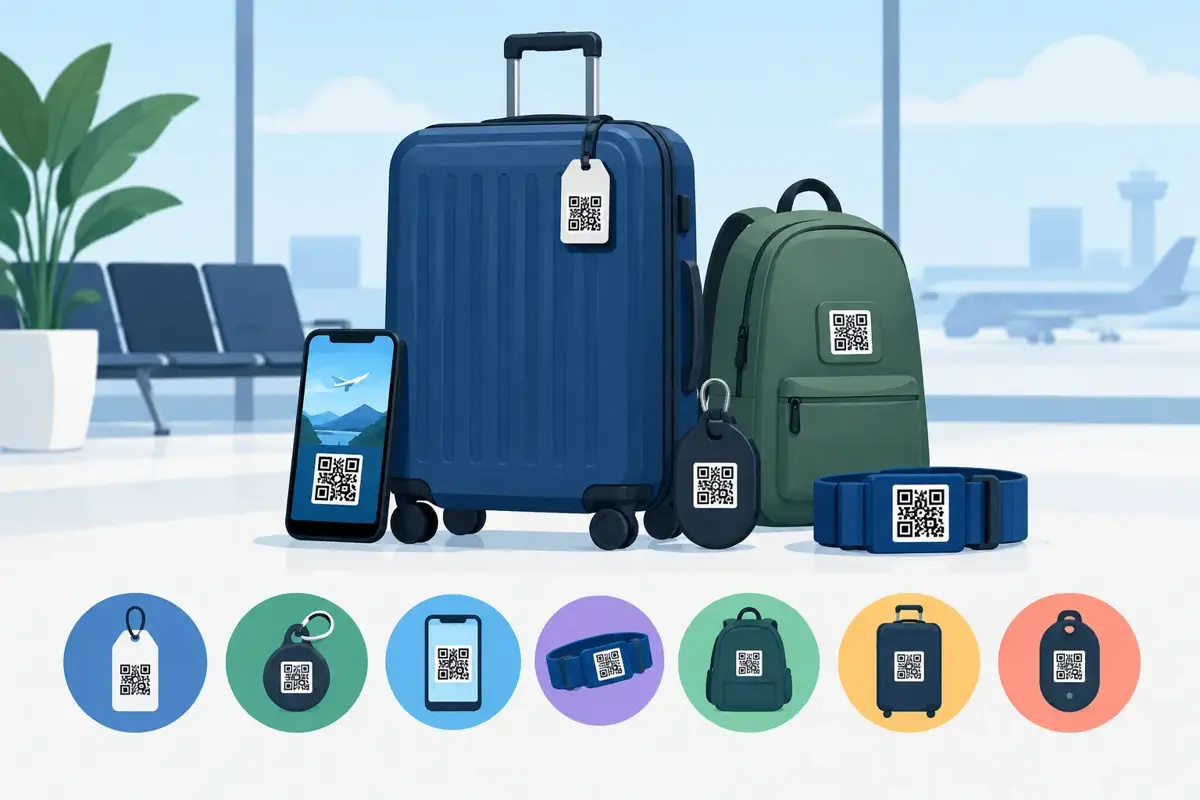
6. QR contact tags with privacy protection
A QR luggage tag gives a finder a clear action: scan the code using their phone camera. Instead of displaying your personal mobile number, the scan can direct them to a secure contact method that lets them call or message you, or a nominated emergency contact, without exposing private details.
This is especially useful when you cannot answer immediately. You might be in the air, at passport control, driving, or asleep in a different time zone. A ContactMeTag can be set up online in minutes and allows contact details to be updated without replacing the physical tag. The person who finds the bag does not need an app, which removes a common barrier at the moment help is needed.
For best results, attach the tag where it is easy to see but not likely to be scraped off, such as the luggage handle or a durable tag loop. Make sure the QR code remains clean and readable, and test it before departure.
7. A clear owner message inside and outside
Sometimes the simplest wording is the most effective. A small external label that says “If found, please scan” can prompt action, while an internal card can say “This bag belongs to [first name]. Please contact me using the details provided.”
This approach works well alongside a QR tag or private contact method because it tells people exactly what to do. Do not assume a finder will understand the purpose of a code or tracker without a prompt. Clear instructions reduce hesitation.
The most reliable approach is layered
No single travel bag identification option covers every situation. A bright strap helps you recognise your suitcase on the carousel. An internal card helps if the external tag is missing. A tracker may help you establish where the bag is. A privacy-first QR contact tag gives a finder a fast, direct route to you without making your personal number public.
Think about the type of travel you do. For a weekend away with carry-on only, a distinctive marker and contact tag may be enough. For an international family holiday with checked luggage, use multiple layers on every bag, including children's bags and shared suitcases. For business travel, discreet identification may suit you better than a highly visible novelty accessory.
If your luggage is damaged or split from its tag, the details inside become critical. If it is picked up by another traveller, a visible contact option makes it easier for them to correct an honest mistake before they leave the airport. If it is found later, clear contact instructions can turn an awkward delay into a quick return.
Set up your bag before you leave home
Before packing, photograph each bag from the outside and note its brand, size, colour and any distinguishing features. Add a secure internal contact card, then attach your chosen external identifier. If you use a QR contact tag, scan it yourself and confirm the right contact numbers are active.
Review nominated contacts before a long trip. A partner, family member or trusted friend may be able to respond while you are on a flight or out of mobile range. They should know that they may receive a call or message about your luggage and what action you would like them to take.
Finally, remove old airline stickers and outdated labels. Conflicting information can slow down recovery and make a well-meaning finder unsure which details are current.
Your bag does not need to shout your private details to be returned. It just needs to be recognisable, clearly marked and ready to connect the person holding it with the person who needs it back.