Road Trip Safety Essentials for Australian Drivers
By ContactMeTag · · 6 min read
A tyre failure on a hot stretch of highway, a wrong turn after mobile coverage drops out, or a minor crash when nobody can reach your family quickly - these are the moments road trip safety essentials are made for. A safe trip is not about expecting the worst. It is about making sure a small problem stays manageable, even when you are far from home.
Road Trip Safety Essentials Start Before You Leave
The most useful safety item is the one you prepare before the car leaves the driveway. Give your vehicle a proper check a few days before departure, not ten minutes before loading the boot. That leaves time to book a repair, replace a worn tyre or source the part you need.
Start with tyres. Check pressure when they are cold, including the spare, and use the pressure listed for your loaded vehicle. A car carrying passengers, camping gear, an esky and a roof pod may need different pressures from the everyday setting on the driver’s door sticker. Inspect tread and sidewalls as well. A tyre that has looked fine around town can become a serious risk in heat, rain or on rough regional roads.
Check engine oil, coolant, brake fluid and windscreen washer fluid. Test headlights, brake lights, indicators and wipers. A clear windscreen matters just as much on a wet coastal road as it does when glare and dust build up inland. If you tow a caravan, trailer or boat, inspect the coupling, chains, lights, tyres and load restraint separately. Towing changes braking distance, fuel use and the way your vehicle handles crosswinds.
Plan the route with realistic stops. Long Australian distances can look simple on a map but become tiring quickly, particularly after dark. Check for fuel availability, roadworks, unsealed sections and weather warnings. Download maps for offline use, but do not rely on a mobile alone. Carry a paper map or write down key towns, turn-offs and emergency contacts.
Pack for the Problems You Can Actually Solve
A well-packed vehicle does not need to resemble a recovery truck. It needs enough equipment to help you stay visible, comfortable, connected and safe while you wait for assistance or deal with a minor setback.
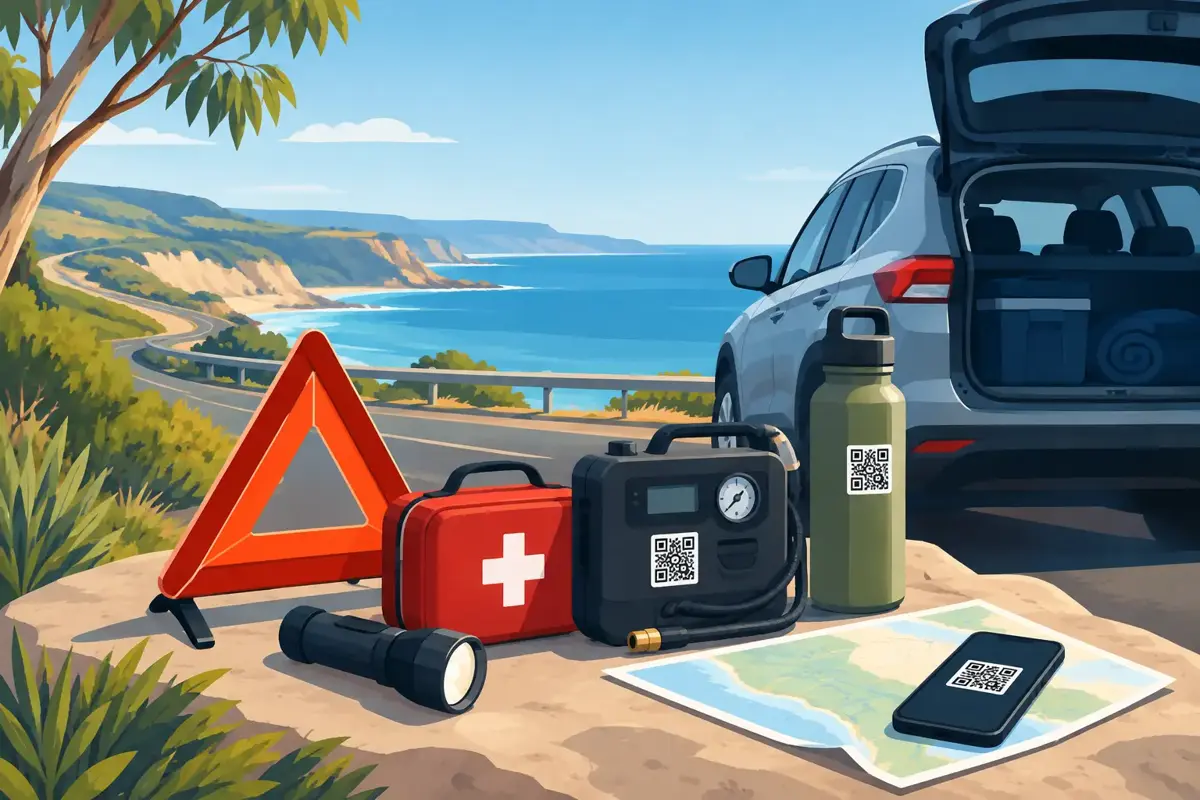
Keep these items accessible rather than buried under luggage:
- A first-aid kit, including personal medications, insect repellent and sunscreen.
- Drinking water for every person, plus extra water for unexpected delays.
- A charged power bank, charging cables and a 12-volt vehicle charger.
- A torch or headlamp, high-visibility vest, gloves and a reflective warning triangle.
- A tyre inflator, tyre-pressure gauge, basic tool kit and puncture repair option suited to your vehicle.
- Non-perishable snacks, a blanket or warm layer, and wet-weather gear.
The right mix depends on where you are going. A family driving between major towns may prioritise snacks, medication and child supplies. A trip through remote areas calls for more water, extra fuel where appropriate, communications planning and greater confidence in basic vehicle recovery. Do not pack equipment you do not know how to use. Read the instructions at home and practise safely, especially with tyre inflators, jacks and spare-wheel tools.
Load heavy gear low and forward in the boot or cargo area, securing loose items. In a sudden stop, an unsecured camp stove, toolbox or suitcase can become dangerous. Keep the first-aid kit, water, torch and warning gear within easy reach.
Make Emergency Contact Simple
After a crash or medical incident, the biggest delay is often not finding help - it is finding the right person to contact. Your phone may be flat, locked, damaged or out of reach. Passengers may be shaken, and a helpful bystander may not know who should be called.
Before you leave, nominate at least two emergency contacts and make sure they know your travel plan. Share the general route, overnight stops, vehicle registration and expected arrival time. Ask them to act if they have not heard from you after an agreed check-in, rather than waiting until worry has built for days.
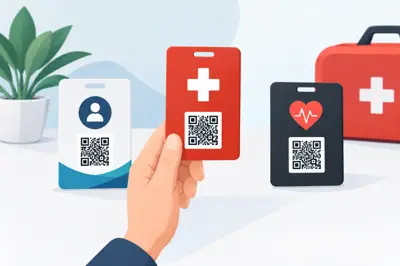
Put important details somewhere others can find them without exposing your private mobile number. A weatherproof ContactMeTag vehicle QR tag can give a Good Samaritan, emergency responder or finder a direct way to reach you or your nominated contacts with a scan. No app is required for the scanner, and your contact details can remain private. It is a practical backup when you cannot speak for yourself or when a vehicle is unattended.
For a serious emergency in Australia, call Triple Zero (000). If coverage is limited, move only if it is safe to do so and tell someone your exact location using road markers, nearby towns or GPS coordinates. Roadside assistance is valuable for mechanical trouble, but it is not a substitute for emergency services where life, injury or immediate danger is involved.
Drive for the Conditions, Not the Schedule
Most road trip pressure comes from time. A late start, a booked campsite or a desire to reach the next town before dinner can tempt drivers to rush. That is when safe decisions become harder.
Build slack into the plan. Fuel up earlier than you think you need to, especially outside populated areas. Stop before fatigue becomes obvious. Swapping drivers helps only if both people are rested and licensed to drive the vehicle. Opening a window or turning up the music does not fix fatigue. A proper break, food, water and sleep do.
Slow down for rain, loose gravel, unfamiliar bends, wildlife and changing light. Kangaroos and other animals are most active around dawn and dusk, but they can appear at any time. If an animal enters your path, brake firmly in a straight line where safe. Swerving sharply can put the vehicle, passengers and oncoming traffic at greater risk.
On unsealed roads, reduce speed before the surface changes and leave a bigger gap to the car in front. Dust can hide potholes, washouts and other road users. In floodwater, the safest choice is usually to wait or turn around. Water depth and road condition are difficult to judge, and conditions can change fast.
If You Break Down or Have a Crash
Your first priority is the people in and around the vehicle. If possible, pull well clear of traffic onto firm ground. Turn on hazard lights, assess injuries and call 000 if anyone is hurt or in danger. Do not stand near moving traffic, particularly on narrow roads, blind corners or high-speed highways.
If the vehicle cannot be moved, get everyone to a safer location away from traffic when it is safe to exit. Use a reflective warning triangle only when you can place it without putting yourself at risk. At night, high-visibility clothing and a torch can make a major difference, but avoid directing traffic unless it is necessary and safe.
For a minor collision, exchange required details, take clear photos and write down the time and location while it is fresh. Stay calm and avoid debating fault at the roadside. If the vehicle is unsafe to drive, organise recovery rather than trying to limp to the next town.
A breakdown in a remote location requires patience. Stay with the vehicle unless there is an immediate safety reason not to. A vehicle is easier for rescuers to spot than a person on foot, and it provides shade, supplies and shelter. Conserve phone battery, avoid running the engine unnecessarily, and make yourself visible.
Give Every Traveller a Role
Road trip safety works best when one person is not carrying every responsibility. Before departure, show passengers where the first-aid kit, water, torch and emergency contacts are kept. Older children can help with simple checks, such as ensuring devices are charged or confirming everyone has water before a long leg.
If you are travelling with children, carers, older relatives or someone with a medical condition, prepare for their specific needs. Keep medications in labelled containers and within reach, carry relevant medical information, and plan regular comfort stops. A simple emergency contact method can also reduce confusion if someone becomes separated at a servo, rest area or attraction.
The goal is not to turn a holiday into a risk assessment. It is to create a few reliable habits before the kilometres add up: a sound vehicle, sensible supplies, clear contacts and enough time to make the safe call. Then, if the unexpected happens, you and the people around you have a clear next step.