Traditional Luggage Labels Comparison for Travel
By ContactMeTag · · 7 min read
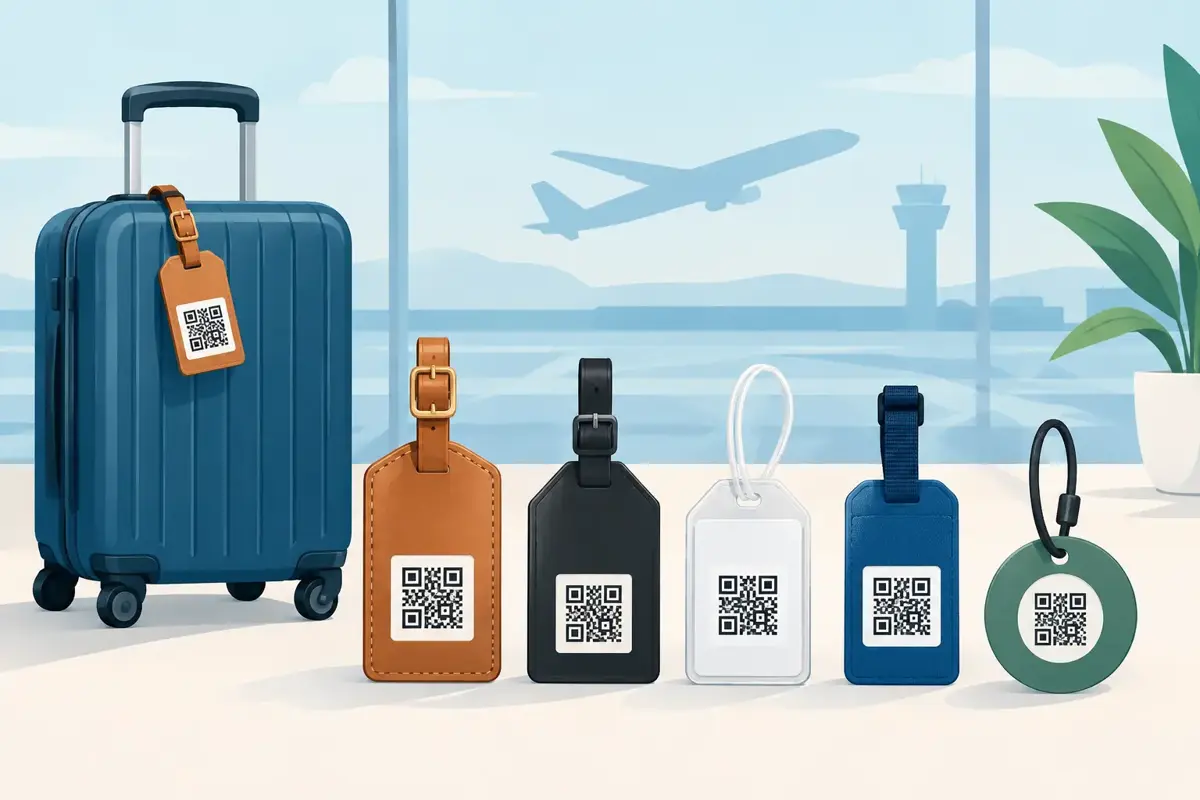
A bag can disappear in the few metres between the carousel and the taxi rank. It can also be lifted from a hotel lobby, left in the boot of a shuttle, or sent to the wrong airport. A traditional luggage labels comparison matters because the label on your suitcase is often the only thing standing between a finder and a bag that cannot be returned quickly.
The right choice is not simply about making your luggage look smart. It is about whether a stranger, airline worker or hotel receptionist can identify the owner and make contact without delay - while keeping your personal details private.
Traditional luggage labels comparison: the real test
Most luggage labels fall into four practical groups: airline paper tags, handwritten address labels, engraved metal or leather tags, and QR-enabled tags. They all help in different ways, but they do not offer the same level of privacy, durability or speed when your bag is lost.
The best label for your trip depends on where you are going, how often you travel and how comfortable you are putting personal information in public view. For family holidays, business travel and overseas trips, the strongest option is usually the one that lets a finder reach you immediately without displaying your mobile number or home address.
Airline paper tags: useful, but temporary
Airline baggage tags are essential for routing checked luggage. They contain the information airlines need to move your suitcase through the system, and the barcode gives staff a way to trace its journey. Keep the baggage receipt until your bag is back in your hands.
But these tags are not a personal recovery tool. They can tear, become detached or be removed once you collect your luggage. They also do not help much if your suitcase is misplaced after leaving the airport, such as in a rideshare, on a coach or at accommodation.
Think of an airline tag as a transport label, not your bag's permanent identity. It works inside the airline system. A luggage label needs to work when your bag is found by anyone else.
Handwritten address labels: immediate but exposed
A classic plastic luggage tag with a paper insert is familiar, inexpensive and easy to replace. A finder can read your details without a phone, battery or internet connection. That simplicity is its biggest advantage.
The downside is equally clear: anyone standing behind you in a queue can see what you have written. Listing your full name, home address and mobile number makes it easier for a helpful person to contact you, but it also puts personal details on display throughout your trip.
For some travellers, a first name, surname initial and email address may feel like a reasonable compromise. Yet email can be slow when a suitcase has been found and you are already boarding another flight. A visible mobile number is faster, but it removes privacy from the equation.
Paper inserts also struggle with rain, rough baggage handling and wear. A clear cover helps, but it is not a guarantee. If the tag breaks away from the suitcase, the useful information goes with it.
Engraved metal and leather labels: durable, not discreet
Engraved luggage labels look more permanent. Metal options can withstand knocks better than paper inserts, while leather tags suit travellers who prefer a traditional style. Many have a privacy flap that covers the details until someone opens it.
They are a solid step up in durability, especially for regularly checked bags. There is no setup process and no device needed to read them. If a hotel staff member finds your bag, they can open the cover and use the details straight away.
However, the information is still static. If you change your phone number, emergency contact or travel plans, the engraving cannot be updated. The same privacy issue remains once the flap is opened: your details are visible to whoever has the luggage.
There is also a small but practical question to ask. Will a busy finder open a tag, read small engraved text and then decide how to contact you? Often, yes. But when time matters, fewer steps usually mean a better chance of action.
Where QR luggage tags change the equation
A QR luggage tag combines a physical tag with a digital contact route. A finder scans the code using their phone camera and is directed to a simple contact page. They do not need to install an app, create an account or see your private mobile number.
That changes the traditional luggage labels comparison from a question of material to a question of response. Instead of relying on printed details that may be out of date, you can manage the contact information behind the code online. If your mobile number changes, you update the details without replacing every label on every bag.
For a traveller, this is especially useful when a suitcase is found after a flight. A Good Samaritan can scan the tag and send a message or call through the contact system. You can be reached, or a nominated emergency contact can be reached, without handing your personal number to a stranger.
ContactMeTag applies this approach with durable, weatherproof QR tags designed for real-world lost-and-found moments. The tag stays on the luggage; the contact details remain protected behind the scan.
The trade-off: a scan needs a phone
QR tags are not magic. The finder needs a smartphone with a camera and, usually, an internet connection. In an area with no mobile coverage, a printed label may be easier to use immediately. This is why some travellers choose a layered approach: a QR tag for private, updatable contact and a discreet backup identifier inside the suitcase.
The other consideration is tag quality. A QR code must remain clear enough to scan after being dragged over airport belts, exposed to rain or knocked against hard surfaces. Choose a tag made for travel rather than a paper sticker placed on the outside of your case.
What to put on a luggage label
Avoid treating a luggage label like a public directory listing. A full home address can tell the wrong person more than they need to know, particularly when it is obvious you are away.
With a traditional label, use the minimum information that still gives a finder a realistic way to reach you. Your name and mobile number are direct, but not private. An email address offers more privacy, but may not lead to a quick response.
With a QR tag, keep your contact details current and nominate someone who can act if you are in transit, asleep on an overnight flight or unable to answer. For family travel, a second adult can be a sensible contact. For a child’s bag, make sure the contact route leads to a parent or carer who will answer unknown calls.
Inside the case, place a simple itinerary or contact card under the top layer of clothing. This gives airline staff a backup option if the external tag is damaged. Do not rely on an itinerary alone, though. It may not be seen until the bag has already travelled a long way.
Choosing the right label for your travel style
If you only take a carry-on bag on occasional domestic flights, a basic traditional tag may be enough. You remain close to the bag and can spot a mix-up quickly. Even then, privacy is worth considering when the bag sits in an overhead locker or airport lounge.
If you check luggage, travel with children, move between several hotels or take long overseas trips, a more durable and private option makes stronger sense. Your bag passes through more hands, more vehicles and more places where you may not notice it missing straight away.
For frequent travellers, the ability to update details matters. A label should not become useless because you changed your mobile number, changed jobs or need a different contact while travelling. That is where a digital contact route has an advantage over permanent engraving.
Also check the attachment. A beautiful tag is of little use if its strap snaps on the first baggage conveyor. Look for a secure fastening, clear identification on both sides where appropriate, and materials that can handle rain, scuffs and regular handling.
Give a finder one clear action
When luggage goes missing, the goal is not to provide every possible detail. It is to make the next action obvious. A finder should be able to see the label, understand what to do and contact the right person in seconds.
Before your next trip, inspect the tag already hanging from your suitcase. If its details are faded, outdated or more public than you are comfortable with, replace it before check-in. A small tag cannot prevent every travel disruption, but it can give an honest finder the fastest possible way to get your bag - and your plans - moving again.