
10 Smart School Bag Identification Ideas
By ContactMeTag · · 7 min read
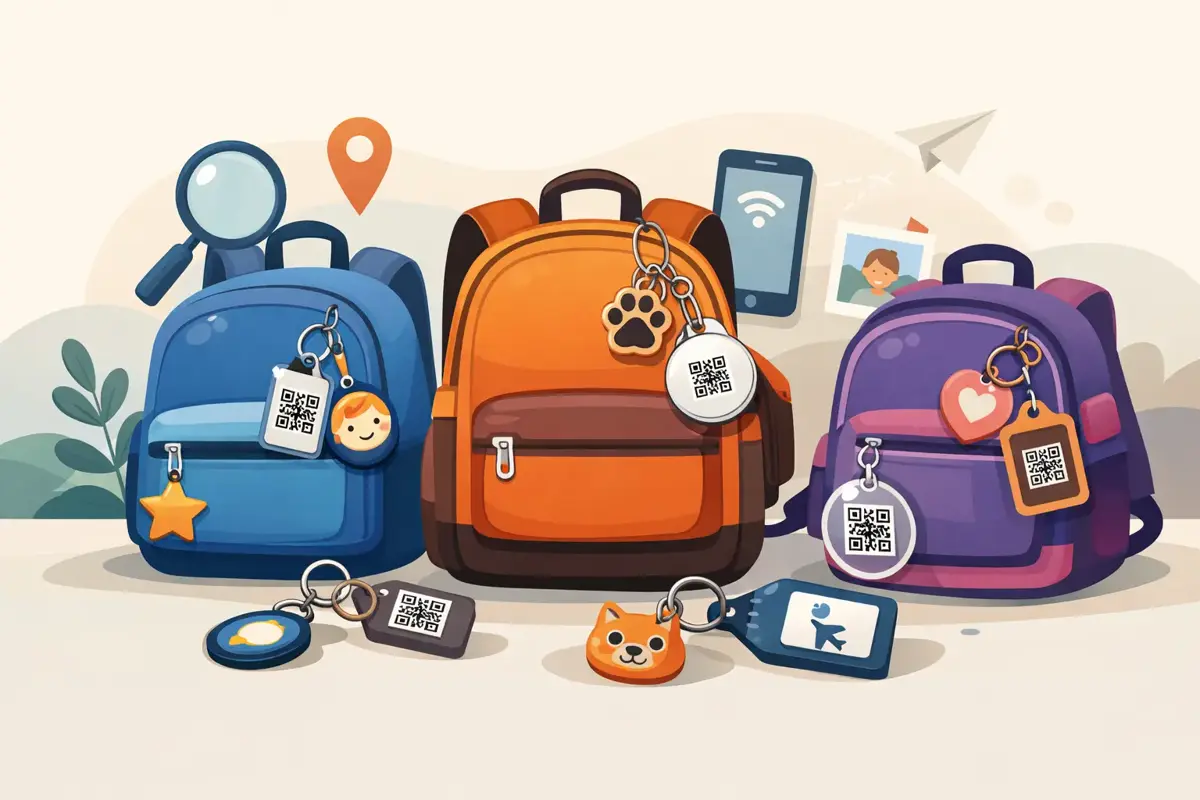
Monday morning school drop-off is not the time to discover three identical navy backpacks lined up outside the classroom. Bag mix-ups happen fast, especially in the early years, and a simple name label is not always enough. The best school bag identification ideas make a bag easy for a child to recognise, hard for someone else to confuse, and simple to return if it goes missing.
That last part matters more than most parents expect. A school bag is rarely just a bag. It often carries lunch boxes, readers, medication, notes from school, spare clothes and the bits and pieces that keep a school day running smoothly. Good identification helps with the everyday problem of bag confusion, but it also helps when a bag is left on the oval, at after-school care, on the bus or at a mate's place.
What good school bag identification ideas actually need to do
A lot of parents start with the obvious move: write the child's name on the bag. Sometimes that works. Sometimes it creates a new issue. A full name displayed clearly on the outside of a bag can make it easier for strangers to use a child's name in public. For many families, especially with younger children, that trade-off does not feel worth it.
The better approach is to think in layers. One layer helps your child recognise the bag at a glance. Another helps teachers and carers quickly confirm whose bag it is. A final layer helps a finder contact you if the bag has truly gone missing. Each layer solves a different problem.
Visual school bag identification ideas for faster recognition
Young children do not always read quickly, and even older kids can miss a printed name in a rush. Visual identifiers work because they can be spotted from a distance.
A bright keyring, zipper pull or bag charm is one of the easiest fixes. It adds something distinctive without replacing the bag itself. If half the class has black or blue school bags, a fluorescent tag, a textured pom-pom or a silicone charm in a favourite shape can stand out immediately. The main caution is durability. Fluffy or novelty accessories can fall off, and anything too bulky may get caught in lockers or bag racks.
Coloured straps or handle wraps are another strong option. A simple wrap around the top handle gives a child a quick visual cue when bags are piled together. This works especially well for younger students who rely on colour more than text. If your school has rules about uniform presentation, keep the colour easy to spot but still sensible.
Reflective stickers or patches can help for two reasons. First, they make the bag easier to identify. Second, they add visibility in low light during winter pick-up, walking to school or after sport. This is one of those rare options that improves both convenience and safety.
Personalised patches can also be effective, particularly if they use an icon rather than a full name. A dinosaur, soccer ball, rainbow or surfboard gives the child an instant marker without broadcasting personal details. For some families, that balance is ideal.
Name labels still work - if you use them well
There is nothing wrong with traditional labels. They are still one of the most practical school bag identification ideas, but placement matters.
An external name label can help teachers and school staff, but it should be discreet. First name only is often enough, especially in primary school. Putting it near the side seam, under the flap or on the top handle area can make it visible when needed without making it the first thing strangers see.
An internal label is just as important. If the outside marker is damaged or removed, the bag still needs a clear ownership detail inside. Include the child's name, class if relevant, and a parent contact method you are comfortable sharing. If you do not want a personal mobile number visible, that is where a smarter contact option can make more sense.
Permanent marker directly on fabric is cheap and fast, but it fades, bleeds and can look messy by term two. Sew-on labels last longer. Iron-on labels are quick, though some peel with heavy use or repeated washing. If the bag is expensive or likely to be handed down, choose an option that can be updated later.
Privacy matters more than many parents realise
Not every identification method is equally safe. A bag tag with a child's full name, school and contact number on open display can solve one problem while creating another.
For public-facing items, less is usually better. Your child does not need their full identity hanging off a zipper for everyone at the bus stop to read. This is where families often need to separate recognition from contact. A visible marker helps the child identify the bag. A more secure contact method helps a trusted person return it.
QR identification is one of the most practical answers here. Instead of exposing private phone numbers, a QR tag can direct a finder to a safe contact pathway. That means if the bag is left behind at sport, in a library or on public transport, someone can reach the parent or nominated contact quickly without personal details being printed on the bag itself.
For parents who want low friction, this matters. The best systems do not ask the finder to download an app, create an account or guess which number to call. They just scan and act. When a school bag goes missing, speed is useful. Simplicity is what gets results.
School bag identification ideas that hold up in real life
A good idea on day one is not always a good idea by week eight. Kids drag bags across concrete, leave them in the rain, overstuff them and swap keyrings with friends. Practical identification has to survive daily use.
That is why durable tags often outperform paper cards or handwritten labels tucked into plastic sleeves. Water, heat and rough handling expose weak materials fast. If you are choosing any external identifier, look for something weather-resistant, firmly attached and easy to clean.
It also helps to avoid solutions that are too easy to copy. If five children in the class all decide they want the same cartoon tag, your visual cue loses value. Pair one obvious feature with one less visible identifier. For example, use a bright handle wrap on the outside and a secure contact tag inside or attached discreetly near the top.
If your child catches the bus, plays sport after school or moves between households, stronger identification becomes even more important. The more places a bag travels, the more chances there are for it to be misplaced. In those cases, simple recognition plus return-ready contact details is the safest combination.
The most effective setup for busy families
If you want a system that works without much maintenance, keep it simple. Start with one visual identifier your child can describe easily. Then add one ownership label for school staff. Then add one secure return method for genuine lost-and-found situations.
For example, a child might have a yellow strap wrap they can spot from a distance, a first-name label inside the top pocket, and a QR contact tag attached to the bag for fast return if it is found off school grounds. That setup covers recognition, confirmation and recovery without overcomplicating things.
This layered approach is especially useful for younger children, children who are still building independence, and families juggling multiple school bags at once. It reduces confusion for the child and removes guesswork for the adult who finds the bag.
One practical option is a privacy-first QR tag from ContactMeTag, which lets a finder scan and reach the right person quickly without exposing your private number on the outside of the bag. That is a stronger fit for many families than a standard bag tag with personal details printed for anyone to see.
How to choose the right idea for your child
The best choice depends on age, routine and temperament. A Prep student usually benefits from bold visual cues and very simple ownership details. An older primary student may prefer something less decorative but still distinctive. A high school student may care more about privacy and less about bright accessories.
Think about where the bag is most likely to be confused or lost. If the problem is classroom mix-ups, visual recognition matters most. If the bag regularly travels between school, care, sport and grandparents' houses, secure contact and return features matter more.
It is also worth involving your child. If they choose the colour, patch or tag, they are more likely to notice it and use it as their own reference point. The goal is not to create the fanciest bag in the year level. It is to make the right bag obvious, every time.
A school bag should be easy to spot, easy to verify and easy to return. When those three things are covered, small daily hassles stay small - and if the bag does go missing, the right person can be reached fast.