Why a Scan to Call Safety Tag Matters
By ContactMeTag · · 6 min read
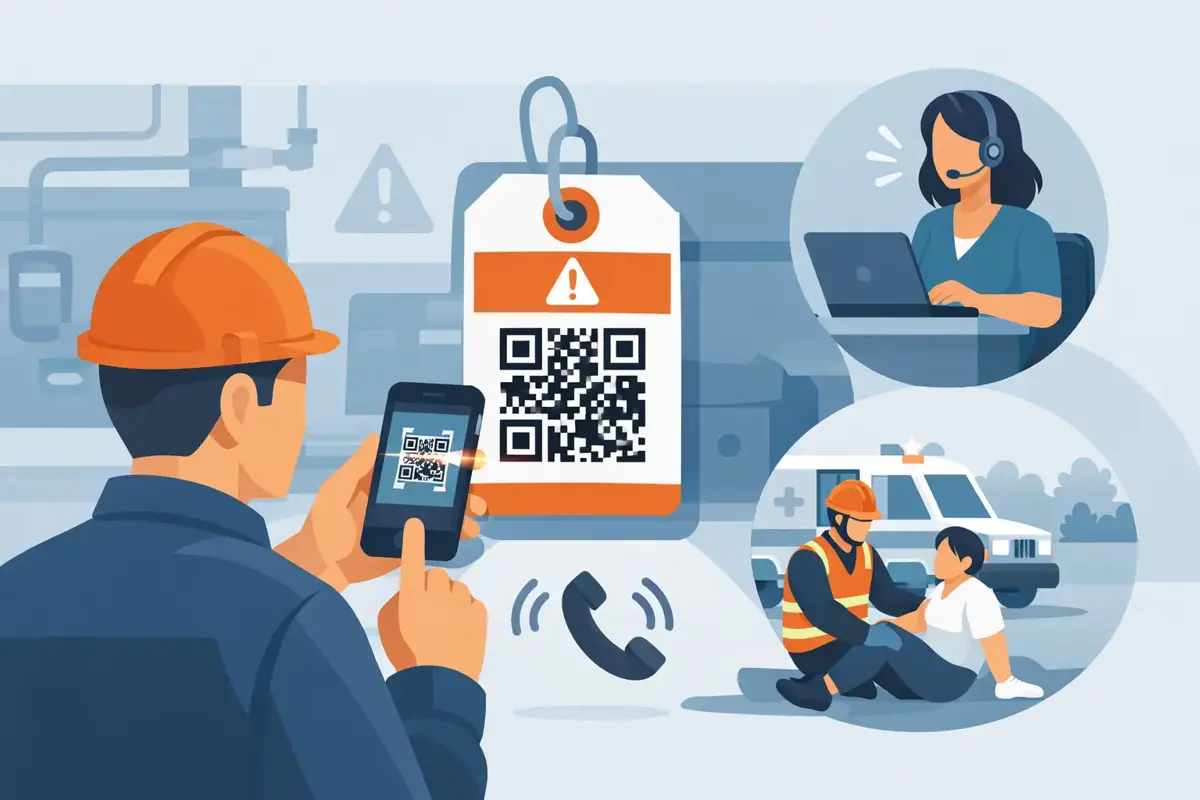
A child is late out of the school gate. A bike is lying on the roadside after a fall. A suitcase has been pulled off the carousel by mistake. In each case, the problem is the same - the right person needs to be reached quickly, and most of the time there is no easy, private way to do it. That is exactly where a scan to call safety tag earns its place.
It turns a small physical tag into a direct line of communication when time matters and details are missing. Someone scans the QR code with their mobile, follows the prompt, and can call or message the owner or an emergency contact without seeing a personal phone number. No app. No account for the scanner. No need to guess who to contact.
What a scan to call safety tag actually does
At its simplest, a scan to call safety tag connects a finder, bystander or responder with the person who needs to know what has happened. The tag sits on something you carry, wear or use every day - a helmet, keyring, school bag, wallet, pet collar, car, luggage or even the front of a holiday home. When it is scanned, it opens contact options instantly.
That matters because in real situations, people do not want instructions, paperwork or delays. They want a clear next step. If someone finds a lost dog on a suburban street, they need a fast way to contact the owner. If a driver is involved in an accident and cannot speak, a bystander needs a simple way to reach a nominated contact. If a traveller leaves a laptop behind, the person who found it needs a method that feels safe and legitimate.
The best systems remove friction from both sides. The owner gets privacy. The scanner gets immediate action.
Why speed and privacy need to work together
Many safety products solve one problem and create another. A printed phone number on a bag tag is simple, but it exposes private details to anyone who sees it. A locked app-based system may protect information, but it can fail the moment a stranger is asked to download something just to help.
A good scan to call safety tag sits in the middle. It gives people a way to act now while keeping personal numbers masked. That balance is not a nice extra. It is the reason many people will actually use the tag in the first place.
Parents do not want a child’s school bag showing family contact details in plain view. Riders do not want to rely on emergency information buried in a mobile that may be locked, flat or damaged. Travellers do not want a luggage tag handing out their number to every baggage handler and passer-by. Privacy-first design makes the tag practical enough for everyday use, not just emergencies.
Where a scan to call safety tag helps most
Some products sound useful in theory but are too narrow in practice. This one works because the same basic action solves a wide range of very ordinary problems.
For road users, the value is obvious. A tag on a helmet, motorcycle or car can help a bystander contact family or a nominated support person quickly after an accident or breakdown. For cyclists, it can bridge the gap between the incident and the first useful phone call.
For families, school bags, prams and wearable tags can help if a child is separated in a busy place. The person helping does not need to make decisions or search through belongings. They scan and contact the right person.
For older Australians and carers, the tag can support dementia care and medical safety. If someone becomes disoriented, a simple scan can lead to a family member or carer without broadcasting personal information to the public.
For travellers, luggage, passports wallets, backpacks and devices are obvious candidates. Lost property is often found by honest people who are willing to help if the process is easy. Most will not spend long trying to identify the owner. A visible QR tag gives them a direct, low-effort option.
For the home, gates, key safes or holiday properties can also benefit. If a neighbour, guest or tradesperson needs to make contact, the tag can route them to the right person without putting a personal number on display.
What to look for in a scan to call safety tag
Not all tags are equal, and the differences show up when conditions are less than perfect. If the tag is going on a motorbike, pet collar, school bag or luggage case, it needs to handle weather, knocks and regular wear. A flimsy label might survive a week. A proper safety tag is built for daily life.
The digital side matters just as much. Setup should be straightforward enough to finish in minutes. Updating contact details should not be a headache. The person scanning should not be asked to install an app, create an account or jump through security screens that stop them from helping.
Privacy controls are another non-negotiable. The point is to enable contact without exposing the owner’s direct mobile number. That protects families, solo travellers and anyone placing tags on publicly visible items.
It is also worth thinking about longevity. A safety tag is not useful if the service behind it disappears or becomes difficult to manage. Reliable lifetime support and a clear activation process make a real difference.
How setup should work in real life
A scan to call safety tag only helps if people actually activate it. That means setup has to be fast, plain-English and forgiving for non-technical users.
In a well-designed system, you receive the tag, scan or enter the code online, add your preferred contact details or nominated emergency contacts, and assign the tag to its purpose. You might label one for your helmet, another for your dog, and another for luggage. From there, if something happens, the scan leads to the right contact path.
This is where practical design beats flashy features. Most households do not want another app to manage or a long list of settings. They want to get it sorted in a few minutes and trust that it will work when needed.
That approach is part of why ContactMeTag resonates with safety-conscious Australians. It keeps the process simple while solving the two biggest problems at once - reaching the right person fast and protecting private contact details.
The trade-off to understand
A QR-based tag depends on one basic condition: the person helping needs a mobile capable of scanning a code. In Australia, that is usually a safe assumption, but not always. Mud, damage or poor visibility can also affect a scan if the tag is badly placed or poorly made.
That does not make the system weak. It means placement and quality matter. A helmet tag should be visible and durable. A pet tag should handle weather and movement. A luggage tag should be easy to spot but securely attached. Like any safety tool, the result depends on how well it is used.
It is also worth remembering that a scan to call safety tag is not a replacement for every emergency measure. It works best as one layer in a broader plan. Medical alerts, roadside assistance, ID checks and family safety routines still have their place. The strength of the tag is that it fills a common gap - the moment when a stranger is willing to help and needs a fast, private way to reach someone.
Why this small tag changes the outcome
Most emergency and lost-property situations are not solved by complex technology. They are solved by reducing hesitation. The easier it is for a good Samaritan to do the right thing, the more likely it is to happen.
That is the real value of a scan to call safety tag. It does not ask people to think hard, search hard or expose someone else’s private details. It gives them one clear action, right when it counts.
If you are protecting a child, a pet, a vehicle, a home, a bag or your own safety on the road, that kind of clarity matters. When you cannot explain, answer or be there in person, a simple scan can speak for you - and sometimes that is exactly what gets the right call made in time.