QR Tag Versus ICE Card: Which Helps Faster?
By ContactMeTag · · 6 min read
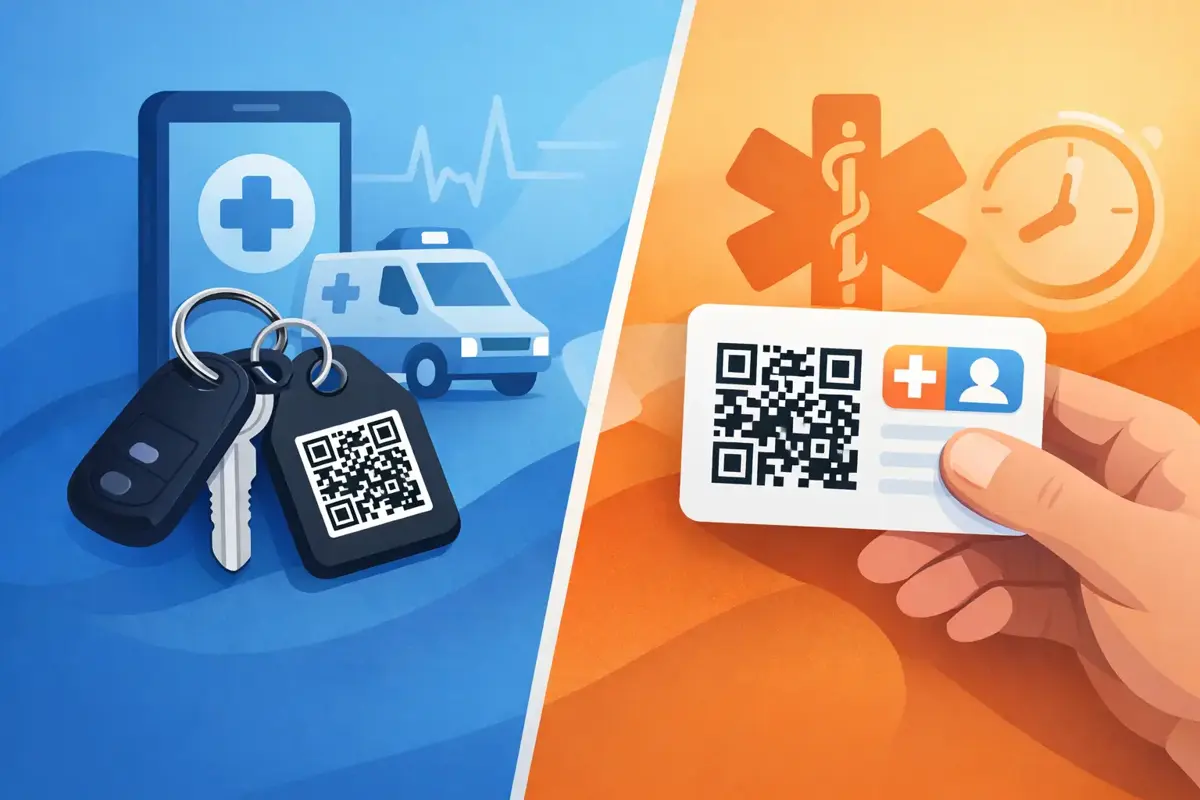
A paramedic is beside your vehicle after a crash. Your wallet is in a bag, your mobile is locked and you cannot explain who should be called. This is where the QR tag versus ICE card decision becomes practical, not theoretical. Both are designed to help another person find emergency contact details, but they work very differently when time, privacy and access matter.
An ICE card can be a sensible starting point. A well-placed QR tag can go further by making it easier for a responder, Good Samaritan or finder to act without putting your personal mobile number on public display.
What an ICE card does well
ICE stands for “In Case of Emergency”. Traditionally, an ICE card is a small card carried in a wallet, purse or medical ID holder. It may list your name, an emergency contact, medical conditions, medications, allergies and other information you want responders to see.
Its biggest strength is simplicity. It needs no battery, mobile signal, camera or account. A card is immediately readable when someone finds it, and it can include essential health information in plain language. For people with serious allergies, complex conditions or a treatment plan that must be communicated clearly, carrying a current written card can be valuable.
An ICE card is also inexpensive and familiar. A parent can place one in a child’s school bag. A traveller can keep one in their passport wallet. Someone caring for an older family member may put one in an easy-to-find pocket.
But the card only works if it is found, recognised and still accurate. Wallets are often left at home, secured in a vehicle, lost with the item or inaccessible after an incident. Handwritten details can fade, and a change of mobile number can make an otherwise useful card ineffective.
Where an ICE card can fall short
An ICE card exposes whatever is printed on it to anyone who picks it up. That may be acceptable for some people, but it is a genuine privacy trade-off. Your full name, phone number, home address, medication or family contact details may be visible to a stranger after a lost wallet, bag or set of keys changes hands.
There is also limited room. You might have space for two contacts, but what happens if the first person does not answer? Updating the card means finding it, replacing the details and making sure every copy is changed. It is easy for an old card to remain in a helmet, glove box or travel bag long after the information has changed.
Mobile-based ICE contacts have a similar issue. They can be helpful when emergency personnel can access a mobile, but a mobile may be flat, damaged, locked away or simply not nearby. A mobile contact cannot assist when the urgent item is your motorcycle, your pet, your luggage or the child who has wandered from the family group.
QR tag versus ICE card: the key difference
A QR tag puts a scannable code on the item or place where help is most likely to be needed. When scanned with a standard smartphone camera, it can direct the scanner to a contact page. The tag owner’s nominated contacts can be reached without their private phone numbers being printed on the tag itself.
That changes the response pathway. Instead of someone reading a number, deciding whether to call and hoping it is current, they scan the code and use the displayed call or message option. The finder does not need to install an app or create an account. The owner or nominated contact can be reached quickly, while contact details remain masked.
A QR tag is not a replacement for every piece of medical information. If a person has a critical condition, they should follow clinical advice and carry any appropriate medical identification. The stronger approach is often to use each tool for what it does best: an ICE card for vital written information, and QR tags for fast, privacy-conscious contact across the things and places that matter.
Why placement matters more than the format
Emergency contact information is only useful when it is where someone can find it. A wallet card is useful for a wallet. It does very little for a cyclist separated from their bag, a driver involved in a roadside incident, or a dog found near a busy road.
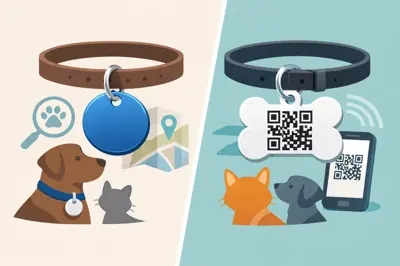
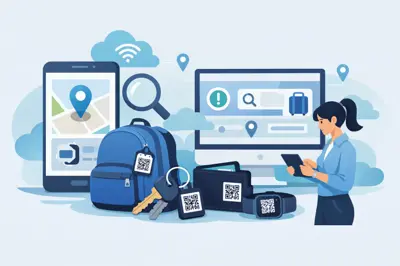
QR tags can be placed on a vehicle windscreen, helmet, keyring, luggage, school bag, pet collar, home entry point or medical accessory. This gives a helper a visible way to make contact at the point of discovery. A person who finds a suitcase at an airport does not need access to your wallet. A neighbour checking on a holiday home does not need to know who holds the spare key. They need a clear next action.
For a family, this can mean assigning tags by scenario. A tag on a child’s backpack helps if they are separated during an excursion. One on a parent’s keys helps when keys are found. One on a bike helmet gives a bystander a practical contact option after an incident. The same contact management can support several parts of everyday life.
Privacy is not a small detail
Writing a mobile number on a luggage label or key tag makes it easy for a kind finder to call. It also makes that number available to anyone else who sees the label. The same applies to printed ICE cards that include detailed personal information.
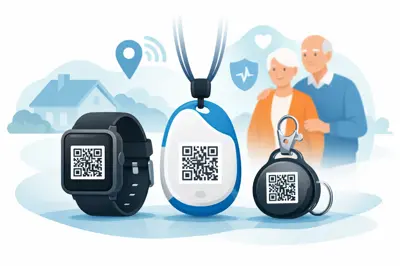
With a QR contact tag, the visible code is not the contact information itself. The scan creates the connection, while the underlying phone numbers can stay private. This is especially relevant for children, people living alone, carers supporting a person with dementia, and anyone who does not want their personal number attached to a vehicle or bag.
Privacy does not have to slow down an emergency response. When a QR system is designed for immediate action, the scanner can call or message through the contact page without needing the owner’s number. ContactMeTag is built around this practical balance: a physical, weatherproof tag paired with online contact routing that can be updated when circumstances change.
Choose the option that fits the risk
If you want a straightforward written record of allergies, medications and emergency details in your wallet, an ICE card remains useful. Keep it legible, dated and easy to spot. Tell close family where it is kept, and review it after any medication, address or contact change.
If your priority is fast contact from an item, vehicle, pet or location, a QR tag is usually the better fit. It is particularly useful where a wallet or unlocked mobile may not be present. Look for a tag that is durable enough for its environment, simple to activate, readable in daily conditions and supported by a service that does not make the finder download an app.
For many Australians, the answer is not strictly one or the other. Carry an ICE card for information that must be read directly. Use QR tags to give people a fast way to reach the right person when you cannot speak, cannot be found, or are simply not there.
Keep your details ready before they are needed
The best emergency contact system is one you set up before the trip, school run, weekend ride or holiday. Nominate contacts who understand they may receive a call, check that their numbers are current, and make sure tags are placed where they can be seen without searching through personal belongings.
Then review the setup a few times a year. A new mobile number, changed custody arrangement, new medication or different holiday-home access plan can alter who should be contacted. Preparation is not about expecting the worst. It is about making the next step obvious for the person trying to help.
When someone scans a tag or finds an ICE card, they have already chosen to act. Give them the clearest, safest way to reach the people who matter.