Engraved Pet Tag vs QR Tag for Lost Pets
By ContactMeTag · · 6 min read
A gate left ajar, a startled dog during a storm, or a cat that slips out at dusk can turn an ordinary day into a frantic search. When a neighbour, ranger or Good Samaritan finds your pet, the first few minutes matter. The engraved pet tag vs QR tag question is really about one thing: how quickly can the right person reach you, without putting your private details on display?
For most Australian pet owners, the strongest answer is not choosing one over the other. It is using a visible engraved tag for immediate recognition and a QR tag for fast, private contact when more information is needed.
Engraved pet tag vs QR tag: the key difference
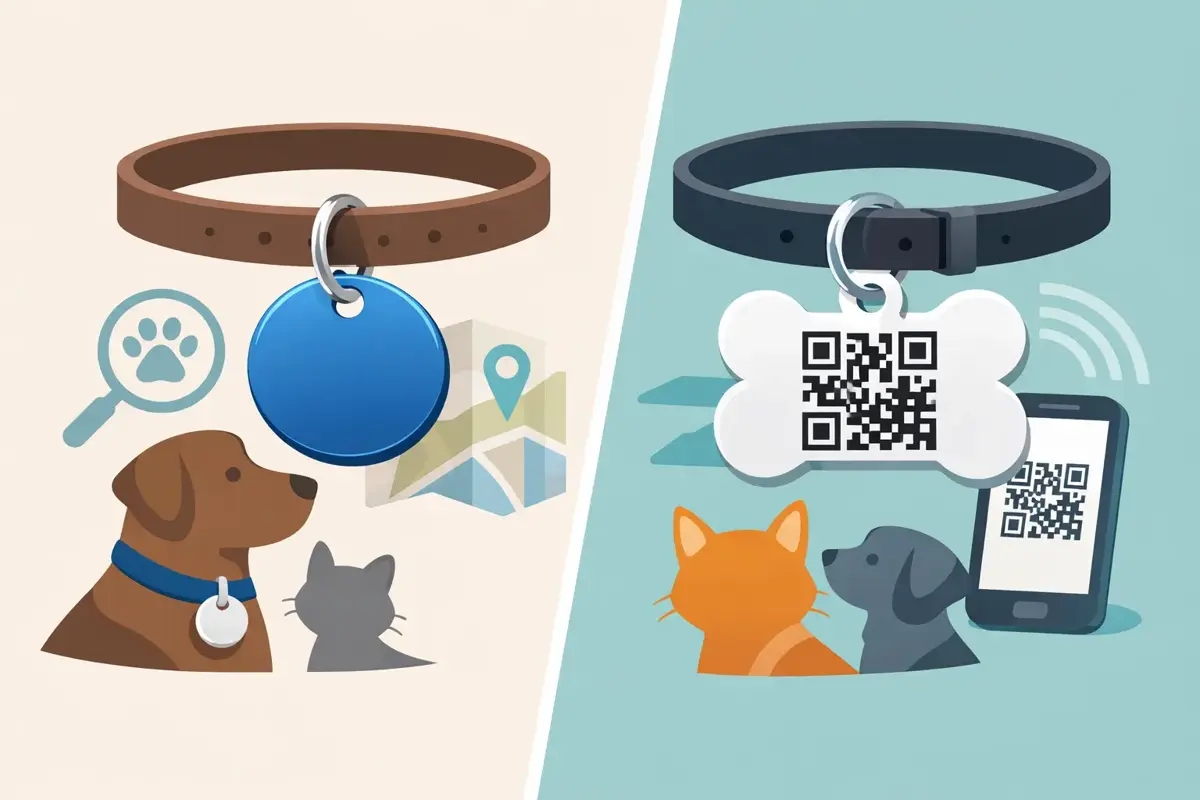
An engraved pet tag carries fixed details, usually your pet's name and your mobile number. Anyone can read it without a phone, reception, battery or internet connection. It is familiar, simple and still one of the fastest ways for a finder to call you.
A QR pet tag holds a scannable code that opens a secure contact page on a smartphone. Rather than displaying your personal mobile number on the tag, it can connect the finder to you or a nominated emergency contact through masked calling or messaging. It can also provide useful information such as your pet's name, medical needs, behavioural notes and a second contact person.
The practical difference is flexibility. Engraving is permanent. A QR profile can be updated online in minutes if you change your mobile number, move house, add a vet contact or need to flag an allergy.
When an engraved tag is the better choice
Engraved tags are excellent for immediate, low-tech identification. A person who finds your dog near a busy road may see a phone number and call before they think to scan anything. For older people, young children, or anyone without a smartphone handy, readable engraving removes a step.
They are also useful when phone coverage is poor. If your pet goes missing while camping, at the beach, or in a regional area with patchy reception, a finder can write down your number and try later. A QR code needs a camera-equipped smartphone and usually an internet connection to open the contact page.
There is one major limitation: a traditional tag shares whatever is engraved on it with every person who sees it. If it includes your mobile number, that number is public whenever your dog is at the park, outside a cafe or being walked around the neighbourhood. Some owners are comfortable with that trade-off. Others would rather keep their contact details private.
Engraving also has limited space. Long names, multiple numbers and medical instructions can become cramped and hard to read. Over time, cheaper tags can scratch, fade or become difficult to decipher.
Where a QR pet tag offers more protection
A QR tag is designed for the moment someone has found your pet and wants to help. They point their phone camera at the code, scan it and follow the prompt. No app should be required. The process needs to be simple enough for a stranger standing on a footpath with an anxious dog on a lead.
The strongest QR systems do not simply show your personal phone number. They let the finder call or message through a protected contact route, keeping your number masked while still making communication immediate. That matters if your pet's tag is visible in public every day.
A QR profile can also make the conversation more useful from the start. If your dog is nervous around men, needs medication, has a food allergy or should not be approached near traffic, those details can help a finder respond safely. For a cat, you might note that they are indoor-only and need to be brought inside rather than left to wander home.
QR tags are particularly helpful for households with more than one carer. You can nominate a partner, family member or trusted neighbour as another contact. If you are in a meeting, on a flight or out of mobile range, the finder has another way to get help quickly.
ContactMeTag QR pet tags are built around this real-world need: a scan can create an immediate, privacy-first path to the people who can get a pet home.
The trade-offs to consider before you choose
QR technology is not magic, and a good safety plan acknowledges its limits. A finder needs to notice the tag, know to scan it and have a working smartphone. Most Australians do, but not every situation is ideal. A flat battery, poor signal or a rushed moment can delay a scan.
That is why a QR tag should not replace a microchip. Microchipping is a core part of responsible pet ownership and is required for dogs and cats in many Australian states and territories, with local rules varying. A council ranger, vet or shelter can scan a microchip and use the relevant registry details to trace an owner. But this process may take longer than a direct call from the person who first finds your pet.
An engraved tag has limits too. Your number may change. A tag can become unreadable, and it cannot explain that your pet is frightened, deaf, diabetic or likely to bolt. It also gives anyone who looks closely direct access to the information you choose to print.
Durability matters for both options. Look for a tag made to handle rain, mud, salty air, sun and the daily knock of a collar against a food bowl. Check the split ring and attachment point as well as the tag itself. A tag that falls off is no help when it is needed most.
The safest setup for dogs and cats
For many pets, the best arrangement is layered identification. Think of it as planning for different people and different moments.
Your pet should be microchipped and have current details recorded with the relevant registry. Their collar should carry a durable ID tag. If privacy is a priority, a QR tag can provide the main contact route while a small engraved tag offers a simple backup, such as your pet's name and a short instruction to scan the QR code.
For dogs that spend time off lead, travel in the ute, visit dog parks or stay with sitters, a QR tag can be especially useful because your contact arrangements can change without buying a new tag. Before a holiday, add the number of the person caring for your pet. If your dog has escaped before, add a calm, clear note such as: “Please do not chase. Call owner and keep at a safe distance.”
Cats need identification too, even if they are strictly indoor pets. Doors open during grocery runs, trades visits and moves. A lightweight tag that will not snag is essential, and a breakaway collar may be the safer option for cats that climb or roam. Choose the collar and tag combination that suits your cat's behaviour rather than assuming one setup works for every animal.
Set up your pet's QR details for a real emergency
The information behind a QR code should be short, current and useful to a stranger. Start with your pet's name and clear contact options. Add one or two emergency contacts who are likely to answer. Then include only the information that will help someone act safely.
For example, “Milo is friendly but scared near roads” is more helpful than a long biography. “Needs epilepsy medication” gives a finder and a vet an urgent reason to make contact. Avoid publishing unnecessary private details such as your home address.
Test the tag after setup. Scan it from another person's phone, check that the contact method works and make sure the page is easy to understand. Repeat this check after changing mobiles, moving, separating from a partner or updating a carer's number. A pet tag is only as useful as the details behind it.
Choose for the moment your pet cannot speak
An engraved tag is fast, familiar and independent of technology. A QR tag protects privacy, carries more useful information and stays current as life changes. Neither should be asked to do every job alone.
Give the person who finds your pet more than one clear way to help. A readable collar tag, an active QR contact route and an up-to-date microchip turn a stressful moment into a faster path home. When your pet cannot tell someone who they belong to, every clear detail can make the difference.