Property Access QR Versus Key Safes for Safer Homes
By ContactMeTag · · 7 min read
A cleaner arrives at your holiday unit early. Your neighbour has spotted water near the back door. A family member needs to check on an older relative who is not answering their mobile. In these moments, property access QR versus key safes is not simply a technology choice. It is a decision about how quickly the right person can be contacted, how much control you retain and whether your private details stay private.
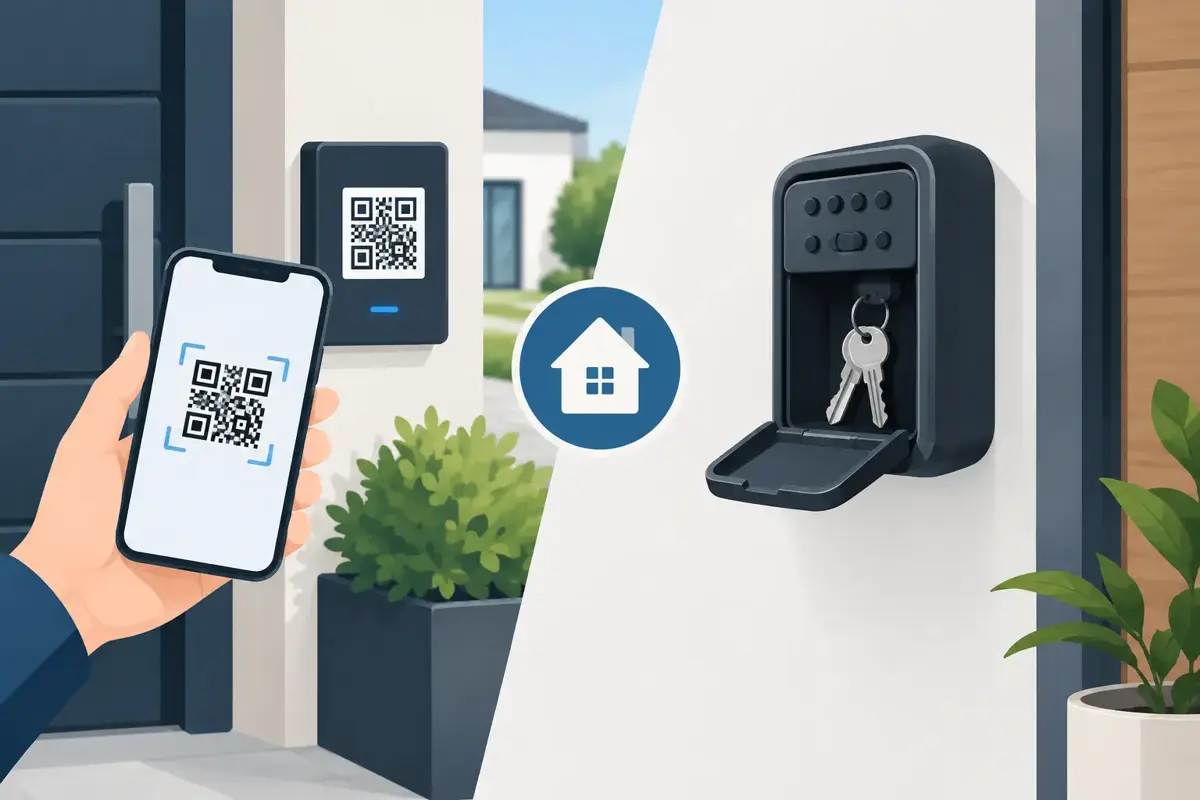
Key safes have long been the familiar answer. Put a spare key in a locked box, share the code and hope it is used only as intended. QR property access tags take a different approach: a person scans a visible code to contact the owner or nominated person, without seeing a personal mobile number. One stores a physical key. The other starts a fast, traceable conversation.
For many homes, the sensible answer is not necessarily one or the other. It is understanding what each option does well, where its limits are and how to build a safer access plan around real life.
Property access QR versus key safes: the real difference
A key safe provides direct entry. If someone has the location and the combination, they can retrieve the key and enter. That makes it useful where access has already been approved, such as a booked cleaner, trusted family member or emergency tradesperson you have arranged in advance.
A property access QR tag does not give a scanner a key or automatic permission to enter. It gives them a way to reach you immediately. After scanning, they can call or message through a contact-routing system, while your own mobile number remains protected. You can then assess what is happening, confirm who is there and decide the next step.
That difference matters. A key safe is built for pre-authorised access. A QR code is built for urgent communication and access decisions made in the moment. If a neighbour finds an open gate, a delivery driver cannot locate the right entrance, or a strata manager needs to report a problem, direct contact is usually more useful than a key they should never have had.
When a key safe is the practical choice
There are situations where a key safe remains a sensible part of the setup. A holiday-home cleaner may attend every Friday at the same time. An adult child may regularly help a parent with appointments and groceries. A trusted property manager may need access between guests. In these cases, the key holder is known, the reason for entry is routine and a physical key avoids delays.
The trade-off is that a key safe creates a standing access point. Once a code has been shared, it can be remembered, forwarded or left unchanged long after a cleaner, tenant or contractor has moved on. A key can also be copied without your knowledge. Even a well-made key safe needs careful placement, a quality lock and regular code changes.
Do not treat a key safe as invisible. Anyone who can see it knows that a key may be nearby. Position it thoughtfully, avoid obvious locations, and never use an easy code such as a birthday, postcode or repeated numbers. If the box shows signs of damage or tampering, replace it and rekey the property if needed.
Where a property access QR tag is stronger
QR access information works best when the person at the property needs guidance, not a spare key. That is common at homes, holiday properties, sheds, garages and rental units where the owner is away but still wants to remain in control.
A weatherproof QR tag placed near an entry point can help a finder or visitor contact the right person in situations that do not fit a pre-arranged schedule. Think of a tradie who arrives to inspect storm damage, a neighbour who hears an alarm, a guest locked outside after hours, or a ranger who needs to report an issue at a remote property.
With a ContactMeTag property QR tag, the scanner does not need an app, account or your phone number. They scan with their mobile camera and can call or message the contacts you have nominated. You can direct them to the right person, provide instructions or arrange for someone local to attend.
This is particularly helpful for holiday-home owners. A property can sit empty for weeks, while different people may need to report a problem: neighbours, cleaners, guests, gardeners, tradespeople or building managers. A QR contact point is easier to update than a handwritten note and avoids displaying private mobile numbers on a gate, meter box or letterbox.
Privacy and security are not the same thing
Both systems can improve convenience, but neither replaces sensible property security. A QR code should never display instructions that help an unauthorised person enter, such as a gate code, alarm code or the location of a hidden key. It should be used to start contact, verify the situation and give information only when appropriate.
Likewise, a key safe should not become the only security decision you make. A physical key can be useful, but it needs controls around it. Who knows the code? When was it last changed? Does the key open every door, or only the side gate and laundry? Could a limited-access key do the job instead?
For a high-value property, a smart lock with time-limited codes may suit scheduled guest or contractor access better than a traditional key safe. But smart locks rely on power, connectivity and correct setup. If a battery fails or a guest cannot operate the app, you still need a clear way for someone to contact you. That is where a QR contact point can support the broader plan.
Build an access plan for the people who actually turn up
The strongest setup is based on likely scenarios, rather than a single gadget. Start by separating people into three groups: those who should always have access, those who may need access after you approve it, and those who only need to report an issue.
Your trusted, regular visitors may need a controlled key or temporary smart-lock code. People such as neighbours, passers-by, delivery drivers and emergency contacts usually need a fast way to reach you instead. A QR tag provides that clear first step without handing out permanent entry.
Before placing anything at the property, work through these practical checks:
- Nominate at least two contacts, especially if you travel or work in areas with poor reception.
- Confirm each contact understands when they are authorised to make decisions or arrange access.
- Keep emergency services information visible where appropriate, but do not rely on a QR code during an immediate life-threatening emergency.
- Update your QR contact details when your mobile number, property manager or emergency contacts change.
- Change key safe combinations after a tenancy, contractor change, relationship change or lost key.
- Test the system from outside the property using a different mobile, so you know exactly what a visitor experiences.
The test matters more than people expect. A tag hidden behind a pot, faded by sun or placed where mobile reception is poor will not help when the pressure is on. Place it where a visitor can see it without entering the property, such as near the front gate, external meter box or clearly signed entry point. Choose a position that is visible to genuine visitors but does not advertise personal details.
What happens during an urgent property issue?
Imagine your neighbour notices smoke coming from a holiday house. Their first action should always be to call 000 if there is immediate danger. A property QR tag is not a substitute for emergency services. But once emergency help is on the way, the tag can help them reach you or your local contact quickly, explain what they have seen and share practical information.
Now consider a less urgent but costly problem: a burst irrigation line is flooding the side yard. A neighbour scans the code, sends a message and reaches the owner without searching social media, knocking on empty doors or calling a mobile number printed publicly on a sign. The owner can ask a trusted local person to check the tap, contact a plumber or provide access only after confirming the situation.
This is the value of communication-first access. It gives people a simple action when they want to help, while leaving the decision to open the property with the person responsible for it.
The choice for homes, rentals and holiday properties
Choose a key safe when someone genuinely needs repeat, pre-approved physical entry and you can manage the code carefully. Choose a property access QR tag when the priority is making contact quickly, protecting private mobile numbers and deciding access case by case.
For many Australian households, the practical answer is both: a well-managed key safe or smart lock for trusted access, backed by a QR contact tag for everyone else. The key gives entry to the people you have already chosen. The QR code gives unexpected visitors a safe way to reach the person who can choose what happens next.
A spare key can solve a planned visit. A clear contact route can prevent a small problem from becoming an expensive one when nobody expected to be at the door.