How to Prepare Roadside Contact Details Fast
By ContactMeTag · · 6 min read
A flat battery at a servo is frustrating. A crash on a country road, a medical episode behind the wheel, or a vehicle left blocking a driveway can become much more serious when nobody can quickly reach the right person. The time to prepare roadside contact details is before you need them, when you can think clearly about who should be contacted and what they need to know.
Your registration papers might identify your vehicle, but they do not give a helpful stranger, roadside assistance provider or emergency responder a safe, immediate way to reach you or your family. A practical contact plan closes that gap without putting your private mobile number on public display.
Why roadside contact details matter
Roadside contact details are not only for major accidents. They help in the everyday situations Australians deal with: a car with lights left on at the shops, a vehicle moved after a minor scrape, a ute parked in front of access gates, or keys found beside a car park.
In a serious incident, you may be shaken, injured or unable to use your mobile. If you travel alone, no one nearby may know who to call. If you share a family car, the person driving may not be the registered owner or the person who knows the insurance details.
The goal is simple: make it possible for someone acting in good faith to reach a useful contact quickly, without asking them to search through your wallet, unlock your phone or guess who to call.
Start with the contacts who can act
It is tempting to add everyone in your family. That can slow things down. Choose one primary contact and one or two backup contacts who are likely to answer, stay calm and take practical action.
Your primary contact might be your partner, adult child, close friend or colleague. For a young driver, it is often a parent or guardian. For an older driver, a trusted family member or carer may be the better choice. What matters is availability, not just the relationship.
Before naming anyone, ask them directly. Confirm their mobile number, let them know why they may receive an unexpected call, and check that they are comfortable handling it. A contact who never answers unknown numbers is not much help in an urgent situation.
For each nominated person, consider what they could actually do. Can they arrange a tow? Do they know where spare keys are kept? Can they contact your insurer, collect children, or tell responders about a medical condition? The best emergency contact is someone who can make decisions, not simply someone who knows you well.
Prepare roadside contact details for real scenarios
A good plan changes slightly depending on how and where you drive. Think through the moments when someone would need to contact you, then match the details to that situation.
For a breakdown or minor vehicle issue
Keep your roadside assistance membership number, insurer name and policy details saved securely on your mobile and available to your nominated contact. If you regularly drive outside mobile coverage, tell someone your planned route and expected arrival time before you leave.
For a shared family vehicle, make sure every regular driver knows who to contact after a breakdown. The teenager borrowing the car may know how to call for help, but may not know the policy holder, preferred repairer or where the vehicle’s locking wheel-nut key is stored.
For a crash or medical emergency
Emergency services will manage urgent care. Your contact details help the people around you notify family sooner and pass on essential information. Keep medical notes short and relevant: serious allergies, a condition that may affect communication, or whether you carry critical medication.
Do not put detailed medical history, your home address, licence number, or insurance policy number in a public-facing location. Those details create a privacy risk and rarely help a passer-by make the first call. Provide only what is needed to get the right person involved.
For parking, access and vehicle recovery
Not every roadside problem needs an emergency response. A vehicle may be obstructing a driveway, left in a private car park, or need moving because of a leaking tyre or changing conditions. In these situations, a finder needs a quick way to alert the owner without your number being visible to anyone walking past.
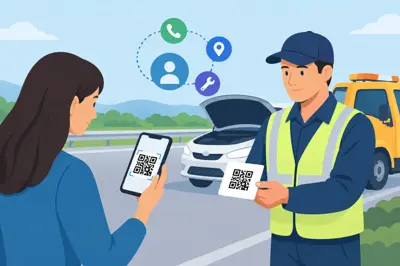
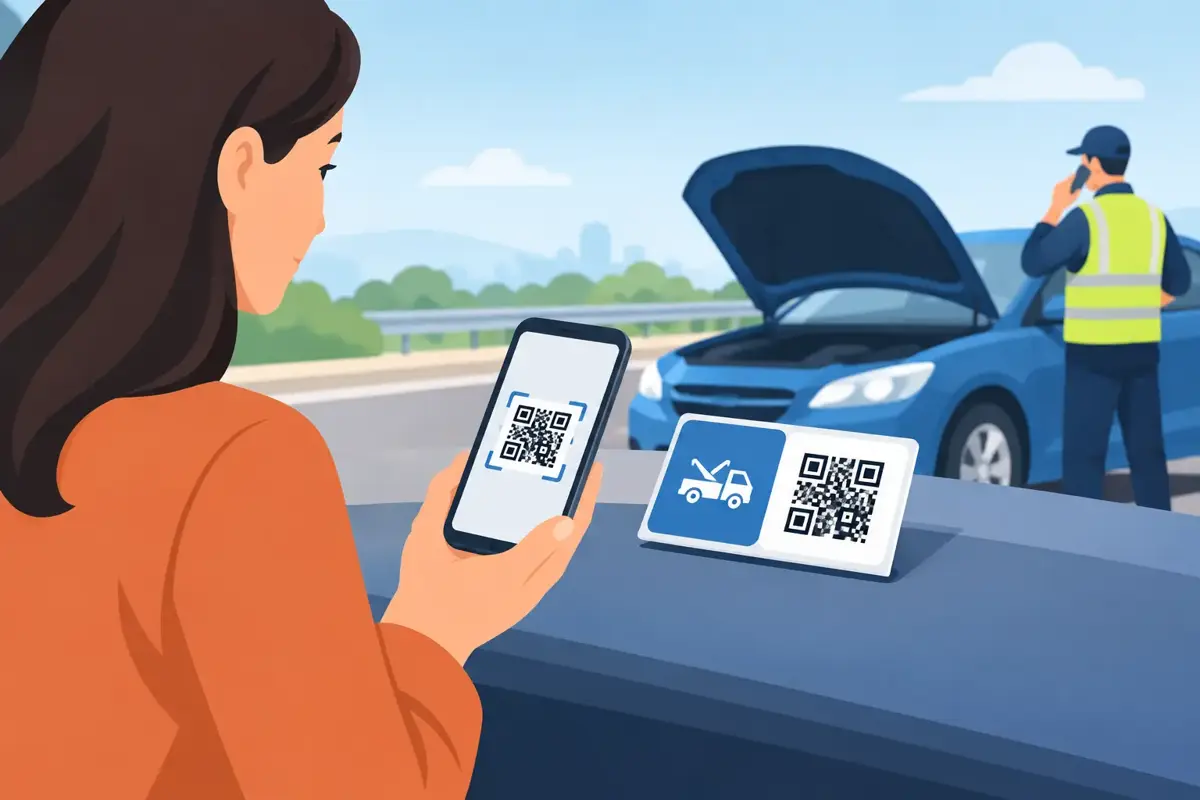
This is where a scannable contact method is particularly useful. A weatherproof QR tag can be placed where it is easy to spot, such as inside a windscreen or on an appropriate vehicle surface. When scanned, it can route the caller or message sender to you or your nominated contacts while keeping personal numbers masked.
Keep private numbers private
A handwritten note on the dashboard can work, but it exposes your mobile number to every person who walks by. It can also fade, be copied, or be used for unwanted contact. Displaying a phone number on a vehicle is a trade-off between accessibility and privacy, and for many households it is not a good one.
A QR contact tag gives people a clear action to take without revealing the information behind it. No app should be required for the person scanning it. They should be able to scan, call or send a message in moments, while your number remains private.
ContactMeTag is designed for exactly this kind of practical, privacy-first contact routing. The tag gives a Good Samaritan, neighbour or responder a direct path to the right person, even when the owner cannot speak for themselves.
Make the details easy to find
The most complete contact plan will not help if no one can locate it. Put essential information in a few sensible places rather than relying on one document in the glovebox.
Your mobile should have emergency contacts set up and accessible from the lock screen where supported. Your nominated contact should know how to identify your vehicle, including make, model, colour and registration. If you use a QR tag, position it where a finder can see it without entering the vehicle or handling personal belongings.
For families with multiple cars, avoid assuming every vehicle has the same details. Review each one. The work car, school-run car, caravan and motorbike may have different drivers, different locations and different contact needs.
Test your setup before you need it
Contact details go stale faster than people expect. A new mobile number, changed insurer, separation, shift work or a move can leave an old emergency plan pointing to the wrong person.
Test it twice a year, perhaps when daylight saving changes or when you renew registration. Scan the QR code yourself. Call the routed number. Send a test message. Ask whether your nominated contacts still want the role and whether they know what to do if they receive a call.
Check the physical tag too. Road grime, sun, rain and car washes can affect anything attached to a vehicle. A durable tag should still be clean, readable and firmly fixed. If it is inside the windscreen, make sure it is not hidden by permits, parking tickets or tinted areas.
A small detail that can save a difficult day
Roadside preparedness is not about expecting the worst. It is about removing one avoidable delay when something unexpected happens. A breakdown can be handled faster, a parked vehicle can be moved sooner, and a family can be notified when it matters most.
Take five minutes to choose the right people, protect their details, and make the contact path obvious. When you cannot make the call yourself, a clear scan can give someone else the confidence to make it for you.