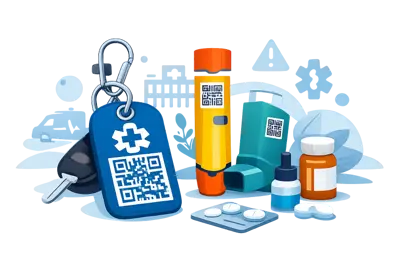
Why a No App Emergency Contact Tag Matters
By ContactMeTag · · 7 min read
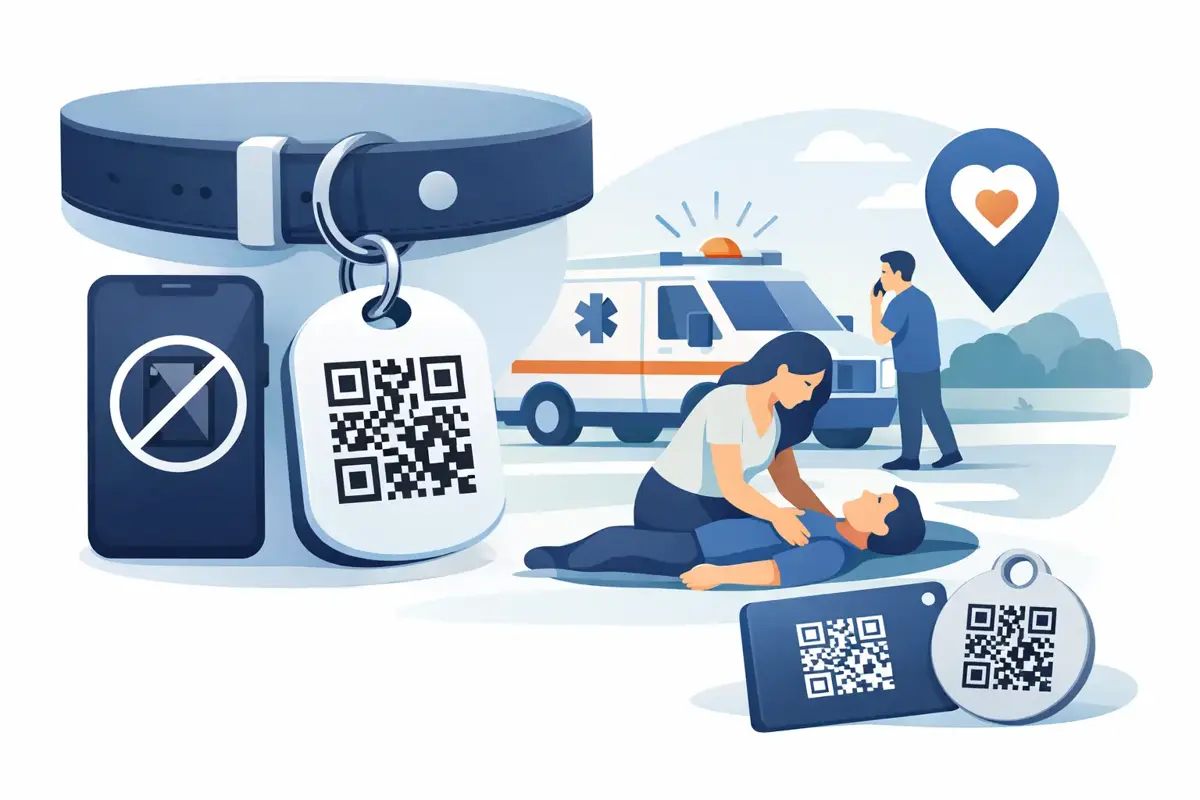
When someone finds your child’s school bag at the oval, your wallet in a car park, or you after a bike crash, there is a small window where help needs to happen fast. A no app emergency contact tag matters because the person trying to help is usually a stranger, under pressure, and unlikely to jump through hoops. If reaching you takes too long, they may give up, move on, or hand the problem to someone else.
That is the whole point of a better emergency contact system. It has to work instantly, on the phone already in someone’s hand, without asking them to download anything, create an account, or reveal more of your private information than necessary. In a real emergency, friction is the enemy.
What a no app emergency contact tag actually does
A no app emergency contact tag gives a finder or responder one simple action - scan the code. From there, they can call or message the tag owner or nominated emergency contacts through a secure contact-routing system. The best versions do this without showing your private mobile number on the tag itself and without expecting the scanner to install an app.
That sounds simple, and it should. Simplicity is the feature. If a rider is unconscious, a pet has slipped its lead, a child is separated from family, or luggage has gone missing in transit, nobody wants a complicated process. They want a fast, obvious next step.
This is where old-school labels and handwritten contact details start to fall short. A visible number can be useful, but it also exposes private information to anyone who sees it. Once printed, it is hard to update. And if you change numbers or contacts, the tag is suddenly out of date.
Why no app matters more than most people realise
People often assume an app-based safety tool is more advanced. Sometimes it is, but that does not always make it more useful in the moment that counts.
If the scanner needs to install an app before they can help, you have introduced delay. Delay is bad enough when someone is trying to return a lost laptop or keys. In a medical incident or roadside accident, it is worse. The person helping may have limited reception, low battery, little patience, or no confidence with technology. Even a 30-second barrier can be enough to stop action.
A no app emergency contact tag removes that barrier. Most Australians already know how to open a camera and scan a QR code. It is familiar. It is fast. It works across a wide range of devices. That makes it better suited to real-world use by Good Samaritans, neighbours, school staff, travellers, and first responders who need contact details now, not after a download.
There is also a trust factor. People are naturally cautious about downloading unfamiliar apps from a tag they have just found on a helmet, a pet collar, or a suitcase. Asking for no app installation keeps the interaction clean and low risk for the person trying to help.
The best use cases are the everyday ones
Emergency products are often sold around worst-case scenarios, but the strongest value usually shows up in the everyday moments. A no app emergency contact tag is useful because life is full of smaller incidents where quick contact solves the problem.
Think about a child’s backpack left behind after sport, a dog escaping through the gate, a phone left in a rideshare, or a set of house keys dropped near the shops. In each case, a decent person may want to help, but they do not want to become a detective. If the tag gives them an instant path to the right person, recovery becomes much more likely.
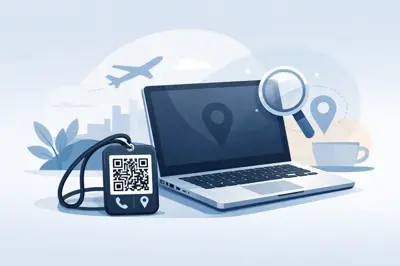
The same goes for travel. Lost luggage can sit untouched while staff try to work out who owns it. A simple scan that reaches the owner or their emergency contact can cut through the mess quickly. For holiday homes or short-stay properties, a tag on keys or access devices can help guests or neighbours reach the right person without exposing the owner’s direct number to everyone.
Then there are the situations nobody wants to imagine but should prepare for anyway - a motorcycle crash, a medical episode on a walk, an elderly parent wandering, or a cyclist unable to speak after a fall. In those moments, speed and clarity matter more than clever features.
Privacy is not optional
A lot of people still write their mobile number on personal belongings because it feels practical. It is practical, right up until it is not.
A visible phone number on a bag, keyring, or vehicle can be misused. It can be copied, shared, or called at the wrong times by the wrong people. For children’s items, that risk is even more uncomfortable. For vulnerable people, it can be a serious concern.
A well-designed no app emergency contact tag solves that by keeping contact details private while still making them reachable. That balance matters. You want to be easy to contact in an urgent situation, but you do not want your personal number displayed on the outside of your belongings, your child’s gear, or a helmet left in public.
This is one reason privacy-first systems make more sense than static printed labels. They can route calls or messages without exposing personal numbers, and they can usually be updated if your circumstances change. If you switch carers, replace a mobile, or need to add a second emergency contact, the tag stays useful.
What to look for in a no app emergency contact tag
Not every tag on the market is built for pressure. Some are cheap stickers with little thought given to durability, privacy, or ease of use. Others look clever on the website but create too many steps when someone actually scans them.
Start with the obvious question: can a stranger use it immediately? If the answer involves app stores, account creation, or long instructions, it is probably not the right fit.
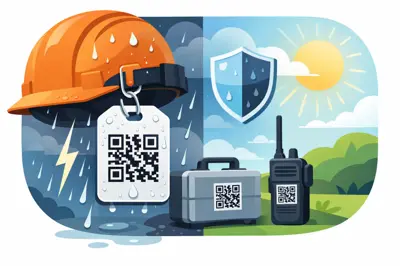
Next, look at durability. A tag meant for vehicles, helmets, keyrings, luggage, pet collars, or outdoor gear needs to cope with weather, heat, handling, and everyday knocks. If the code fades, peels, or becomes unreadable, the whole system fails.
Then consider setup and management. A good system should be easy to activate online in minutes, simple to update, and flexible enough to suit different use cases. A family may need one contact path for a school bag, another for a grandparent with medical needs, and another for travel items. Ease matters here because safety products only work when people actually keep them current.
Finally, think about what happens after the scan. The tag itself is only the trigger. What matters is whether the scanner can quickly reach the right person, for free, without confusion. That is where better platforms separate themselves from novelty QR products.
Why this is becoming a family essential
Prepared families already think about seatbelts, bike helmets, sunscreen, and roadside kits. A no app emergency contact tag belongs in the same category. It is not dramatic. It is practical. It covers the moments between an incident happening and the right person being reached.
For parents, that means a clearer plan when school items go missing or a child is separated in a busy place. For riders and cyclists, it means a bystander can help without searching through a locked mobile. For pet owners, it means a finder can act straight away. For travellers, it means a lost item has a better chance of making its way back. For carers, it adds a layer of protection when memory or communication is unreliable.
That practical value is why Australian-made solutions like ContactMeTag are getting attention. They are built around a simple idea that holds up under pressure: when you cannot speak, your QR code speaks.
The trade-off to understand
No product prevents every bad outcome. A tag will not replace emergency services, medical ID, or common-sense precautions. If a phone has a damaged camera, there is no reception, or nobody notices the tag, there are limits. That is worth saying plainly.
But those limits do not make the tool less valuable. They simply frame it for what it is - a low-friction way to improve the odds of fast contact when minutes matter or belongings go astray. In safety planning, improving the odds is often exactly the point.
The smartest safety tools are the ones people can use without thinking too hard. If someone wants to help, your system should let them do that immediately. A no app emergency contact tag does not ask for much. It asks for one scan, one moment of action, and gives you a much better chance of being reached when every scan counts.