Why an Allergy Emergency QR Tag Matters
By ContactMeTag · · 7 min read
A severe allergic reaction does not leave much room for explanation. If someone is struggling to breathe, disoriented or unconscious, the people nearby need clear information straight away. That is where an allergy emergency QR tag earns its place. It gives bystanders, first responders and venue staff a fast way to access critical details and contact the right person without relying on the wearer to speak.
For families managing anaphylaxis, food allergies, insect sting reactions or medication sensitivities, the real value is not just the QR code itself. It is what happens in the first minute after someone scans it. The right details can reduce hesitation, support quicker decisions and help the person get the care they need while protecting private contact information from being displayed in public.
What an allergy emergency QR tag actually does
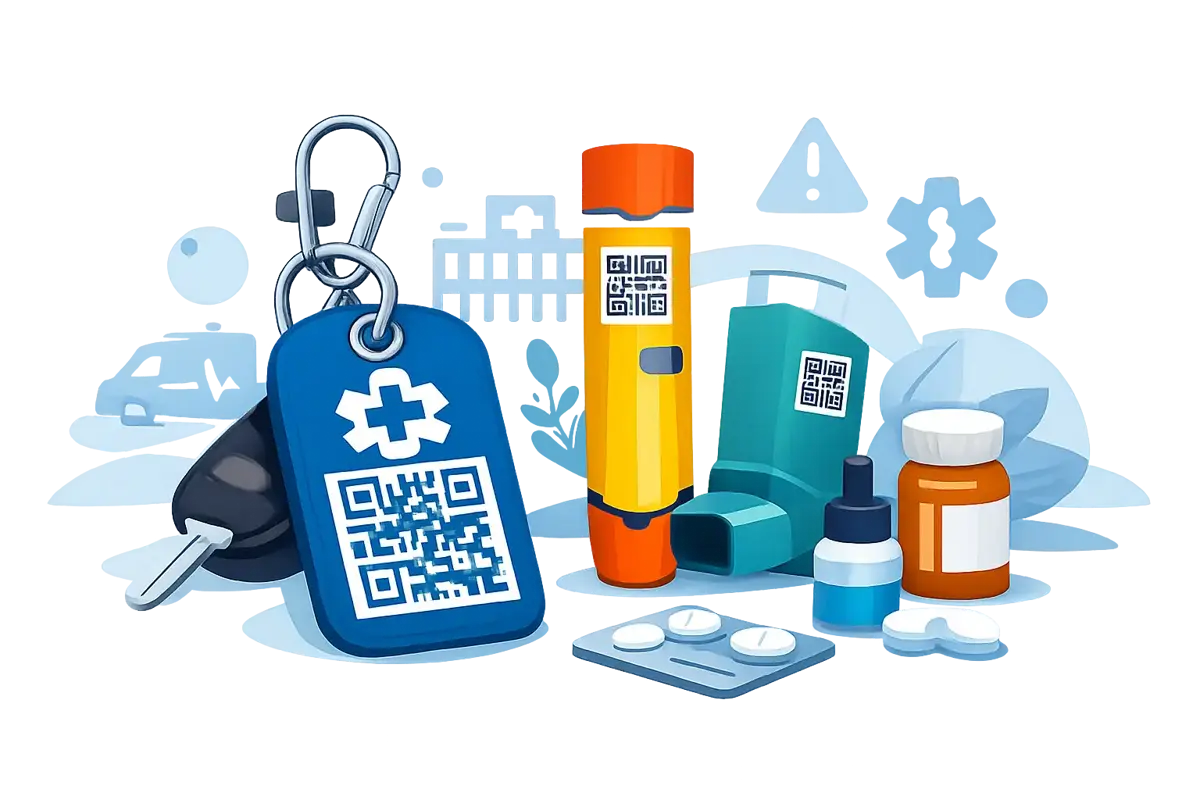
An allergy emergency QR tag is a physical tag, sticker or wearable item linked to an online emergency profile. When someone scans the code with a mobile, they can view the information the tag owner has chosen to make available in an emergency. That may include the allergy type, the risk of anaphylaxis, emergency instructions, and how to contact a parent, partner, carer or other nominated person.
This matters because allergies are often invisible until they become urgent. A child at school camp, a cyclist on the side of the road after a crash, or an adult at a restaurant who suddenly reacts to food may not be able to explain what is happening. In those moments, a tag can bridge the gap between confusion and action.
The best systems do not force a scanner to download an app or sign up for anything. They work instantly through a standard phone camera, because delays defeat the purpose. If the person scanning can call or message a nominated contact immediately, that can make a practical difference fast.
Why speed matters in an allergy emergency
Not every allergic reaction looks dramatic at first. Some begin with hives, swelling or stomach pain, then escalate quickly. Others involve dizziness, wheezing or collapse with very little warning. People nearby might suspect asthma, dehydration or panic unless there is a visible sign pointing them in the right direction.
A medical bracelet still has a role, especially for showing a condition at a glance. But it has limited space. It cannot explain whether the allergy is food-related, medication-related or insect-related, whether the person carries an EpiPen, or who should be contacted first. An allergy emergency QR tag adds depth where a simple engraving cannot.
That does not mean a QR tag replaces established medical identification. It works best as part of a layered approach. A visible tag or wearable can alert people that this is an allergy-related emergency, while the QR profile provides the detail needed to respond more confidently.
Who benefits most from an allergy emergency QR tag
Parents of children with severe allergies are often the first to see the value. School, sport, parties and excursions all involve handovers of responsibility. Even when a child is well supervised, the adult present may not know their full medical history. A scannable tag gives them another way to access instructions and call the right person without searching through bags, paperwork or old text messages.
Adults with known allergies benefit too, especially those who commute, travel, ride, work alone or spend time outdoors. If a reaction happens in a public place, strangers are more likely to help if the next step is obvious. A QR tag removes guesswork.
There is also a strong case for carers supporting older Australians or people with memory loss who also live with allergies. In any situation where the person may not be able to explain their condition under stress, quick-access information becomes more than convenient. It becomes protective.
What information should be included
The most useful allergy profile is clear, short and specific. In an emergency, nobody wants to read a long medical history on a phone screen. They need immediate facts.
At minimum, the profile should identify the allergy or trigger, note whether there is a risk of anaphylaxis, and explain the first action to take. It should also list nominated emergency contacts. If relevant, it can mention where medication is usually carried, such as in a backpack, handbag or jacket pocket.
There is a balance to strike here. Too little information creates uncertainty, but too much can bury the essentials. A well-set-up profile focuses on what a stranger or responder needs right now, not every detail the family knows.
Privacy matters as well. Many people do not want their personal mobile number or home address printed on a public tag, especially one attached to a child, bag or wearable item. A privacy-first QR system solves that problem by letting someone scan and connect without exposing those details to everyone who sees the tag.
Where to use an allergy emergency QR tag
Wearable use is the obvious choice, but it is not the only one. For children, a tag on a school bag, lunch bag or sports kit can be valuable because those items are often close by when an incident happens. For adults, a tag on a keyring, wallet, helmet or phone case can make the information easier to find.
Placement depends on the risk scenario. A cyclist with a bee sting allergy might want the tag on a helmet. A child with nut anaphylaxis may need it on a backpack or wearable tag used every day. A traveller with serious medication allergies may choose luggage and a wallet tag as backup.
The practical rule is simple. Put the tag where another person is likely to notice it quickly, even if the owner cannot point to it.
What to look for in the right solution
Not all QR tags are equal, and this is one category where convenience should never come at the expense of reliability. The tag needs to be durable, easy to scan and simple to set up. If activation takes ages or the platform is confusing, many people will leave the profile incomplete, which weakens its usefulness when it counts.
A good allergy emergency QR tag should work without an app, support fast contact routing and keep personal numbers private. Weather resistance matters if the tag is worn outside, attached to bags or used on helmets. So does long-term service. Emergency information is not something people want to rebuild every year from scratch.
It is also worth checking how easy it is to update the profile. Allergies can change, medication advice can be revised, and emergency contacts often need to be updated. A system that can be adjusted online in minutes is far more practical than one that locks information in place.
This is where ContactMeTag fits naturally for Australian families who want something straightforward and ready for real life - a physical tag backed by quick setup, privacy-first contact routing and durable local manufacturing.
Allergy emergency QR tag versus traditional medical ID
This is not an either-or decision for most people. Traditional medical IDs are still useful because they are immediately visible and do not depend on someone choosing to scan. They can say “Anaphylaxis” or “Severe allergy” in plain sight, which is powerful in a crisis.
A QR tag adds the next layer. It can provide the details that do not fit on a bracelet or pendant and connect the scanner to someone who knows the person’s medical needs. That combination is often stronger than relying on either tool alone.
The trade-off is that a QR tag depends on a person nearby recognising it and using their mobile. In Australia, that is usually not a big barrier, but it is still worth acknowledging. The smartest setup keeps emergency information visible and scannable, not hidden away in one place.
Setup should take minutes, not effort
For a safety tool to work, it has to be easy enough to finish properly. The ideal setup is simple: activate the tag online, add emergency details, nominate contacts, and place the tag where it will be seen. After that, review the information every so often, especially before school terms, travel, camps or major routine changes.
If you are setting one up for a child, think through a real scenario. Who should be contacted first during school hours? Where is the adrenaline injector carried? What wording would make sense to a teacher, coach or stranger under pressure? That exercise usually reveals which details matter most.
The aim is not to create a perfect medical record. It is to create a fast, usable path to action.
When someone cannot explain what is wrong, even a small delay feels big. An allergy emergency QR tag gives other people a clearer way to help, and that kind of preparedness is often what turns panic into action.