Medical ID That Speaks When You Cannot Respond
By ContactMeTag · · 6 min read
A medical ID is easy to overlook - right up until a fall, allergic reaction, road crash or sudden illness leaves you unable to explain what responders need to know. In those first minutes, clear information can help a stranger, paramedic or hospital team make safer decisions and contact the people who need to be there.
For many Australians, a medical ID is not about expecting the worst. It is a practical layer of preparedness: a visible way to say, “Here is what matters if I cannot speak for myself.”
What a medical ID should do
A useful medical ID needs to be easy to find, quick to understand and available without relying on someone knowing your mobile passcode. Traditional engraved bracelets and wallet cards can still help, particularly for a person with a serious allergy, diabetes, epilepsy, a heart condition or an implanted medical device.
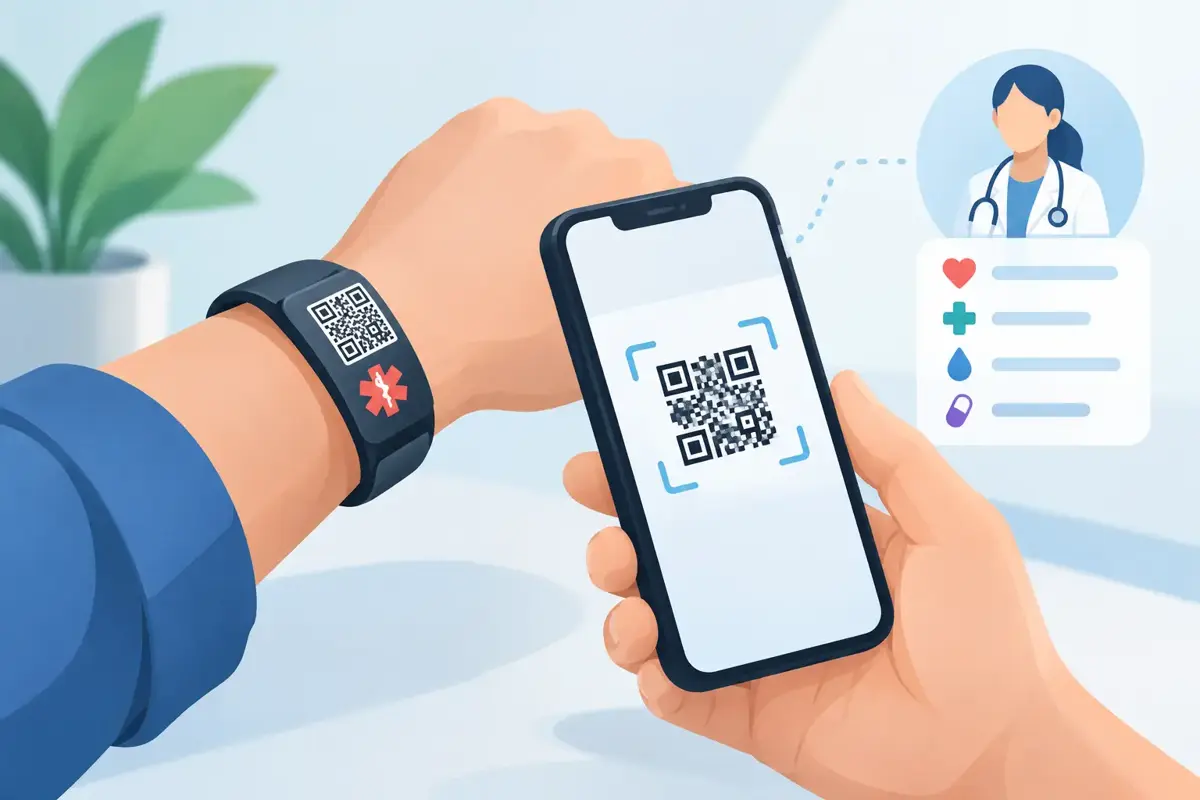
But space is limited. A bracelet cannot carry every detail, and a card can be lost, damaged or missed in an emergency. That is where a QR-enabled medical ID can add another level of support. A person scans the code with their mobile camera and is directed to the information and contacts you have chosen to make available.
The best approach depends on your needs. Someone managing anaphylaxis may need a highly visible alert about allergens and an adrenaline injector. A person living with dementia may benefit most from immediate access to family contacts if they become disoriented. A motorcyclist may want a helmet tag that lets first responders reach their nominated contact without displaying a personal phone number in public.
The aim is not to create a complete medical record. It is to make essential information and the right people reachable when time, stress and uncertainty are working against everyone.
What information belongs on a medical ID?
Keep it short, current and relevant to emergency care. A responder needs the facts that could change what happens next, not a life history. If your medical situation is complex, speak with your GP or treating team about what information is most useful to carry.
Your medical ID may include:
- Your full name and date of birth, if you are comfortable sharing them.
- Serious allergies, especially to medicines, foods, latex or insect stings.
- Major conditions such as diabetes, epilepsy, asthma, heart disease or dementia.
- Critical medicines or treatments, including insulin, blood thinners or an adrenaline injector.
- A nominated emergency contact, plus a second contact where possible.
- Useful care instructions, such as communication needs, a preferred hospital or the location of essential medication.
Avoid vague notes such as “medical issues” or “takes medication”. They do not tell a responder what action may be required. Equally, avoid overcrowding the profile with every past diagnosis, routine prescription or private detail. More information is not always better if it hides the urgent facts.
If you use a digital profile, review it after a diagnosis, medication change, new allergy or change in emergency contact. An out-of-date medical ID can create confusion at the very moment it is meant to help.
Why contact access matters as much as health information
Medical information is only one part of an emergency. Families often need to know where someone has been taken, whether a child needs collecting, who can care for a pet, or where spare medication can be found. When an accident happens away from home, those practical details matter quickly.
A QR medical ID can bridge that gap by giving a finder or responder a direct way to call or message nominated contacts. With ContactMeTag, the scanner does not need to download an app or create an account. They scan, choose how to make contact and the owner’s private number remains masked.
That privacy protection is particularly useful for wearable tags, helmets, bags and wallets. You want help to be one scan away, but you do not want your phone number printed where anyone can photograph, copy or misuse it.
It also helps in situations that are not strictly medical. A child separated from family at a busy event, an older person who has wandered, or a traveller whose bag has gone missing may not be able to make a call themselves. A clear contact route gives the person who finds them a simple next step.
Where should you keep your medical ID?
Visibility matters. In a serious incident, a medical ID hidden at the bottom of a backpack may not be found until much later. Wearable IDs are often the strongest option for conditions where urgent treatment decisions are likely.
A bracelet, watch band tag or necklace can work well for everyday wear. If you ride, a weatherproof tag on your helmet adds a contact point that is easy to locate after a crash. For children, a tag on a school bag can be useful, though it should complement rather than replace age-appropriate safety planning.
It is sensible to use more than one location when the risk or routine calls for it. For example, a person with severe allergies may wear a medical ID and keep an additional QR tag on their medication pouch. A driver with a complex health condition may wear an ID while also keeping emergency contact details visible in their vehicle.
Choose durable materials designed for the environment. A tag exposed to rain, sun, salt air, dirt or daily knocks needs to remain scannable. Check it from time to time with a different mobile phone. A QR code that cannot be scanned is no help when every second counts.
Do not rely on a medical ID alone
A medical ID supports emergency response, but it does not replace calling Triple Zero (000), carrying prescribed medication, following a care plan or seeking medical advice. If someone is unconscious, struggling to breathe, having a seizure, experiencing chest pain or showing signs of anaphylaxis, call 000 immediately.
For children and people who need additional support, make sure family members, carers, teachers and regular companions know what the ID is for and where it is kept. A tag works best when it sits within a wider plan: medication is accessible, emergency contacts are current, and the people around you know the basics.
There is also a privacy trade-off to consider. The more details you make publicly viewable, the more useful the profile may be to a responder - but the more personal information you are sharing. A privacy-first setup lets you keep public details brief while still allowing a trusted contact to be reached quickly. Consider what a stranger genuinely needs to know before you publish it.
Set up your medical ID before you need it
Do not wait until travel day, a new diagnosis or the next family outing. Set aside ten minutes at home, when you can think clearly. Add the essential information, nominate reliable contacts and ask those contacts whether they are happy to receive emergency calls or messages.
Then test the experience. Scan the tag yourself. Check that names are spelled correctly, contact methods work and instructions are easy to read on a mobile screen. If you have changed your phone number, moved house or started seeing a new specialist, review your details again.
A medical ID is a small item with a serious job. When you cannot speak, it can give another person the confidence to act, the information to respond appropriately and the means to reach someone who cares. Put it where it can be found, keep it current and let every scan count.