Keyring QR Contact Tag: Small Tag, Faster Help
By ContactMeTag · · 6 min read
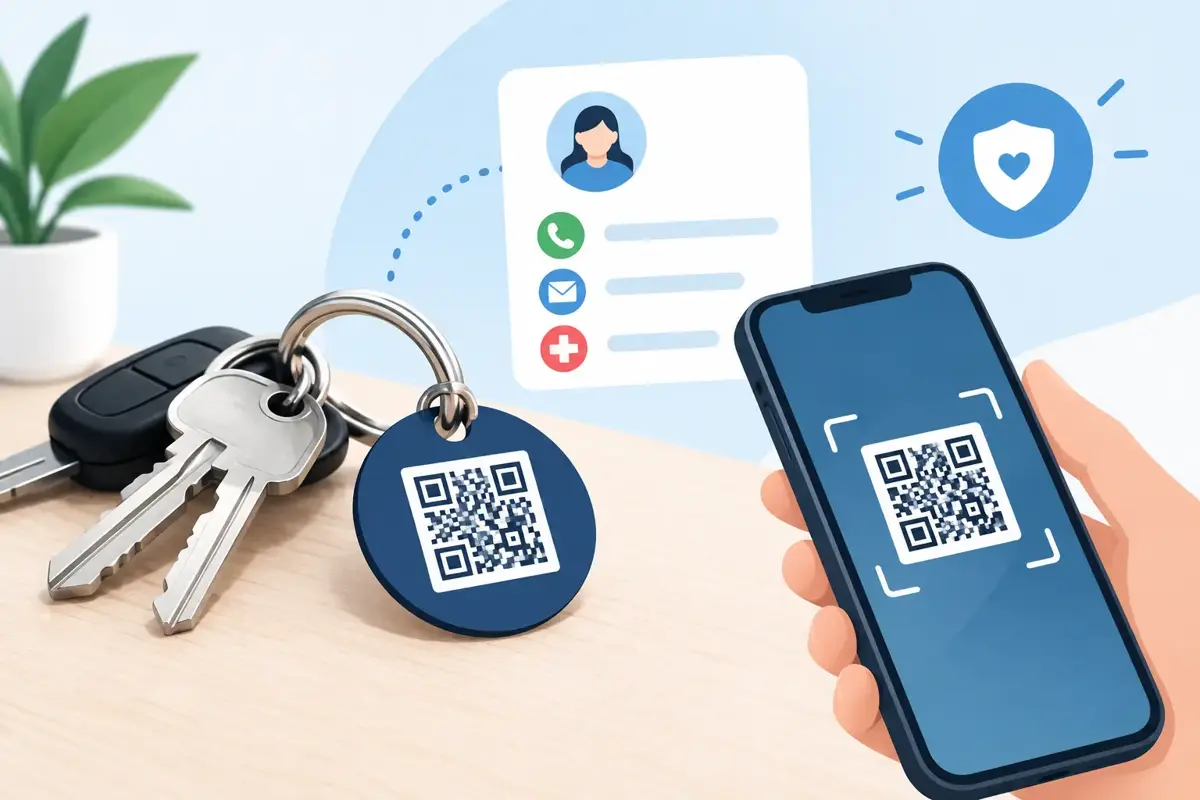
Your keys are often the first thing a helpful stranger finds after a bag is left in a cafe, a wallet goes missing, or a vehicle key is dropped at the servo. A keyring QR contact tag turns that small moment of uncertainty into a clear next step: scan the code and contact the right person without needing to see their private mobile number.
That matters because most lost property is not truly gone forever. It is simply sitting with someone who wants to help but has no safe or easy way to identify the owner. In an emergency, the same problem becomes more urgent. If you cannot speak for yourself, your keyring can help direct a responder, bystander or Good Samaritan to the people who need to know.
What a keyring QR contact tag does
A QR contact tag is a durable tag attached to your keyring. When someone scans it with the camera on their mobile, they are taken to a contact page where they can call or message you, or reach your nominated emergency contacts, depending on how you have set it up.
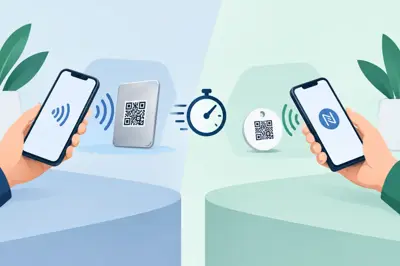
There is no app for the scanner to download and no complicated process to explain. The person scanning only needs a camera on their mobile and an internet connection. That simplicity is the point. A tag is useful only when an ordinary person can use it quickly, under pressure, without instructions.
Unlike writing your name and phone number on a key label, a properly designed QR contact tag can keep personal details private. Your number is not displayed on the tag for anyone to photograph or copy. Instead, the scan creates a safer route for legitimate contact when it is needed.
Why keys are one of the best places for a QR contact tag
Keys travel everywhere. House keys, car keys, office passes, garage remotes and storage keys tend to live on the same ring, making a keyring tag one of the most practical everyday safety tools you can carry.
Consider the common scenarios. Your child leaves their school bag on the train with the house keys inside. A traveller drops their hire-car keys near a lookout. A cyclist loses a keyring on the footpath after a fall. A neighbour finds keys near your holiday home but has no idea who to call. In each case, a scan can move the situation from guesswork to contact within moments.
It is also useful for people who may be more vulnerable when away from home. Older Australians, people living with dementia, teenagers travelling independently and people managing allergies or medical conditions can carry emergency contact access without wearing a public-facing card full of private information.
A keyring is not a replacement for a medical ID where medical information must be immediately visible to paramedics. It is, however, a strong extra layer for getting family, carers or nominated contacts involved quickly.
What should happen after someone scans
The best tag experience is direct. A finder scans, sees a clear action screen and chooses whether to call or send a message. They should not need to create an account, search for your details or hand over their own personal information just to do the right thing.
For the owner, the process should be equally straightforward. You activate the tag online, add the contacts you want available and keep them current. If your circumstances change, such as a new mobile number, a new carer or a different emergency contact, you update the details connected to the tag rather than replacing the physical tag.
ContactMeTag is designed around this practical contact-routing approach. The physical tag stays on your keyring while the contact details behind it can be managed online, helping keep private numbers masked from public view.
Choosing a tag that will cope with real life
A keyring tag spends its life in pockets, handbags, work bags, glove boxes and on benchtops. It may be knocked against keys, exposed to rain, left in a hot car or dropped in the driveway. A paper label or cheap printed sticker can quickly become unreadable.
Look for a tag made for daily use, with a QR code that remains sharp and scannable after regular handling. Weatherproof materials matter, particularly if your keys are attached to a ute, motorcycle, boat, caravan or outdoor storage shed. The tag should also be compact enough not to become annoying in a pocket, while still being easy for a finder to notice.
Privacy deserves the same attention as durability. A QR code should help people contact you without placing your full name, home address or mobile number in plain sight. This is especially relevant for house keys. If keys are lost near your home, you do not want a tag to reveal exactly where those keys belong.
There is a trade-off to consider. A tag that says too little may be overlooked, while a tag that displays too much can create a privacy risk. The practical middle ground is a clearly marked QR emergency or contact tag that explains its purpose but protects the details behind the scan.
Set it up before you need it
The value of a QR tag depends on the information being ready when a scan happens. Set aside a few minutes when the tag arrives and complete activation straight away. Leaving it in a drawer until later defeats the purpose.
Start by choosing your primary contact. This is usually your own mobile for lost-property situations. Then add one or more nominated emergency contacts who are likely to answer their phones and understand what to do if they receive an urgent call.
For a family keyring, it can help to nominate two adults. For an older parent, include a close relative and a regular carer. For a teenager, make sure the contacts know that a message about a scanned tag could mean lost keys, a delayed trip home or an incident requiring quick attention.
Before attaching the tag permanently, scan it yourself. Check that the contact options are correct and easy to use from another mobile. Ask a family member to test it too. This small check can reveal an old number, a spelling error or a contact who is rarely reachable.
Review the details every few months, and always after a change in family circumstances. A QR tag is only as useful as the person at the other end of the call.
Make your whole household easier to reach
One keyring QR contact tag is a smart starting point, but different items create different contact problems. Keys can be returned through a scan, while a lost wallet, school bag, helmet or piece of luggage may need its own tag because it can become separated from the keyring.
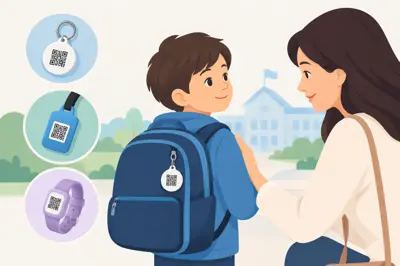
Think through the items that leave home most often and the people who rely on them. A child may need a tag on their school bag. A pet owner may need one on a collar. A motorcyclist may keep one on a helmet, while a traveller might place tags on luggage and a passport wallet. The goal is not to tag everything for the sake of it. It is to put a fast contact path where an unexpected separation would cause real stress.
For households with spare keys, be deliberate. A keyring for a holiday house, workshop or caravan may need different nominated contacts from your everyday house keys. Someone local may be able to check a property faster than a family member who lives interstate.
A small tag that helps people act
People are more likely to help when the next step is obvious. A QR tag removes the awkwardness of wondering whether to hand keys into a police station, leave them at a cafe counter or try to find the owner through social media. It gives the finder a direct, privacy-conscious option while giving you a better chance of getting important items back.
Keep your tag visible, your contacts current and your keyring with you. When something goes wrong, the person holding your keys should not have to guess what to do next.