A Guide to Family Emergency Preparedness
By ContactMeTag · · 6 min read
The power goes out at 8:40 pm. One child is at sport, another is at a friend’s place, your mobile battery is low, and the street is suddenly dark and noisy. That is exactly when a guide to family emergency preparedness stops being a good idea and starts being the plan that keeps everyone calm, contactable and moving in the same direction.
Most families do not need a complicated emergency system. They need one that works under pressure, makes sense to every person in the household, and does not rely on perfect memory. The best plans are simple, visible and practised. If something goes wrong, every minute matters. Confusion wastes time.
What family emergency preparedness really means
A good guide to family emergency preparedness is not about expecting the worst every day. It is about reducing friction when something unexpected happens. That could be a storm, bushfire warning, medical episode, car accident, lost child at a busy event, break-in, house fire, or even a simple missed pick-up that turns stressful fast.
Preparedness means your household knows three things without needing to think too hard. First, where to go. Second, who to contact. Third, what to take. If those three answers are clear, people make better decisions under stress.
The trade-off is that every family’s plan will look a little different. A household with young children needs clear adult roles and simple instructions. A family with teenagers needs backup communication rules because plans change quickly. If you care for an older parent, someone with dementia, or a child with allergies or asthma, your emergency planning needs to cover identity, medical needs and fast contact as well as evacuation.
Start with the emergencies most likely to affect your family
Preparedness works best when it reflects real life. In Australia, that often means planning for extreme weather, bushfire risk, flood alerts, heatwaves, blackouts and road incidents. But the smaller, everyday emergencies matter too. A child can be separated in a shopping centre. A wallet can go missing. A car can break down on a regional road. A pet can slip through an open gate.
Think through your household week as it actually runs. Who drives where? Who catches public transport? Who has keys? Who has medication? Which family members are often out alone? You are looking for weak spots in contact and response, not trying to create fear.
One practical way to do this is to walk room by room and routine by routine. At home, check exits, smoke alarms, torches and where vital documents are kept. For school and sport, check pick-up arrangements and emergency contacts. In the car, think about roadside breakdowns, crashes and who should be called if the driver cannot speak.
Build a family plan everyone can follow
A plan is only useful if the whole household can remember it. That means keeping it short and specific. Choose one meeting point just outside the home and one outside your immediate area in case the street is blocked or evacuation is required. Make sure children know both places by name, not just by description.
Decide who your out-of-area contact is. This matters because local networks can become congested. A grandparent, sibling or close friend in another suburb or region can help relay messages when people are scattered. Every family member old enough to use a mobile should know that person’s number or have it stored in more than one place.
Then assign roles. One adult might be responsible for children, another for medications and documents, another for pets. If there is only one adult in the household, simplify the plan even further. Prioritise life safety first, then communication, then possessions.
Children need direct language. Instead of saying, “If something happens, stay calm,” say, “If we get separated, stay where you are and ask a staff member, teacher or police officer to call Mum, Dad or your emergency contact.” Specific instructions are easier to act on.
Your emergency kit should match your real risks
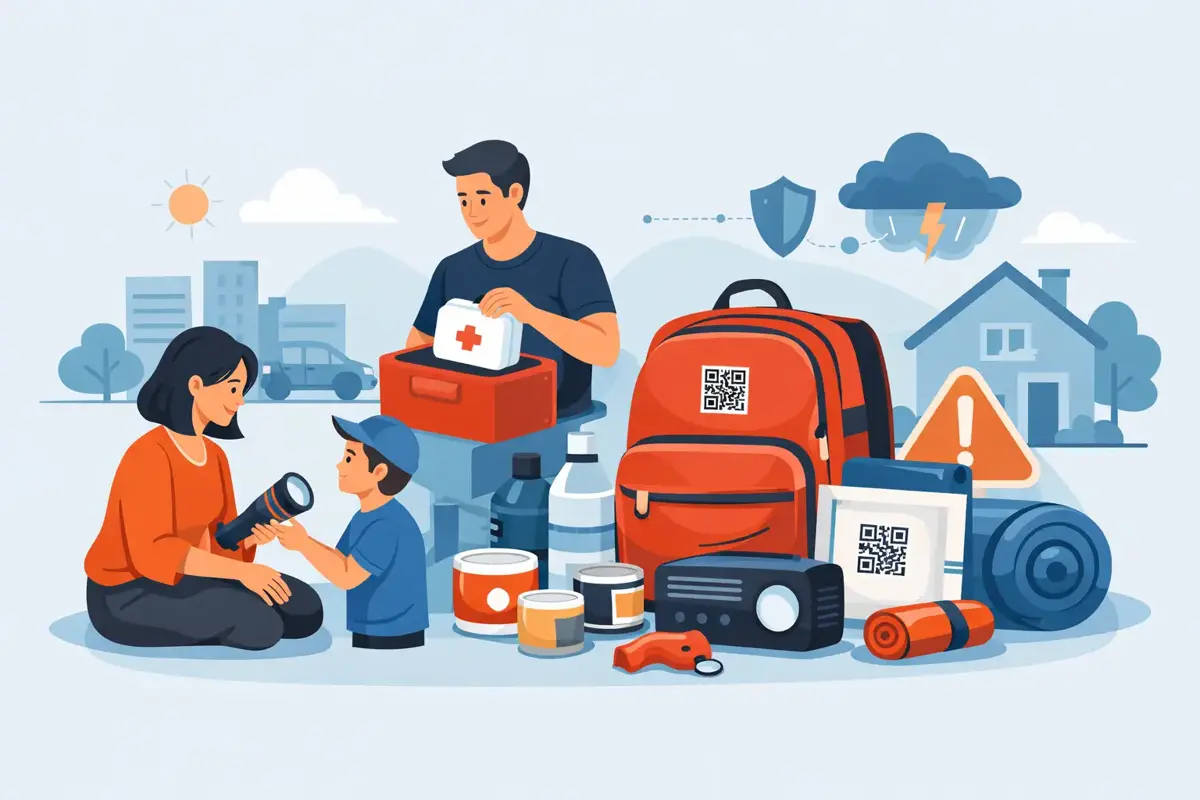
Every household should have a basic emergency kit, but it does not need to be overdone. Water, non-perishable food, a torch, spare batteries, power bank, first aid kit, medications, copies of key documents, pet supplies, and basic hygiene items cover most situations. If you live in a bushfire or flood-prone area, your kit may need masks, protective clothing, extra water and a battery radio.
The common mistake is building a kit once and forgetting it. Batteries go flat, snacks expire, children outgrow clothing, and medications change. Review it every few months, ideally at the start of each season. Keep one main kit at home and a smaller version in the car. If you spend long hours on the road or travel regionally, a stronger vehicle kit is worth it.
It also helps to think beyond the obvious. If someone in the family wears glasses, keep a spare pair. If a child relies on a comfort item, pack one. In an emergency, emotional regulation matters too. A calm child is easier to move and protect.
Communication is the part families overlook most
In many emergencies, the biggest problem is not access to supplies. It is getting the right person contacted quickly. If a parent is injured in a crash, if a child is found alone, if a pet is picked up by a neighbour, or if a bag with essential items is misplaced, speed matters. So does privacy.
That is where a layered contact system makes a real difference. Family members should carry emergency details in a way others can access instantly without exposing private information unnecessarily. A handwritten note in a school bag can help, but it has limits. It can be lost, damaged or out of date.
A smarter option is a system that lets a finder, bystander or responder scan and reach the right person straight away. For Australian families, that can mean placing QR contact tags on school bags, helmets, keyrings, luggage, vehicles or even around the home where urgent access may be needed. ContactMeTag is designed for exactly this kind of moment - when you cannot speak, your QR code speaks.
The benefit is practical, not technical. A scan can connect the person on the scene with the owner or emergency contacts without displaying personal phone numbers publicly. That is useful in a road emergency, but also in the everyday incidents families deal with all the time - lost property, wandering children, unattended holiday homes, pets escaping, or carers needing fast contact.
Make the plan visible, not just discussed
Many households talk about emergencies once and assume that is enough. It is not. Under stress, people forget. Put key instructions somewhere visible, such as inside a pantry door, near the front entrance or in a family folder. Keep contact details current. If school pick-up permissions change or a medical condition is updated, your emergency information should change too.
This matters even more for blended families, separated parents and shared care arrangements. If children move between households, both homes need aligned emergency instructions. If one parent changes mobile numbers, old details can create dangerous delays.
A quick household drill once or twice a year is usually enough. Walk through what happens if there is a fire at night, a blackout, or a sudden need to leave the house. Keep it calm and matter-of-fact. The goal is familiarity, not fear.
Include the situations that feel too minor to plan for
Family emergency preparedness is often framed around major disasters, but everyday disruptions are where many families feel most exposed. The child who misses the bus stop. The teen whose phone dies after training. The older parent who becomes disoriented on a walk. The suitcase that goes missing on holiday with medications inside. These are not dramatic scenarios, but they can escalate quickly if nobody can make contact.
That is why the best preparedness plans do two jobs at once. They cover high-impact emergencies and low-level situations that still need immediate action. The more your system works in ordinary life, the more likely it will work in a real crisis.
There is no perfect family plan. Ages change, routines shift, and risks vary depending on where you live and how you travel. What matters is having a simple setup that gives people clear next steps and a fast way to reach the right contact when time is tight.
Preparedness is not about trying to control everything. It is about making sure your family is easier to help when help is needed most.