Family Safety Technology for Everyday Emergencies
By ContactMeTag · · 7 min read
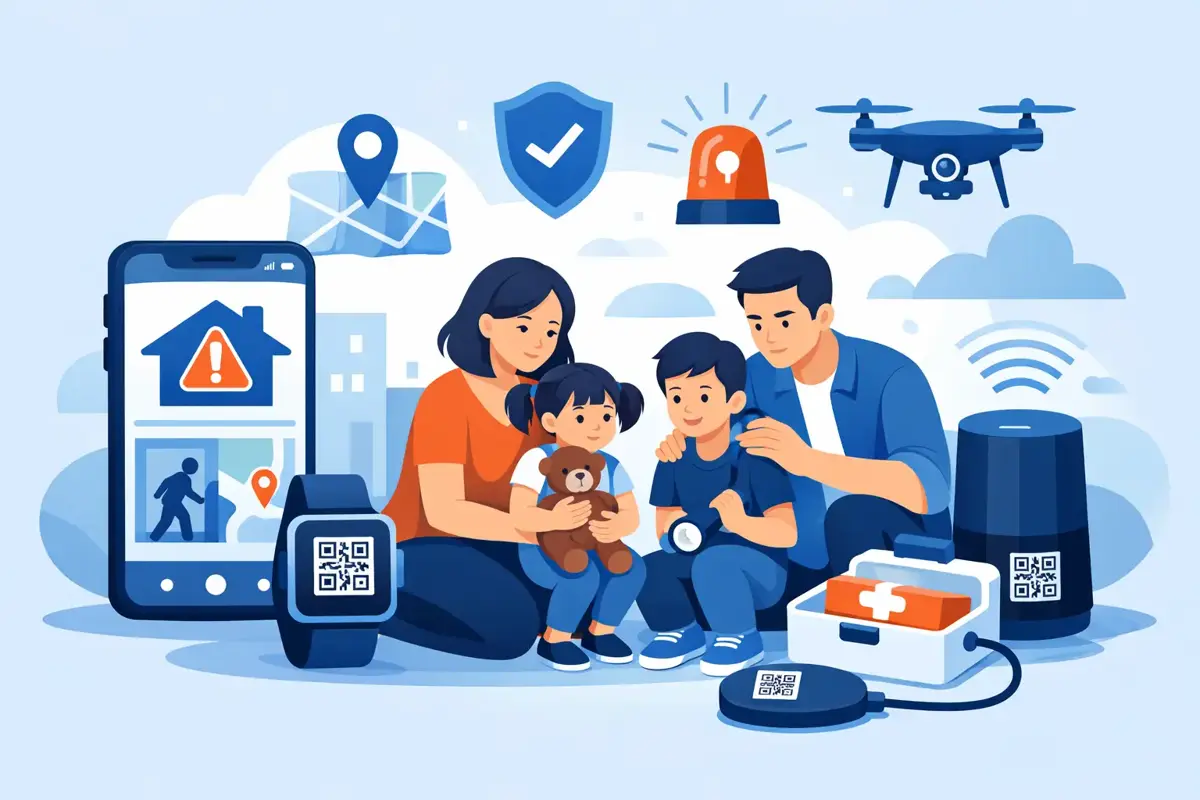
A child gets off at the wrong bus stop. A wallet is left behind at a café. Mum has a medical episode while out walking the dog. These are not dramatic hypotheticals - they are ordinary moments when family safety technology can turn confusion into quick, practical action. The right tools do not replace care or common sense. They make it easier for the right person to be contacted when someone needs help.
For most Australian families, safety technology works best when it is simple enough to use every day and ready when nobody has time to troubleshoot. A scanner should not need to download an app. A finder should not need to search social media. And private mobile numbers should not need to be printed on a school bag, helmet or set of keys.
What family safety technology should do
Safety products are often judged by the number of features they offer. In a real emergency, the better question is simpler: can this help someone take the next useful step immediately?
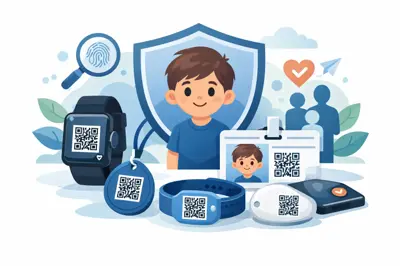
For a family, that might mean a QR tag on a child’s bag that lets a teacher or Good Samaritan reach a parent. It could mean an emergency contact tag in a vehicle, so responders can contact a nominated person after an accident. It may be an ID tag for an older relative living with dementia, or a luggage tag that helps a stranger return a bag before a holiday is derailed.
The strongest systems do three things well. They make contact fast, protect personal information, and work in situations where the owner cannot explain what has happened. That last point matters. A lost phone, a flat battery, stress, injury or confusion can make even a well-organised family difficult to reach.
Fast contact without public personal details
Writing a mobile number on a child’s belongings may feel practical, but it exposes that number to anyone who sees it. The same problem applies to pet collars, keys, luggage and bike helmets. Privacy is not an extra feature when family details are involved. It is part of sensible preparation.
A privacy-first QR contact tag can display a clear instruction to scan, then route a call or message to the owner or nominated emergency contact without showing their number to the scanner. The person who finds the item or needs to help does not need an account or a special app. They use their phone camera, scan the code and follow the prompt.
That design removes friction at the moment it matters. A stranger who finds a school bag in a park is more likely to scan a visible tag than to wait for a response to a vague social media post. A responder at a roadside incident can access emergency contact options without digging through a locked mobile. A neighbour can alert a holiday-home owner to a problem before water damage, an open gate or a security concern gets worse.
There are trade-offs. QR technology depends on a smartphone with a camera and an internet connection, so it should support, not replace, emergency services information, medical identification or a family communication plan. For serious or life-threatening situations, call Triple Zero (000) first. A tag is there to help people make contact once immediate emergency action is underway.
Where QR safety tags make a real difference
The best place for a tag is usually the item that travels with the person, pet or property risk you want to protect. Families often start with one urgent use case, then notice other gaps around the home.
For school-aged children, a tag on a backpack, lunch bag or jacket can help a trusted adult contact a parent if a child is separated during an excursion, sport day or public transport mix-up. It should be positioned where it is easy to spot, rather than hidden inside a pocket.
For drivers, motorcyclists and cyclists, a vehicle or helmet tag can provide a clear route to emergency contacts after an incident. This is particularly useful when a person is unconscious, distressed or unable to access their phone. It does not communicate medical history by itself, so consider pairing it with appropriate medical ID where relevant.
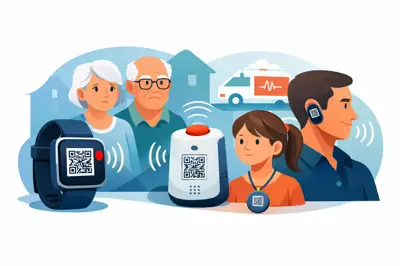
For older family members, wearable or keyring tags can support independence without broadcasting private details. Dementia care is one example. If a person becomes disorientated while out, a finder has a straightforward way to alert family or carers. The tag should be discussed respectfully with the person wherever possible and kept attached to something they genuinely use.
For travellers, tags on luggage, wallets, passport holders and devices can shorten the distance between losing something and getting it back. A name card inside a suitcase may help after it is opened, but an external contact route gives a finder a chance to act before the bag disappears into lost property.
Pet tags solve a similarly urgent problem. A pet may be microchipped, but a passer-by who finds a wandering dog needs an immediate way to reach its owner. A durable QR tag on the collar can make that first contact easier, especially outside council or vet opening hours.
Set up your family contacts before you need them
A safety tag is only as useful as the contact information behind it. Setup should take minutes, but it deserves a little thought. Choose people who are likely to answer their mobile, understand the situation and have permission to act.
Start with one primary contact and at least one backup. Parents often nominate each other, then add a grandparent, close friend or trusted neighbour. For an older relative, a carer or adult child may be the better first contact. Think about school pickup arrangements, travel plans and work hours. The person who is easiest to reach at 2 pm on a weekday may not be the same person who is available on a Saturday morning.
Keep the message clear. If the platform allows a short note, use language a stranger can understand quickly, such as: “Please call if found” or “Emergency contact available by scan.” Avoid adding unnecessary personal details, addresses or medical information to a publicly accessible item.
Check the details every few months, especially after a new mobile number, move, separation, change in care arrangements or overseas trip. A tag with an old number is better than no identification in some cases, but it cannot deliver the fast contact your family expects.
Choose technology that suits real Australian conditions
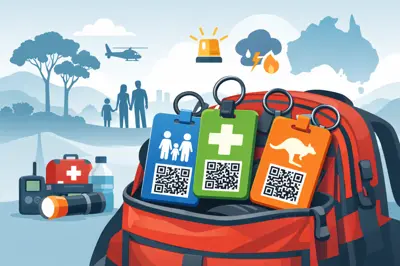
A tag that sits on a ute, bike, school bag or pet collar has to handle more than a neat indoor test. Look for weatherproof materials, strong adhesion or secure fittings, and a code that remains scannable after sun, rain, dust and everyday knocks.
Visibility matters too. A small tag may suit a keyring, while a vehicle emergency tag needs to be placed where a helper can reasonably find it. Do not put it where it interferes with safety equipment, required vehicle markings or a helmet’s structural integrity. For children, avoid placing identifying tags where they can be easily removed or used to reveal a child’s full name.
ContactMeTag combines durable, Australian-made QR tags with masked contact routing, so a scanner can make contact without seeing the private number behind it. The practical value is not the code itself. It is the action it enables when someone needs to help and you cannot speak for yourself.
Build a safety system, not a pile of gadgets
Family safety technology is most effective when each tool has a defined purpose. A location-sharing app may help family members coordinate during a busy day, but it can fail with a flat battery, poor reception or a phone left in a locker. A QR contact tag can work when the item is found but the phone is unavailable. A smoke alarm protects the home differently again. None of these tools does every job.
Talk through a few likely scenarios at home. If a child is separated from the family at a festival, who do they ask for help? If a grandparent feels unwell on a walk, where is their contact tag? If keys go missing, which number should be called? Short, calm conversations make technology more useful because everyone knows what it is for.
Preparedness should feel reassuring, not alarming. Put contact tools on the belongings that matter, keep details current and make sure your family knows that asking a safe adult for help is always the right move. When an unexpected moment arrives, a simple scan can give someone the confidence to act - and give your family a faster path back to each other.