Best Tags for Family Emergency Readiness in Australia
By ContactMeTag · · 7 min read
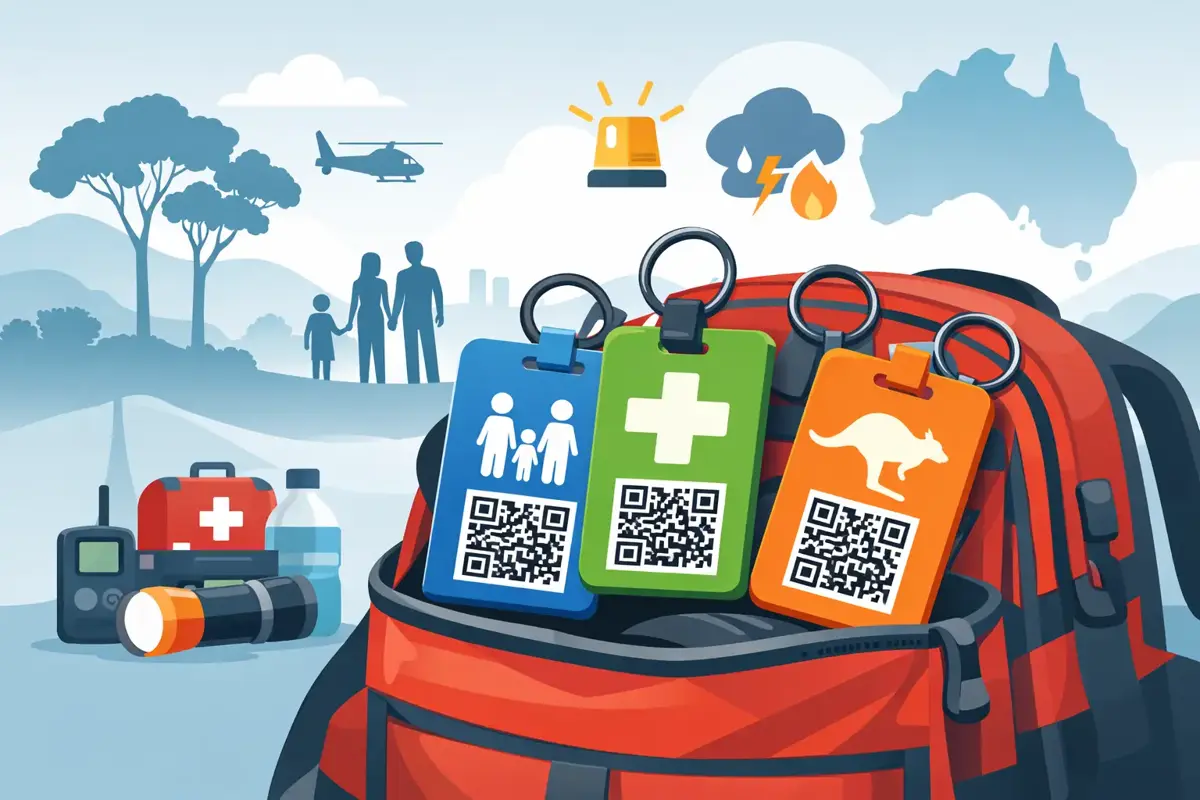
A family emergency rarely gives you time to search through a mobile, unlock a device or remember which relative should be called first. The best tags for family emergency readiness make that first point of contact simple: a person scanning the tag can reach the right person quickly, while your private mobile number stays private.
For Australian families, the most useful tag is not necessarily the smallest or cheapest one. It is the one that is easy to spot, tough enough for where it is placed, and set up with clear contact instructions for the people who may need help. A vehicle crash, a lost school bag, a wandering pet or an urgent medical situation all have different needs. Your tags should reflect that.
What makes the best tags for family emergency readiness?
Emergency tags work best when they remove uncertainty. A Good Samaritan should not have to guess who owns an item, which contact to call, or whether they are exposing someone to risk by using a personal phone number printed in public.
A QR emergency tag gives the finder a clear action: scan the code with a phone camera and follow the contact prompt. There is no app to download, no account for the scanner to create, and no need for them to handle sensitive details. When set up properly, the tag owner or nominated emergency contact can be reached without displaying private phone numbers on the tag itself.
The right tag should meet five practical tests:
- It is highly visible where help is likely to be needed.
- It suits the surface, whether that is a windscreen, helmet, keyring, bag or pet collar.
- It is weatherproof and durable enough for everyday use.
- It routes to current emergency contacts without publishing their details.
- It can be understood in seconds by someone who has never seen it before.
This is why a household often needs more than one type of tag. A slim wallet tag may be ideal for identification and a lost wallet, but it is not the right format for a motorbike helmet exposed to rain and road grime. A bright pet tag needs a secure fitting and clear scan instruction, while a home access tag should be positioned where emergency services or a trusted neighbour can find it without searching.
Visibility matters more than clever placement
A tag hidden inside a backpack may still help recover the bag, but it will not help much if a child is separated from a parent at a busy event. Likewise, a QR tag tucked under a vehicle seat will not help a first responder identify emergency contacts after a serious incident.
Place each tag where a finder would naturally look. On a vehicle, that may be a visible exterior location or an accessible window position. On a school bag, it should be on the outside, not buried behind lunch boxes and jumpers. For a helmet, use a purpose-built surface and position that remains easy to scan. The best placement balances visibility with protection from knocks, sun and water.
Choose tags around real family scenarios
Preparedness becomes much easier when you think in moments rather than products. Walk through a normal week: the school run, the commute, sport training, walking the dog, weekend rides, travel and visits to older relatives. Then consider where a quick contact route would reduce stress.
Vehicles and roadside incidents
A vehicle tag can help emergency responders or bystanders reach nominated contacts when a driver cannot communicate. This can matter after a crash, during a medical event, or if someone needs help but their phone is damaged, flat or out of reach.
Choose a tag made for vehicle conditions, including heat, rain and regular cleaning. Keep emergency contact details current, especially after a change of mobile number, relationship or care arrangement. It is also sensible to nominate more than one contact. A single person may be driving, working in a noisy environment or asleep after a night shift when the call comes through.
A QR tag does not replace calling 000 or following the instructions of emergency services. It helps make family contact faster once immediate safety has been addressed.
Children, school bags and after-school activities
Children are often surrounded by adults who want to help, but they may be too nervous to explain where they live or which number to call. A clearly marked bag tag, wearable tag or keyring tag gives a teacher, coach, venue staff member or Good Samaritan a direct way to contact a parent or carer.
Keep the setup simple. Use the parent or carer most likely to answer during the day, then add a second trusted adult. Consider the family routine too. If one parent regularly works in areas with poor reception, nominate someone else who can make decisions quickly.
Avoid printing a child’s full name, school, address or personal mobile number on a public tag. The purpose is safe contact, not public identification. Privacy-first contact routing gives a helpful adult a way to reach you without giving strangers unnecessary personal information.
Pets and everyday escapes
Even careful pet owners have gates left ajar, frightened dogs that bolt during storms, or cats that slip out while groceries are being carried in. A collar tag with a scannable emergency contact route can shorten the distance between a finder and home.
For pets, durability and readability are critical. The tag needs to survive water bowls, rain, beach trips and energetic play. It should be attached securely, positioned so it can be scanned without removing it, and linked to a contact who can answer promptly. If your pet has medication needs, anxiety triggers or a vet contact, keep those details available through the profile where appropriate, without overcrowding the physical tag.
Travel, luggage and shared family gear
The family luggage tag is often treated as an address label, which can reveal more than it should. A QR contact tag offers a more private route for a finder to reach you if a suitcase, pram, camera bag or laptop goes missing.
This is especially useful for shared items. A tag on a nappy bag, sports kit or portable medical equipment can connect the finder with the household member best placed to act. Before travelling, check that your nominated contacts are not all on the same flight or holiday itinerary. A contact back home can be a sensible backup.
Select the tag format before you buy
The best tags are made for the job, not forced into it. Start with the item or person you are protecting, then choose the format and material that suit the environment.
For outdoor and high-contact use, look for a hard-wearing, weatherproof tag that will remain readable after sun exposure, rain and repeated handling. Vehicles, helmets, bikes and pet collars need more resilience than a tag carried inside a wallet. For wallets, keys and work bags, a compact tag is less likely to catch or be removed. For a holiday home or property access point, choose a tag that remains noticeable to authorised visitors, neighbours or emergency personnel.
Also consider scanability. A code that is too small, heavily scratched, curled around a surface or covered by a keyring is less useful in a stressful moment. Test it yourself with more than one phone camera after applying or attaching it.
Set up contacts like an emergency plan
A tag is only as useful as the information behind it. Once you activate it, nominate contacts in the order you would want them reached. Tell those people they have been added and confirm they are comfortable receiving calls or messages. A surprised emergency contact can lose valuable minutes trying to work out whether a call is genuine.
Use clear names and relationships, such as “Mum - primary contact” or “Uncle Sam - local backup”, where the platform allows it. Review your details every few months, and always after a move, separation, new school, medical change or changed work roster. If a car is sold, deactivate or update its tag before handing over the keys.
ContactMeTag tags are designed for this everyday reality: a scan can connect a finder with the right person while contact details remain masked. Setup is completed online in minutes, so a family can build a practical network across the items and people that matter most.
Build coverage without creating confusion
You do not need to tag every object in the house. Start with the places where a delay in contact would have the biggest consequence: vehicles, children’s bags, medical items, keys, pets and travel gear. Add home or holiday-property tags if access instructions or urgent contact could prevent a problem from escalating.
Give each tag a purpose. One may route to both parents, another to an adult child and neighbour who support an older relative, and a travel tag may route to the family member managing the itinerary. This avoids sending every alert to everyone, which can create confusion when fast action is needed.
A short family conversation helps too. Show children what the tag is for, explain that it is there to help safe adults contact family, and remind them to seek a teacher, police officer, venue staff member or another trusted adult if they are lost. For older relatives, keep the explanation respectful and practical: when you cannot speak, your QR code speaks.
The strongest emergency plan is the one that still works on an ordinary, messy day. Put the right tag where help can find it, keep the contact details current, and let one simple scan turn uncertainty into action.