Family Emergency Wearables That Speak When You Can’t
By ContactMeTag · · 7 min read
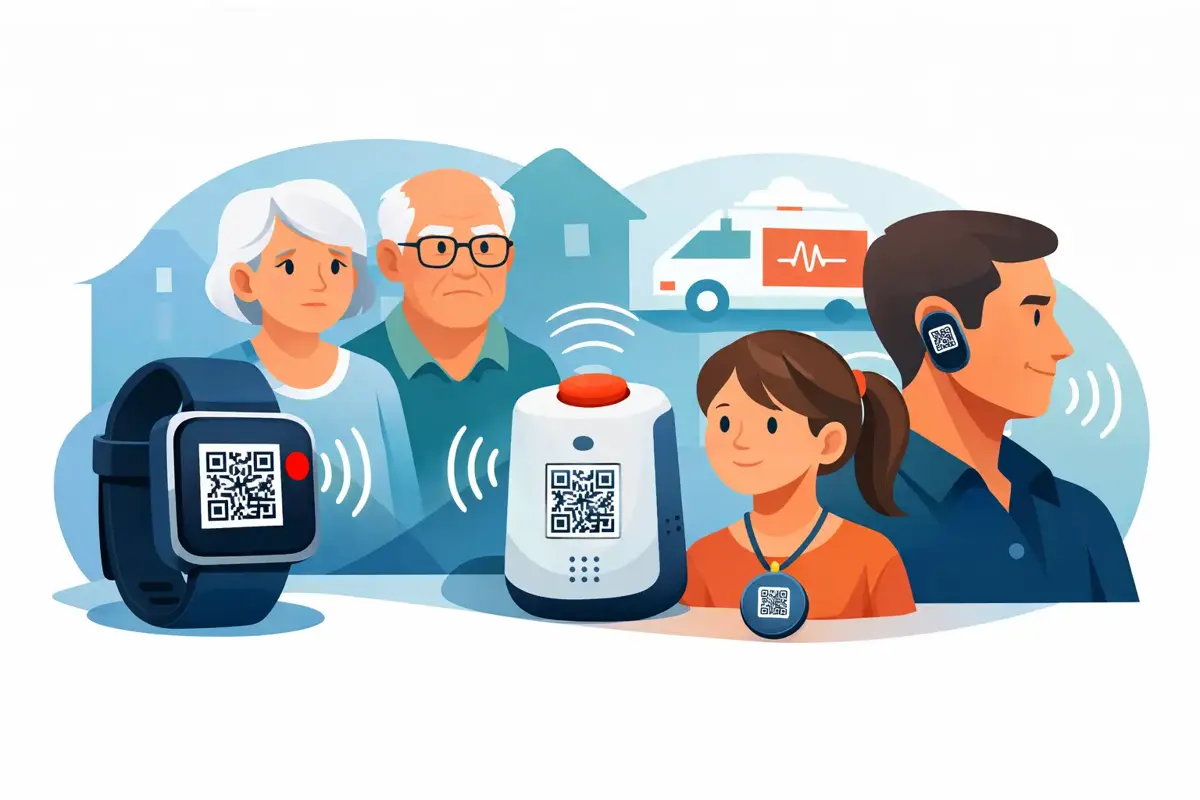
A child is separated from the family at a crowded event. An older parent becomes disoriented on a familiar walk. A cyclist is injured and cannot answer their mobile. In these moments, family emergency wearables can give the person nearby one clear next step: scan, find the right contact and make a call.
That is the value of a wearable safety tag. It does not replace emergency services, medical care or sensible supervision. It gives Good Samaritans, carers and responders a fast way to reach someone who can help when the wearer cannot explain who they are, where they belong or who to call.
What family emergency wearables need to do
A useful emergency wearable has one job: reduce delay. It should be visible enough to be found, simple enough for a stranger to use and reliable enough for the situations your family actually faces.
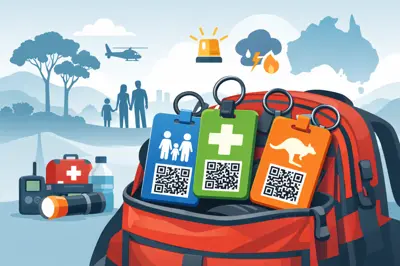
For most households, the best option is a durable wearable tag carrying a QR code. When scanned with a mobile camera, the code can direct the scanner to contact details or emergency instructions set up by the family. No app download should be required. A person who has stopped to help should not need to create an account, search through a complicated menu or guess which number matters.
Privacy matters just as much as speed. Printing a parent’s name and mobile number on a child’s wristband may appear straightforward, but those details are visible to anyone. A privacy-first QR tag can keep personal numbers masked while still allowing a call or message to reach the nominated contact. The helper gets a way to act. Your family keeps control of sensitive information.
The physical tag also needs to suit its environment. A school bag tag may be protected by the bag itself, while a wrist or helmet tag faces sweat, rain, sunscreen, sand and daily knocks. Choose weatherproof material, clear print and a secure attachment that will not become uncomfortable or easy to lose.
Who benefits most from a wearable safety tag?
Family emergency wearables are not only for one type of household. They are most valuable where a small delay in contacting the right person can turn a manageable situation into a stressful one.
School-aged children
Young children may know their first name but freeze when asked for a parent’s phone number. Older children can be independent and capable, yet still need a backup plan for excursions, sport, shopping centres or the trip home from school.
A discreet wearable tag gives a child a simple instruction: if you need help, show this to a safe adult. For the adult, the action is equally clear. Scan the code and contact Mum, Dad, a grandparent or another trusted person. This can be more practical than relying on a handwritten note that becomes unreadable, or a phone that is flat, misplaced or locked.
It is worth discussing when the tag should be used. Teach children to seek a teacher, police officer, event staff member, shop employee or another appropriate adult first. The wearable provides contact access, but it works best alongside calm, age-appropriate safety habits.
Older relatives and dementia care
For families supporting someone living with dementia, confusion can happen close to home as well as away from it. A person may leave for a regular walk and become unsure of their route, or be unable to tell a helpful stranger who to contact.
A wearable QR tag can make identification and contact faster without asking the wearer to navigate a mobile, remember numbers or carry paperwork. Set up more than one nominated contact where possible. If the first person is at work, driving or unavailable, another family member or carer can respond.
The trade-off is visibility. A tag needs to be easy for a helper to spot, but some people may not want a prominent medical-style item. In that case, consider a familiar everyday accessory or attach the tag to something consistently worn, such as a watch band. The most effective solution is the one the person will actually keep with them.
Active families, riders and travellers
A wearable can also support family members who are often on the move. Think of a teenager on a bike ride, a motorcyclist on a weekend trip, a runner training before sunrise or a traveller moving between airports with bags in hand.
If an accident occurs, a mobile may be damaged, locked or out of reach. An emergency contact tag worn on a helmet, wristband or personal gear gives responders and bystanders another path to a family contact. For travel, it can also help when a child is separated from the group or a bag is left behind.
Do not treat the tag as a replacement for a medical ID if a clinician has advised one, particularly for serious allergies, diabetes or complex conditions. Instead, use it as an additional communication layer. Keep medical details brief, accurate and appropriate for a stranger to see, and ensure emergency contacts know the wearer’s relevant needs.
Set it up for the moment you hope never comes
The technology is simple. The preparation deserves a little more thought. A QR emergency wearable only works as well as the contacts and instructions behind it.
Start by choosing who should receive the first call. This is usually a parent, partner or primary carer who can answer most of the time. Then add backup contacts who live nearby, understand the situation and have agreed to be contacted. A grandparent may be ideal for school pickup. A neighbour might be more useful if you are away for the weekend.
Keep the information practical. A helper may need to know the wearer’s name, an emergency contact and a short instruction such as, “Please call my family.” For a person with a medical condition, include only details that support immediate care or communication. Avoid placing a full medical history, home routine or unnecessary personal data into a profile.
Test the process before relying on it. Scan the code using a different mobile and check that the contact routing works as expected. Ask a nominated contact whether they can recognise and respond to the incoming call or message. A five-minute test can reveal an old number, a missed notification setting or a contact who is no longer the right person for the role.
Finally, make the wearable part of a routine. Put it on before school, sport, a day out or a walk. For an older relative, build it into the same habit as taking keys or wearing glasses. Safety tools only help when they are there at the right time.
The details that make a real difference
Not all QR tags are designed for family emergencies. A code that only displays a public webpage is not enough if a worried finder needs to make immediate contact. Look for a system that lets the scanner call or message without exposing your private mobile number, and one that works from an ordinary phone camera.
ContactMeTag combines a physical QR tag with contact routing designed for these real-world moments. The scanner can reach the nominated person quickly, while your number remains private. That balance is especially useful for children, vulnerable relatives and families who do not want personal details openly printed on a wearable.
Durability should also influence your choice. Children pull at straps. Outdoor gear gets wet. Tags used near the beach or on a bike can be exposed to sun and grit. A low-cost tag that fades, cracks or detaches quickly may offer false reassurance. Match the product and attachment method to the wearer’s age, activities and comfort.
There is also a human factor. A QR code is familiar to many Australians now, but not every helper will notice it immediately. Make the tag easy to identify as an emergency contact tag, and explain its purpose to the wearer where appropriate. Clear wording removes hesitation at the exact moment someone is trying to help.
A small signal that keeps families connected
Preparedness is rarely about predicting every possible emergency. It is about giving ordinary people a simple way to do the right thing when something unexpected happens. A wearable QR tag cannot prevent a child getting separated, an accident on the road or a moment of confusion. It can make the next action faster, clearer and less frightening.
Choose contacts carefully, keep them current and test the setup from time to time. When you cannot speak, your QR code can speak for you - and every scan can bring your family one step closer to the help they need.