How a Dementia Wandering ID Tag Helps Fast
By ContactMeTag · · 7 min read
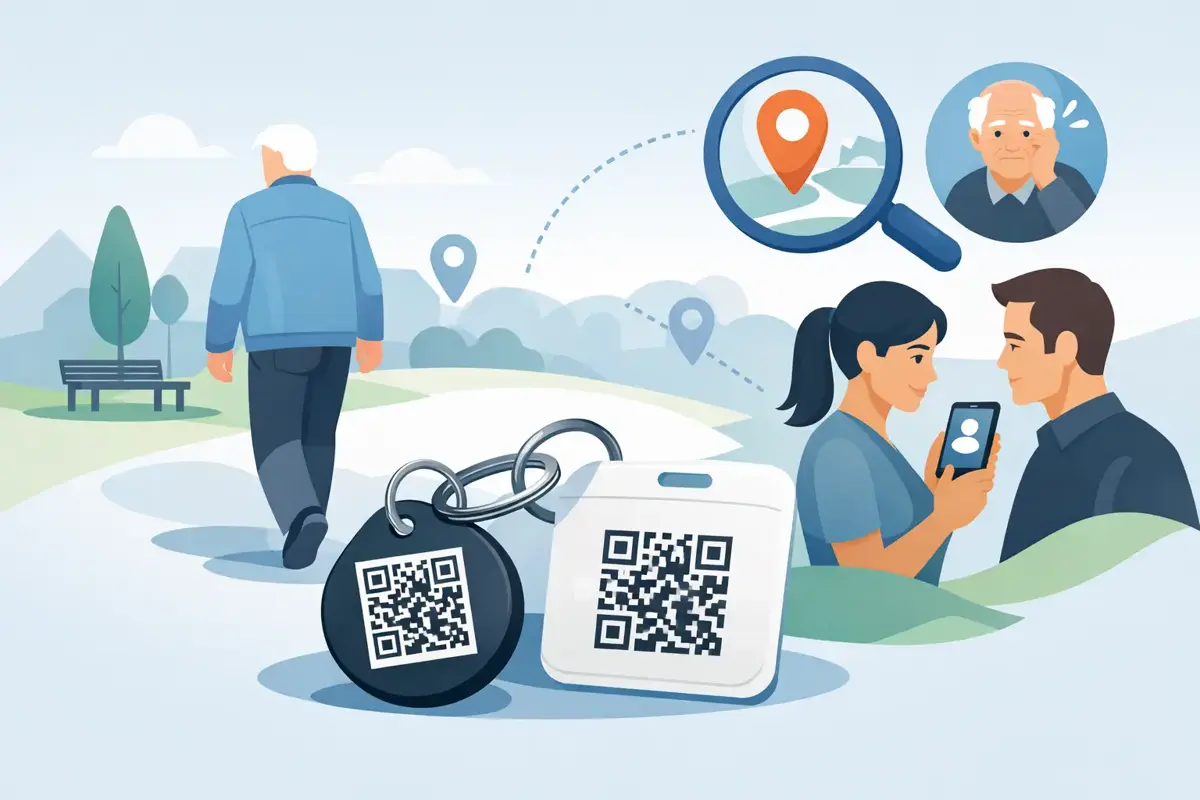
A person leaves home for a familiar walk, turns the wrong corner, and suddenly can’t say who to call. That is where a dementia wandering id tag can make a real difference. In those first uncertain minutes, the right tag gives a stranger, neighbour or emergency responder a simple way to contact family fast without relying on the person to explain anything.
Wandering is one of the hardest parts of dementia care because it can happen during ordinary moments. A short trip to the letterbox, a walk after lunch, a visit to the shops, or confusion after waking can quickly become a safety issue. Families often try to balance freedom, dignity and supervision, but no carer can control every variable every minute of the day. A practical identification tag adds one more layer of protection when routines break down.
Why a dementia wandering id tag matters
When someone living with dementia becomes disoriented, time matters. The longer they are away, the greater the risk of falls, dehydration, traffic exposure, weather stress or panic. Even when they are found quickly, the people helping often face the same problem - they do not know who the person is, where they live, or how to reach a trusted contact.
A dementia wandering id tag closes that gap. Instead of depending on a wallet card that may not be seen, a handwritten note that can fade, or a public phone number that raises privacy concerns, a well-designed tag gives helpers a direct, clear next step. Scan the code or follow the contact prompt, and the right person can be alerted straight away.
That sounds simple because it should be. In a real-world situation, simplicity is the feature that matters most.
What makes an ID tag useful in a wandering incident
Not every tag works equally well for dementia care. Some are too small to notice. Some rely on old-fashioned engraving with limited space. Some display private details that families would rather not leave visible in public. Others depend on an app, which creates friction at the worst possible time.
A useful tag needs to do three things well. It needs to be easy for another person to spot, easy to use without special instructions, and able to connect that finder with the right contact quickly. If the person wearing it is unable to speak, distressed, or confused, the system still needs to work.
Privacy also matters more than many families expect. Putting a full home address, medical history and mobile number on display can feel risky, especially for an older person out in the community. A better approach is contact-first communication - enough information to prompt help, without exposing personal details to everyone who sees the tag.
How a dementia wandering id tag works in practice
Imagine an older man is found outside a suburban shopping centre, unsure how to get home. He may know his first name but not his address. A passer-by notices a visible tag on his keyring, wristband or clothing attachment. They scan the code with their phone. No app is needed. They are guided to contact the nominated family member or carer immediately.
That changes the whole moment. Instead of waiting for police to piece things together or hoping the person remembers enough to assist, the helper can act on the spot. The family gets the call, confirms details, and can head to the location or speak with the person helping.
For carers, that fast contact can reduce search time, lower stress and improve the chance of a calm return home. For the person living with dementia, it can mean less confusion and less time in an unfamiliar setting.
Choosing the right dementia wandering ID tag
The best option depends on the person, not just the product. Some people will comfortably wear a wristband every day. Others are more likely to keep a tag on a zip, shoe, bag, walking aid or house keys. If the item is irritating, bulky or unfamiliar, there is a fair chance it will be removed and forgotten.
Durability matters too. A tag used every day needs to handle sun, rain, knocks and regular handling. If it is for outdoor walks, weather resistance is not a bonus - it is essential. The tag should also stay readable over time, because an emergency rarely arrives when everything is still new and tidy.
Families should look for a setup that is straightforward to update. Dementia care can change quickly. A primary carer may change, routines may shift, respite care may be added, and emergency contacts may need to be rearranged. If updating contact details is a headache, the system is more likely to become outdated.
Where to wear or carry a dementia wandering id tag
The safest answer is the place most likely to stay with the person consistently. For one person, that may be a wearable tag that goes on each morning like a watch. For another, it may be attached to a frequently used personal item that never leaves their side.
There is a trade-off here. A wristband is usually more visible, which helps in urgent situations. But if the wearer dislikes wristbands and removes them, that visibility is lost. A tag on keys or a walker may be less obvious at first glance, but if it stays with the person every day, it may still be the better choice.
Many carers find that routine matters more than theory. The best dementia wandering id tag is the one that is actually there when needed.
What information should be attached to the tag system
This is where families often overcomplicate things. The goal is not to create a public medical file. The goal is to make fast contact possible.
At a minimum, the tag should route a finder to a current carer or emergency contact. It can also include a brief prompt that the person may be living with memory loss or may need assistance. Beyond that, it depends on the situation. Some families may want additional instructions, especially if the person is prone to anxiety, has a preferred name, or should not be left alone.
Keep the focus on action. If someone finds your loved one, what is the quickest, safest next step for them to take?
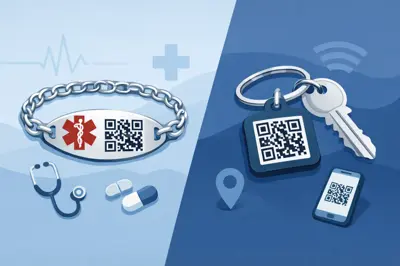
A QR-based dementia wandering ID tag vs traditional engraving
Traditional engraved tags still have a role. They are familiar, require no scanning, and can show a short line such as "If found, call family". For some households, that may be enough.
But there are limits. Engraving runs out of space quickly, and once details are etched in, updates usually mean replacing the whole tag. It also puts the chosen contact number in plain view.
A QR-based approach gives families more flexibility. Contact details can be managed online, multiple contacts can be supported, and private numbers do not need to sit openly on the tag itself. For a wandering scenario, that balance of speed, privacy and easy updating is often a better fit. ContactMeTag is built around that exact need - fast contact without exposing private numbers, and no app required for the person scanning.
How carers can introduce a tag without resistance
The way a tag is introduced matters. If it feels clinical or restrictive, the person may refuse it. If it feels normal and familiar, acceptance is often easier.
Start with language that suits the person. Some people respond well to simple safety framing, such as saying it helps others contact family if needed. Others prefer it to be part of a daily item they already use, rather than something presented as a medical device.
Consistency helps. Put it on at the same time each day, attach it to the same item, and make it part of existing routines before there is an urgent need. The calmer and more ordinary it feels, the better.
An ID tag is not the whole safety plan
A dementia wandering id tag is a practical safeguard, but it is not a substitute for broader support. Families may also need home routines, supervision plans, neighbour awareness, door alerts, regular check-ins and medical guidance. Some people are in early stages and simply need a backup if they become briefly disoriented. Others need much stronger protections.
That does not reduce the value of the tag. It just means safety works best in layers. If one measure fails, another is there to help.
For many carers, peace of mind comes from knowing there is a clear path to contact if the unexpected happens. When someone cannot explain who they are or where they belong, a small tag can do a big job. It gives helpful strangers a way to act, gives families a way to respond fast, and gives a vulnerable person a better chance of getting home without added fear or delay.
If you are setting up support for someone living with dementia, choose the option that fits their habits, respects their dignity and works quickly under pressure. In moments of confusion, every scan counts.