Contact Masking vs Public Phone Number Safety
By ContactMeTag · · 6 min read
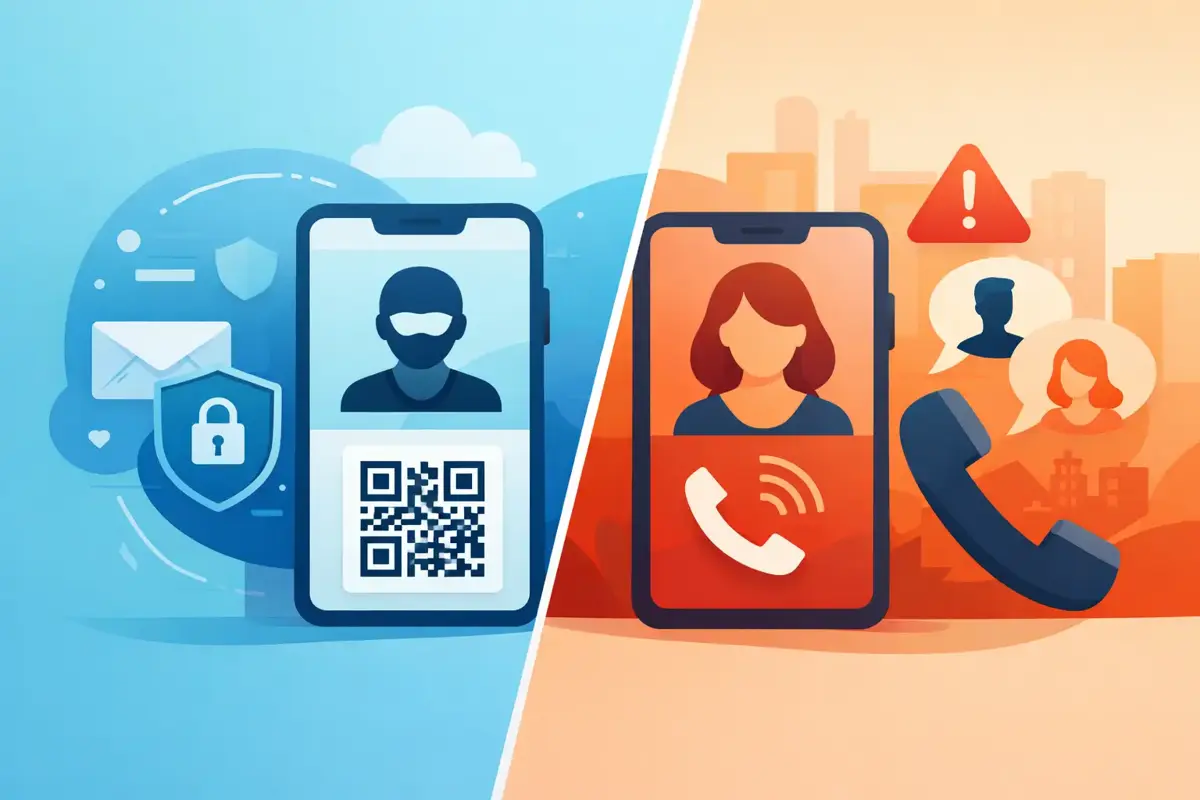
A phone number printed on a vehicle, school bag or pet tag can make contact easy - but it can also put that number in front of strangers every day. The choice between contact masking vs public phone number comes down to a simple question: how can someone reach you quickly when it matters, without giving everyone unrestricted access to your private mobile?
For families, travellers, drivers and pet owners, this is not a small detail. It affects what happens after a prang, when a wallet is found, when a child is separated from the group, or when a neighbour notices a problem at an empty holiday home. The right contact method should help a decent person act straight away while keeping your personal details where they belong - private.
What a public phone number really exposes
A public phone number is exactly what it sounds like: your mobile number is printed, engraved or displayed for anyone to see and use. It may be on a keyring, a luggage label, a helmet sticker, a pet tag or a sign near your front door.
There is a clear advantage. A finder can ring you immediately without needing to scan a code, visit a page or understand a new system. In a genuine emergency, that simplicity can feel reassuring.
The trade-off is that the number is permanent and visible. A person walking past your parked car can photograph it. Someone handling your luggage can save it. A lost keyring may reveal both your phone number and clues about where you live. Even when every person involved has good intentions, your contact information is no longer fully under your control.
A public number can also create nuisance calls, unwanted messages and uncertainty about who is contacting you. For some people, that is merely inconvenient. For parents, carers, people living alone or anyone managing a sensitive situation, it may be a reason not to display an emergency contact at all. That leaves them with the opposite problem: no easy way for a Good Samaritan to get help to the right person.
Contact masking vs public phone number: the practical difference
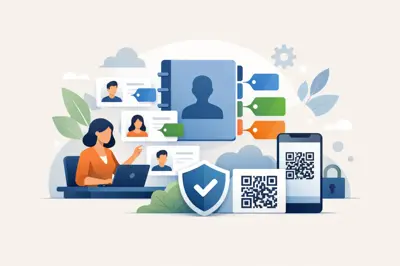
Contact masking provides a safer middle ground. Rather than placing your real mobile number on the tag, you place a QR code linked to a contact-routing service. When someone scans the code using their phone camera, they can call or message you, or a nominated emergency contact, without seeing the number behind it.
The finder still gets a clear next step. They do not need to download an app, create an account or pay to make contact. They scan, choose the contact option shown, and the routing system connects them to the right person.
For the owner, the important difference is control. Your private number is not printed on the item. If your circumstances change, you can update the contact details online instead of replacing every tag. You may nominate a partner, parent, carer or trusted friend as an additional emergency contact, so a call does not rely on one person always being available.
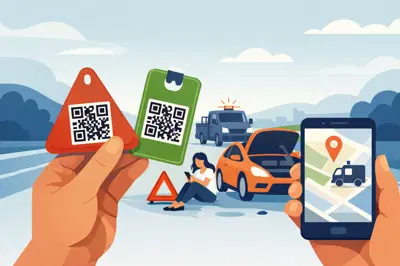
Contact masking does not make a QR tag a replacement for emergency services. If someone is seriously injured, unconscious or in immediate danger, the correct action is to call Triple Zero (000). A contact tag supports faster communication around that response. It can help by giving responders or bystanders a direct route to a family member, carer or owner when they cannot speak for themselves.
Where masked contact makes the biggest difference
The value becomes clearer in everyday Australian situations. A motorcyclist may want an emergency contact available on their helmet without broadcasting a mobile number at every servo, car park or set of lights. A QR tag can provide that route while keeping their personal details concealed.
For children, the privacy benefit is even more obvious. A bag tag or wearable tag can give a teacher, coach, shop staff member or Good Samaritan a way to reach a parent if a child is lost or distressed. The child does not need to remember a number, and their family’s contact details are not plainly displayed for strangers.
Pet owners face a similar choice. A traditional engraved collar tag can show a name and phone number, which is useful when a pet wanders. But the number is visible whenever the pet is out and about. A weatherproof QR tag lets a finder make contact quickly while helping keep the owner’s mobile number private.
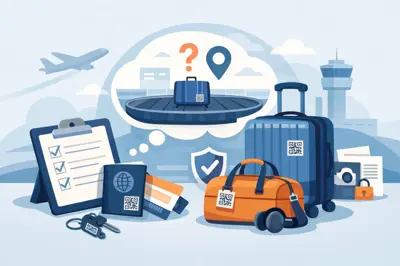
Then there are items that change hands often: luggage, wallets, laptops, keys and sports bags. These are easy to misplace and easy for a helpful stranger to find. They can also contain enough personal information to make direct contact details risky. A masked QR contact route gives the finder a practical way to return the item without adding another piece of personal information to it.
For holiday homes and properties, the same principle applies. A code near an access point can direct a neighbour, cleaner, tradesperson or emergency responder to the right contact without leaving a family member’s phone number on display for months at a time.
Speed matters, but so does the scanner experience
Some people worry that a QR code adds a step compared with a phone number. That can be true if the code sends people to a confusing page or requires a login. In an urgent moment, extra steps are not helpful.
A well-designed system keeps the scan experience simple. The code should be easy to find, easy to scan and clear about what to do next. The person scanning should be able to contact the owner or an emergency contact in moments. That is why no-app access matters. A Good Samaritan should not have to install software before helping someone.
The tag itself also matters. A code that fades, peels or becomes unreadable after sun, rain and rough handling is not ready when it counts. For vehicle, outdoor and pet use, choose a durable, weatherproof tag designed for real conditions, not just a paper label that looks fine on day one.
When a public number may still suit
There are situations where a public phone number remains a reasonable choice. A business vehicle may display a work number intended for public enquiries. A community noticeboard contact or a short-term event sign may need the fastest possible call path and involve no private details.
A public number may also be appropriate if it is a separate number used only for that purpose. Even then, think about who manages it, whether calls will be answered after hours, and what happens if it changes. A number is only useful if the person who needs help can get through.
For personal safety, family use and valuable belongings, contact masking is usually the stronger option because it balances immediate contact with privacy. It gives you a way to be reachable without making yourself openly available to anyone who sees the tag.
How to set up a safer emergency contact system
Start by identifying the moments when another person may need to reach you. Think beyond medical emergencies. Consider lost property, vehicle incidents, a wandering pet, a child separated from you, or a problem at home while you are away.
Choose one primary contact and at least one backup where possible. The backup should understand why they may receive a call and know what action to take. A grandparent may be ideal for a child’s bag tag; a travelling couple may nominate each other and a trusted contact at home.
Next, place the tag where it can be found without delay. On a helmet, it should be visible without needing to remove parts. On luggage, put it where a baggage handler or finder can spot it. On a wallet or keychain, make sure it is not hidden under cards or tucked inside a compartment.
Finally, test it. Scan the code with a different phone, check that the contact options are current, and make sure nominated contacts will answer unknown calls or messages. Update the details whenever a phone number, address, carer or travel plan changes.
ContactMeTag is built around this practical approach: a durable physical tag paired with privacy-first contact routing, so the person who finds you or your belongings has a clear way to help.
A safety contact should not force you to choose between being reachable and being private. Put the right information within reach, keep your personal number out of public view, and make every scan count when you cannot speak for yourself.