Car Accident Contact Information That Matters
By ContactMeTag · · 7 min read
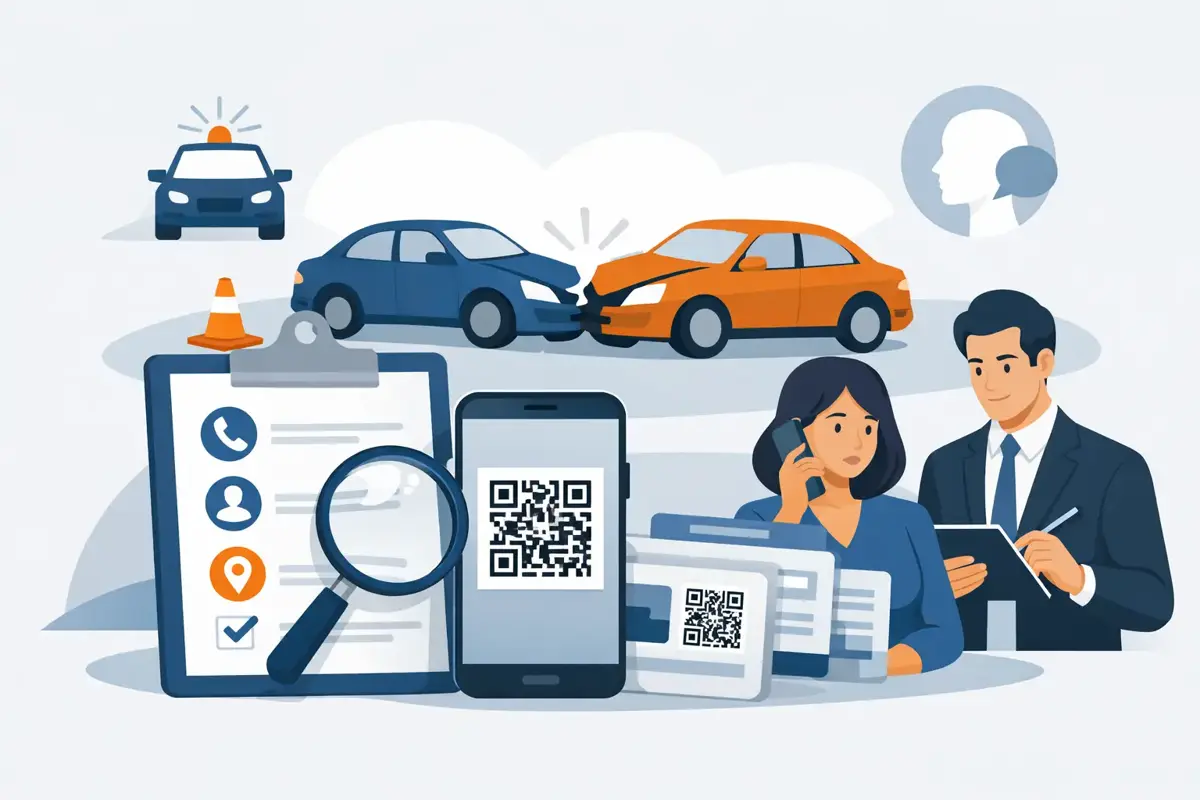
A crash scene is no place to be scrolling through your mobile, trying to remember who to call, what details to swap, or whether your emergency contact is even reachable. In that moment, car accident contact information stops being admin and becomes part of your safety plan.
Most drivers think about registration, insurance and roadside assistance. Fewer think about how quickly someone else could reach the right person if they were shaken, injured or unable to speak. That gap matters more than people realise, especially on rural roads, during school runs, or when a motorbike, bicycle or family car is involved.
Why car accident contact information matters beyond insurance
After a collision, most people focus on damage first. That is understandable, but the human side comes before the paperwork. If a driver is unconscious, confused or trapped, the most useful detail is not always the policy number. It is often a direct path to a spouse, parent, carer or emergency contact who can act straight away.
Good car accident contact information helps in three different ways. It supports the legal and insurance side of the incident, it helps first responders or bystanders identify who to contact, and it reduces delays when decisions need to be made quickly. Those are three very different jobs, and one card in the glove box does not always cover all of them.
There is also a privacy issue that people tend to ignore until it feels uncomfortable. Plenty of Australians still keep personal details on scraps of paper in the console or dashboard. That can work, but it can also expose home addresses, direct mobile numbers and other private information to anyone who opens the vehicle. Preparedness should not mean giving away more than necessary.
The contact information every driver should have ready
The basics still matter. After an accident, you will usually need to exchange your name, address, phone number, vehicle registration and, where relevant, insurance details with the other driver. If police attend, they may also request identification and further information about the vehicle owner.
That is the formal side. The practical side is broader. Every vehicle should also have an easily accessible emergency contact, ideally more than one. If the primary contact does not answer, the second person can be reached without wasting time. For families, that may be a partner and another relative. For older drivers, it may be an adult child and a carer. For younger drivers, it may be a parent and a nominated backup.
Medical context can matter too, but this is where balance is important. Some drivers need responders to know about a severe allergy, epilepsy, diabetes or another time-sensitive condition. Others may prefer not to display anything publicly. It depends on your needs, your privacy concerns and who else uses the car.
Car accident contact information should be fast to find
A lot of emergency planning fails for one simple reason - nobody can find the information when it is needed.
A laminated card buried under receipts in the glove box is better than nothing, but it relies on someone knowing it exists, opening the car and reading it under stress. A note saved in your mobile is useful if you can unlock the phone and speak clearly. If not, it may be out of reach at the exact moment it is needed.
That is why visibility and simplicity matter. The best system is one that a stranger can use immediately without guessing, downloading an app or handling your private data more than necessary. If there are too many steps, most people will hesitate. In a roadside emergency, hesitation costs time.
What to keep in the car, and what to keep private
There is a difference between accessible and exposed.
You want enough information available to help the right people act quickly, but not so much that your personal details are sitting in plain view for anyone passing by. Full addresses, multiple phone numbers and sensitive medical details are not always appropriate to leave openly displayed in a vehicle.
A better approach is controlled access. That means making contact possible without publishing everything. For some people, that may be a sealed emergency card. For others, it may be a privacy-first digital method that lets a finder or responder reach nominated contacts without revealing the actual numbers.
This is where many drivers are now moving towards QR-based emergency contact systems. Used properly, they remove friction. A scan can route a call or message to the right person quickly, while keeping personal contact details masked. No one at the scene needs to install anything, and the information can be updated online when your circumstances change.
When you cannot speak, your contact setup needs to do the talking
The biggest weakness in traditional car accident contact information is that it often depends on the driver being conscious, calm and able to explain things.
But not every crash ends with everyone standing on the footpath swapping details. Some involve shock. Some involve head knocks. Some happen late at night, in the rain, or on country roads where help arrives in stages. In those situations, your setup needs to work even if you say nothing at all.
That is where a visible, durable emergency contact solution can make a real difference. A QR tag placed in or on a vehicle can give a bystander, responder or tow operator a direct way to alert the right person immediately. For families sharing cars, that can prevent confusion. For motorcyclists, it can be even more important, because riders may become separated from their bike, wallet or phone in a serious incident.
ContactMeTag is built around exactly that kind of real-world moment - immediate contact, no app required, and private numbers kept private.
Common mistakes people make after a crash
One of the most common mistakes is assuming a driver licence or registration papers are enough. They are not designed to function as a fast emergency contact system. They identify ownership and legal status, but they do not always help a stranger notify your chosen person quickly.
Another mistake is failing to update details. People change insurers, move house, switch mobiles and separate from partners. Old contact information creates delays and, in some cases, sends sensitive information to the wrong person. Any emergency contact setup is only useful if it stays current.
There is also the issue of overcomplication. If your method requires a login, a special app, a long explanation or tiny printed text, it becomes less reliable under pressure. The right system is the one that works for ordinary people in a stressful moment, not just for organised people on a good day.
How to set up car accident contact information properly
Start with the obvious essentials. Make sure your vehicle registration, insurance details and licence information are current and stored where they should be. Then think beyond compliance and ask a more practical question: if you could not make a call after an accident, who would need to be contacted first?
Choose one or two trusted contacts who will reliably answer and know what to do. Tell them they are listed. Confirm their numbers. If there is critical medical or care information that should be passed on in an emergency, decide how much needs to be included and how much should remain private.
Next, choose how that information will be accessed. Some people are comfortable with a physical card inside the car. Others want something quicker, clearer and more secure. If you use a QR-based contact tag, place it somewhere easy to notice and easy to scan. Test it yourself. Then review it every few months, especially after changing mobiles, insurers, addresses or emergency contacts.
It is not just for major crashes
People often hear the phrase car accident contact information and think of a severe collision. But smaller incidents create the same communication problem.
A minor prang in a shopping centre car park can still leave a stressed driver trying to find policy details and family contacts. A single-vehicle accident on a regional road can leave a motorist stranded and disoriented. Even a parked car that is struck while unattended can benefit from a contact method that helps the right person get notified quickly without exposing private numbers to the public.
Preparedness is not about expecting the worst. It is about removing avoidable delays when something unexpected happens.
A safer setup is one you will actually maintain
The best emergency system is not the one with the longest feature list. It is the one you will keep updated, the one others can use instantly, and the one that respects your privacy while still making contact possible.
For Australian drivers and families, that usually means keeping the formal details sorted, choosing reliable emergency contacts and using a contact method that works even when the driver cannot. If a simple scan can help the right person answer at the right time, that is not just convenient. It is practical safety.
Before your next trip, school pickup or weekend drive, take two minutes and check what someone else could actually do with the information in your car. If the answer is not much, that is the place to start.