Best Recovery Tags for Frequent Travellers
By ContactMeTag · · 7 min read
You only need to stand at an empty airport carousel once to understand why the best recovery tags for frequent travellers are not just a nice extra. When a bag is delayed, sent to the wrong city or picked up by the wrong person, the real problem is simple - how quickly can the right person contact you without your private details sitting in full view on your luggage?
That question matters even more if you travel often for work, move through multiple airports in a week, or carry high-value gear like laptops, chargers, documents and medication. A recovery tag should do one job brilliantly: help your item get back to you fast. The best ones also make that process easier for airline staff, hotel teams, rideshare drivers and everyday people who are trying to help.
What makes a recovery tag worth using?
Frequent travel puts gear through more than the occasional holiday trip ever will. Bags are dragged, stacked, exposed to rain on the tarmac, crushed into overhead lockers and tossed into car boots. So the best recovery tags for frequent travellers need more than a clever idea. They need to work under pressure, with no special instructions and no tech confusion.
A good recovery tag starts with visibility. If someone finds your bag, wallet or laptop sleeve, they need to notice straight away that there is a clear way to contact you. Tiny labels hidden under straps or tags printed with fading text are easy to miss.
Durability matters just as much. If the tag cracks, peels or becomes unreadable after a few flights, it stops being a safety tool and becomes decoration. Weatherproof materials, secure attachment points and a surface that resists scratching all make a real difference for regular travellers.
Then there is privacy. Traditional luggage tags often display your full name, mobile number, home address and email to anyone standing nearby. That might seem normal, but it creates unnecessary exposure. A better recovery tag lets a finder reach you or your emergency contact without putting those details on public display.
Why old-style luggage tags fall short
The standard paper insert tag still shows up everywhere, but it has obvious weaknesses. It can tear, become water-damaged or slip out. More importantly, it relies on visible personal information. If your bag is sitting on a carousel, in a hotel lobby or in the back of a taxi, your details are available to anyone who wants a look.
For occasional travel, some people accept that trade-off. For frequent travellers, it adds up. The more often you move through airports, conference venues and accommodation, the more often your belongings are exposed to strangers. That does not mean old-style tags never work. It means they are not built around privacy or fast, low-friction contact.
A stronger option is a tag that routes communication securely. Instead of showing your phone number, it gives the finder an immediate way to contact you through a scan or simple action. That removes friction at the exact moment speed matters most.
Best recovery tags for frequent travellers: what to look for
If you are comparing options, focus less on novelty and more on what happens in a real recovery scenario. A finder is usually in a hurry. They are at an airport service desk, outside a gate, in a hotel foyer or beside a rideshare vehicle that is about to leave. The best recovery tags for frequent travellers make the next step obvious.
QR recovery tags with protected contact routing
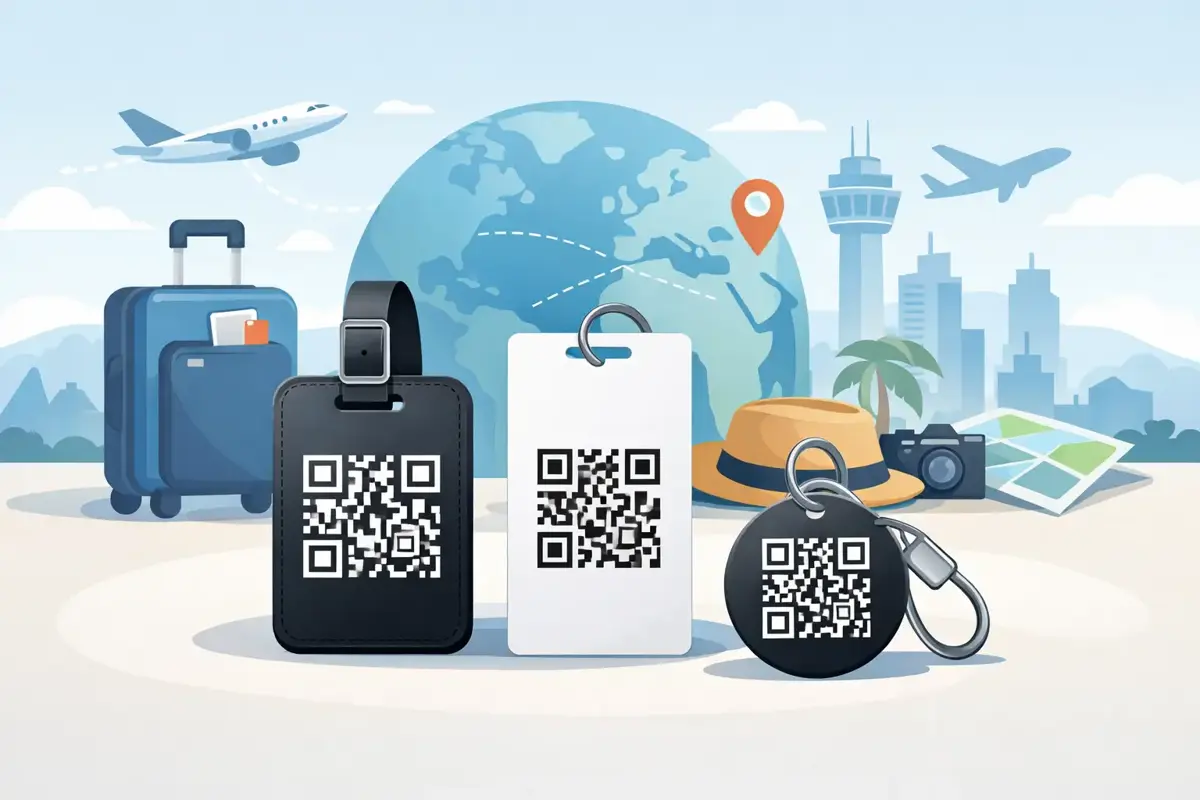
This is often the strongest fit for regular travel. A QR code tag can be scanned in seconds with a mobile, and the best systems do not require the finder to download an app or create an account. That is critical. The more steps involved, the less likely someone is to complete them.
A well-designed QR recovery tag can send the finder straight to a secure contact page where they can call or message you, or reach a nominated contact, without seeing your private number. That gives you the speed of digital contact with the safety of masked details.
For travellers, that combination is hard to beat. It suits luggage, backpacks, laptop cases, wallets and even keyrings. It also works well if you are overseas and need a backup contact method that does not rely on someone correctly reading a handwritten number.
Durable ID tags with minimal visible details
There is still a place for physical ID tags that show limited information, especially as a backup. These can work well if they include just a first name and a non-sensitive contact path, rather than your full home address and personal mobile. They are simple, familiar and easy for anyone to understand.
The trade-off is privacy and flexibility. If your details change, a printed tag can quickly become outdated. If the visible information is too limited, recovery can stall. If it is too detailed, privacy suffers.
Smart trackers with location features
Bluetooth or GPS-style trackers can help you see where an item is, which is useful in some situations. If a suitcase is left in a taxi or your backpack is still at the hotel, knowing its location can save a lot of stress.
But trackers are not the same as recovery tags. A tracker tells you where something may be. It does not always help the person holding it contact you. Batteries go flat, coverage varies, and not every finder will know what to do next. For that reason, trackers are often best used alongside a proper recovery tag rather than instead of one.
The real test: what happens when someone finds your item?
This is where good travel gear proves itself. Imagine your carry-on is left at a security checkpoint. A staff member picks it up. They are not going to spend ten minutes trying to solve the problem. They need a clear action.
If the tag says scan here and contact the owner, the path is immediate. If the system opens a page where they can call or message you for free, without downloading anything and without exposing your personal number, the chance of a fast reunion goes up sharply.
The same applies outside airports. A hotel concierge finding a laptop sleeve, a rideshare driver spotting a wallet under a seat, or another traveller grabbing the wrong black suitcase all respond better to simple instructions than to guesswork.
This is why the strongest recovery tags are built around behaviour, not just technology. People help when the process is obvious.
Where frequent travellers should place recovery tags
One tag on a checked suitcase is a start, but it is rarely enough if you travel often. The most useful approach is to tag the items most likely to be separated from you in different ways.
Checked luggage is the obvious one, but carry-on bags matter just as much because they are constantly moved through screening, lounges and boarding queues. Laptop sleeves and work bags are high priority for business travellers. Wallets, passport pouches and keyrings are easy to misplace when you are tired, rushing or juggling multiple stops.
If you travel with kids, adding a recovery contact point to their bag can also reduce panic in busy terminals. The same logic applies to helmets, prams and other personal gear that gets set down and forgotten in the middle of a long travel day.
Setup should take minutes, not a manual
The best system in the world is no help if it sits in a drawer unactivated. Frequent travellers need something that can be set up quickly, updated easily and relied on without maintenance headaches.
Look for a recovery tag that lets you add or change contact details online in minutes. That is particularly useful if you rotate between work and personal numbers, use different accommodation, or want to nominate someone else as a backup contact while you are in transit.
This is where a practical QR-based system stands out. You keep the physical tag, but the contact details behind it can stay current. That means fewer compromises between convenience and accuracy.
One example is ContactMeTag, which combines a physical QR tag with privacy-first contact routing, no app requirement for the finder, and fast online setup. For travellers, that keeps the process simple at the exact moment simple matters most.
It depends on how you travel
There is no single best tag for every traveller. If you only fly once a year with one suitcase, a basic physical tag may feel sufficient. If you travel weekly, carry expensive gear and move through crowded public spaces, privacy and speed become far more important.
If your biggest concern is locating a missing bag, a tracker may deserve a place in your kit. If your biggest concern is making it easy for someone to return your item, a recovery tag with instant contact is usually the smarter priority. Many frequent travellers will benefit from using both, because location and communication solve different problems.
The common thread is reliability. A recovery tag should still work when you are jet-lagged, when your phone battery is low, when a stranger is trying to help, and when every minute feels longer than it should.
Travel goes better when the small safeguards are already in place. The right recovery tag will not stop a bag from going missing, but it can shorten the distance between lost and returned - and that is often the difference between a brief delay and a ruined trip.
When you travel often, preparation should not add complexity. It should remove it.