Can Tags Route Multiple Contacts? Yes, Safely
By ContactMeTag · · 6 min read
A driver is shaken after a roadside accident. A child has left a school bag on the train. A neighbour notices a worried dog wandering near a busy road. In each case, the question is the same: can tags route multiple contacts quickly enough to make a difference?
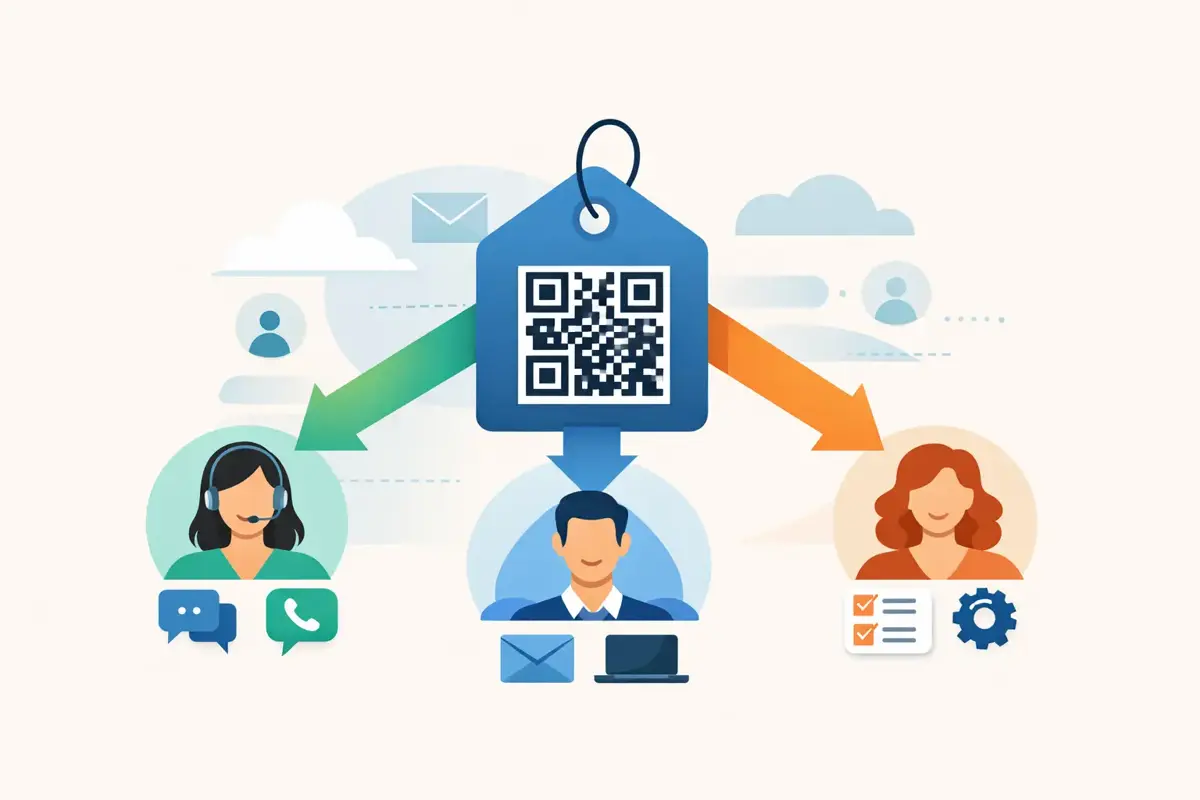
The answer is yes - when the tag is connected to a privacy-first contact-routing system. One QR code can give the person scanning it a simple way to reach the right people without displaying a personal mobile number, home address or private family details. That means one small tag can support a wider safety plan, not just a single phone call.
Can tags route multiple contacts in an emergency?
A QR tag can be set up with more than one nominated contact, allowing a scanner to reach the person best placed to respond. Depending on the situation and the tag settings, that could be the owner, a partner, a parent, a carer, a family member or another trusted emergency contact.
This matters because the person who owns an item is not always able to answer. They may be driving, in a meeting, travelling overseas, in hospital, asleep after a night shift or directly involved in the emergency. A second or third contact creates a practical backup when time matters.
For a motorcyclist, a tag can help a bystander contact a partner or emergency contact after an incident. For a child’s backpack, it can help a finder reach both parents or another approved carer. For a holiday home, a neighbour who spots a burst pipe or an open gate can contact the owner and a local property manager.
The purpose is not to overwhelm a scanner with a list of personal numbers. It is to give them a clear next step: scan, choose a contact method, and send the message or place the call.
Why multiple contacts are better than one
A single contact point can fail at exactly the wrong moment. Phones run flat. Calls are missed. People are out of reception or unable to answer. Multiple contacts improve the chance that someone receives the alert and can act.
They also let households share responsibility without sharing private information publicly. Instead of printing several phone numbers on a luggage tag, helmet or keyring, the contact details sit behind the QR code. The finder sees a simple contact option, while the nominated contacts remain protected.
This is particularly useful for families and carers. A person living with dementia may have an emergency tag linked to a spouse, adult child and trusted neighbour. A child’s wearable tag may connect to both parents. A pet tag can alert the owner first while ensuring a family member can also be contacted if the owner is unavailable.
There is a trade-off, though. More contacts only help if they are current, willing and ready to respond. Adding every relative to a tag may create confusion rather than support. For most uses, two or three reliable people is more useful than a long contact list.
What happens when someone scans the code?
The experience needs to be simple for the person trying to help. They scan the QR code using the camera on their mobile. No app download should be needed. The scan opens a secure contact page where they can take the available action, such as calling or sending a message.
Behind that simple page, the contact-routing platform manages the connection. It can direct the enquiry to nominated contacts while masking their personal phone numbers. The scanner does not need to know who they are calling, and the contact does not need to publish their number on a public-facing tag.
That privacy layer is essential. A QR tag may be attached to a vehicle, bag, wallet, pet collar or child’s belongings - items that can be seen by anyone. Publicly printing a personal number creates an avoidable privacy risk. Routing lets the right communication happen without putting private details on display.
ContactMeTag is designed around this practical balance: make it easy for a Good Samaritan or emergency responder to get in touch, while keeping personal contact details protected.
Choose contacts based on the tag’s job
The best contacts depend on what the tag is protecting. Think about who can take useful action, not only who is closest to the owner.
For a vehicle or motorcycle tag, nominate a partner, family member or trusted friend who knows where spare keys, insurance details or medical information can be found. If the owner is injured, they may be the first person who needs to know.
For luggage, include someone who can answer while you are in transit. A travel companion is often a better second contact than a person at home, especially if lost luggage is found at an airport or accommodation. For a wallet or laptop, choose contacts who can help secure cards, accounts or work access quickly.
For children, use parents or guardians who are normally reachable during school hours. If grandparents regularly collect the child or a trusted neighbour is nearby, they may be a sensible backup. Keep the contact setup focused and ensure every nominated person understands why they have been included.
For a pet, the first contact should generally be the person most likely to collect the animal. A second contact should be someone local with access to the home, lead, carrier or veterinary details if needed.
Set up a contact plan before you need it
Adding several people is only the first step. A reliable tag needs a little household planning. Confirm that each person has the correct mobile number, knows how the system works and is comfortable being contacted about that particular tag.
It is also wise to decide who does what. One person may collect a child or pet. Another may handle a vehicle, speak with police or contact a roadside assistance provider. A property manager may be the right person for a holiday-home issue, but not for a personal medical emergency.
Review the contacts whenever life changes. Update them after a change of phone number, a separation, a move, a new school, a new carer or a change in travel plans. A tag is most useful when its information reflects real life, not the way things looked two years ago.
Before placing the tag into daily use, run a quick test. Scan it with another person’s mobile and make sure the contact options make sense. Check that the right people receive the call or message, and that the tag is positioned where a finder can easily spot it. A tag hidden under a bag flap or covered by a vehicle accessory cannot help when it is needed.
Multiple contacts do not replace emergency services
Contact routing is a fast way to notify family, carers and owners. It is not a replacement for calling 000 when someone is seriously injured, in immediate danger or needs urgent medical, police or fire assistance.
In a road accident, for example, the first priority is the safety of everyone at the scene. Call emergency services if required, move away from traffic where safe to do so, and follow responder instructions. The QR tag can then help responders or bystanders reach the person’s nominated contacts without searching through a locked phone or wallet.
The same principle applies to a missing child, a medical incident or a dangerous animal situation. The tag supports communication. It does not ask a finder to take risks or delay emergency help.
The value is in the backup
A QR tag is a small item, but it can create a meaningful chain of contact when a person cannot speak for themselves or an important belonging has gone missing. Multiple contacts make that chain more dependable by giving the first call, message or alert somewhere else to go when the primary person is unavailable.
Choose a small circle of people who will genuinely answer, keep their details current, and place the tag where it can be found. When someone scans it, every second saved can help turn an uncertain moment into a clear next action.