Best Helmet Emergency Identifiers for Riders
By ContactMeTag · · 6 min read
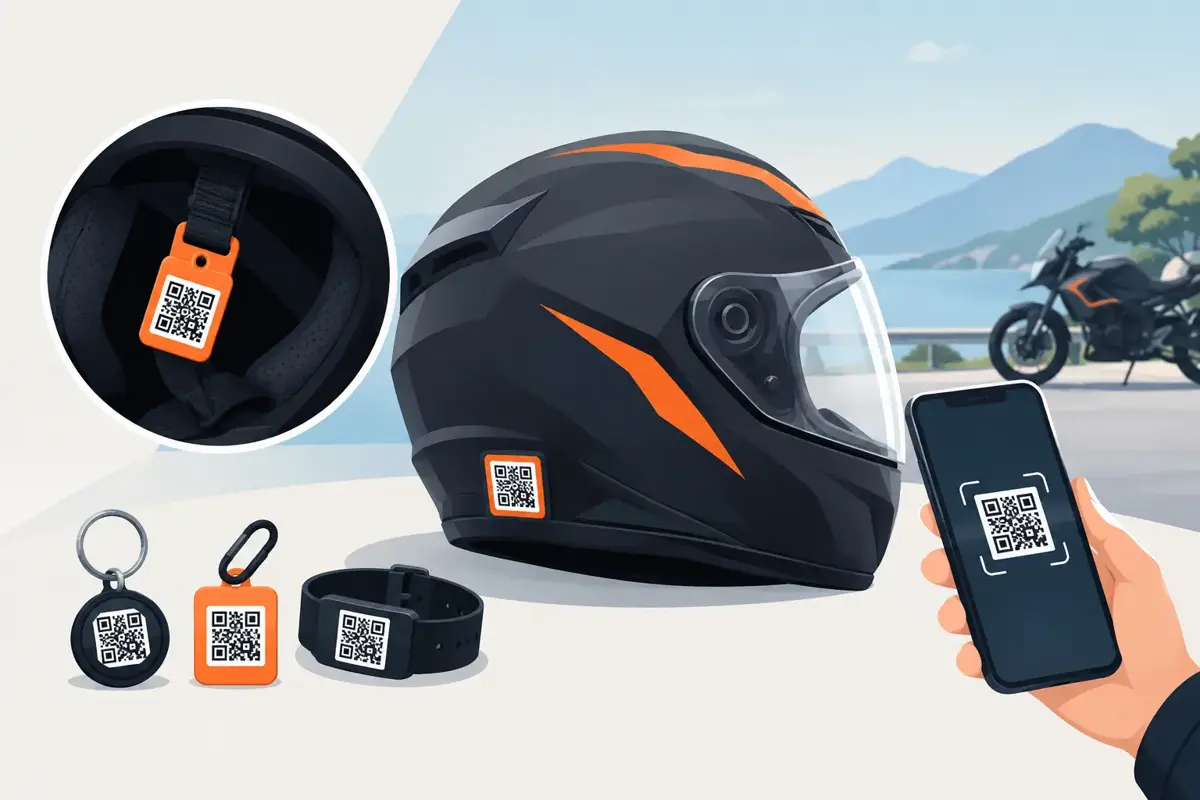
A helmet can protect your head, but it cannot tell anyone who to call if you are unconscious, disorientated or separated from your riding group. The best helmet emergency identifiers give a bystander, police officer or emergency responder a clear way to act quickly, without putting your private mobile number on public display.
For motorcyclists, cyclists, e-bike riders and anyone who relies on a helmet outdoors, the right identifier is a small piece of preparation with a very practical purpose. It should be easy to spot, easy to use under pressure and reliable enough to stay attached through heat, rain, road grime and daily use.
What makes a helmet identifier useful in an emergency?
A helmet emergency identifier works only if another person can understand it in seconds. At a crash scene, nobody should need to guess whether a number belongs to you, search through an app or decipher handwritten details that have faded in the sun.
The most useful options make the next action obvious. A visible QR code with a short instruction such as “Scan for emergency contact” gives a capable bystander a simple path to follow. When scanned with a phone camera, it can connect them to the rider’s nominated contacts without displaying those contacts’ personal numbers publicly.
That privacy point matters. A traditional sticker with your name and mobile number may be fast to read, but it also leaves personal information visible whenever your helmet is parked on a café table, clipped to a bike or carried through a shopping centre. The right system balances access in an urgent moment with everyday privacy.
It also needs to work for the people likely to find you. Not every rider wears a medic-alert bracelet. Wallets can be lost, phones can be locked or damaged, and an emergency contact stored in your mobile may be impossible to access. Your helmet is often one of the first personal items close by.
The best helmet emergency identifiers: your main options
There is no single right choice for every rider. Your riding style, helmet finish, medical needs and appetite for visible personal details all affect what will work best.
Printed emergency-contact stickers
A basic emergency sticker usually provides a name, blood group, allergies or a phone number. It is affordable and requires no technology, which can be reassuring for riders who want information available at a glance.
The trade-off is privacy and permanence. Personal details can be read by anyone, and handwritten stickers may become difficult to read after weather exposure. If your emergency contact changes, you need to replace the sticker. Blood group stickers also deserve care: emergency clinicians will still confirm blood type before treatment, so they should never be treated as a substitute for proper medical assessment.
Medical alert decals
Medical decals are designed to flag a serious condition, such as diabetes, epilepsy, anaphylaxis or an allergy. They can be valuable when a condition may affect immediate treatment, particularly if the information is current and easy to read.
However, a decal alone does not always help someone contact your family or riding partner. It may also reveal sensitive health information whenever your helmet is visible. For some people, that is an acceptable trade-off. For others, a discreet identifier that routes a scanner to the right contact is the better fit.
Engraved plates or tags
Metal plates and engraved tags can be durable and do not depend on a phone camera. They are often used for a rider’s name, emergency contact and basic medical notes.
Their weakness is limited space. Small lettering is hard to read in poor light, and updating details means replacing the plate. A tag also needs a secure location that will not snag on a helmet bag, jacket or chin strap.
QR emergency identifiers
QR identifiers are a practical option for riders who want to keep contact details private while making help easy to reach. The code can direct the scanner to a secure contact-routing page, allowing them to call or message the contacts you have chosen. No app download should be needed for the person trying to help.
This approach is especially useful if you want to update contacts after a move, a change of mobile number or a new riding partner. Rather than replacing the physical identifier, you update the details online. A ContactMeTag helmet tag, for example, is built around this simple scan-to-contact action, with masked contact details and weatherproof Australian-made materials.
QR tags do rely on a working smartphone and enough reception to make a call or send a message. That is why visibility and plain wording still matter. The tag should tell a finder what to do, not assume they will recognise the purpose of a standalone code.
Where to place an emergency identifier on a helmet
Placement can make the difference between a tag being noticed and being missed. Aim for a clean, outward-facing area that is visible when the helmet is on the ground or being handled, without covering vents, safety labels, moving parts or the visor mechanism.
For most full-face and open-face helmets, the lower rear section is a sensible starting point. It is usually easy to see and less likely to be rubbed constantly by your gloves or jacket collar. A side placement can also work well if the helmet has a smooth, clear panel that will not interfere with graphics, vents or communication equipment.
Before applying anything, check the helmet manufacturer’s instructions. Some adhesives, solvents and paints can affect helmet materials or finishes. Use a tag designed for outdoor use, apply it only to a clean, dry surface, and do not drill holes into the shell. A helmet identifier must never compromise the helmet’s protective design.
If your helmet has a matte finish, deep curves or raised graphics, take extra care. Test the intended position visually before applying the tag. It should sit flat enough to scan easily and remain readable without looking like an afterthought.
Set up information that helps people act
A helmet identifier is only as useful as the information behind it. Keep the details focused on what a person needs when you cannot explain the situation yourself.
Your emergency contacts should be people who answer their phones and understand their role. Tell them they are listed, confirm their numbers regularly and consider including more than one person in case the first contact is unavailable. For a rider who often travels alone, a family member and a trusted friend can be a sensible combination.
Where your identifier supports an emergency profile, include only relevant medical information and keep it current. Serious allergies, key conditions, essential medications and communication needs can be helpful. Avoid adding long personal histories that a stressed finder cannot quickly interpret.
A strong setup should cover these practical checks:
- Your nominated contacts know they may receive an emergency call or message.
- Contact details are reviewed after changing phones, jobs, addresses or relationships.
- Medical notes are concise, current and limited to information that may affect urgent care.
- The tag is tested with a phone camera after setup and again after any profile update.
- Your helmet is inspected regularly to make sure the identifier remains firmly attached and readable.
Do not rely on one safety layer
A helmet emergency identifier is a communication tool, not a replacement for emergency services, protective gear, first-aid training or medical identification recommended by your clinician. If there is immediate danger, serious injury or a suspected head injury, the priority is to call Triple Zero (000) and follow the operator’s instructions.
It is also wise to carry identification elsewhere. A wallet card, medical ID on your phone’s lock screen and emergency details shared with your riding group create useful backup. Helmets can be damaged or separated from a rider in a major incident, just as wallets and mobiles can go missing.
The goal is not to create a complicated safety system. It is to remove the small delays that can leave a helpful stranger asking, “Who do I call?”
Before your next ride, look at your helmet as more than protective gear. Make it a clear, private route to the people who need to know you need help. When you cannot speak, one visible scan can start the right conversation.