Why a Pet ID QR Tag Beats a Basic Tag
By ContactMeTag · · 7 min read
The worst time to realise your pet’s tag isn’t enough is after the gate swings open. A dog bolts after a noise, a cat slips past a tradie at the door, and suddenly you are relying on a tiny piece of metal with limited space and fading text. A pet id qr tag changes that moment. Instead of forcing a finder to guess what to do next, it gives them a fast, clear way to contact you or your nominated emergency person on the spot.
For Australian pet owners, that speed matters. Pets can cover a lot of ground in a short time, especially in busy suburbs, near parks, or around roads. The longer a pet is loose, the more the risk grows. A smarter tag is not about adding tech for the sake of it. It is about making it easier for the right person to act quickly when your pet cannot get back home on their own.
What a pet id qr tag actually does
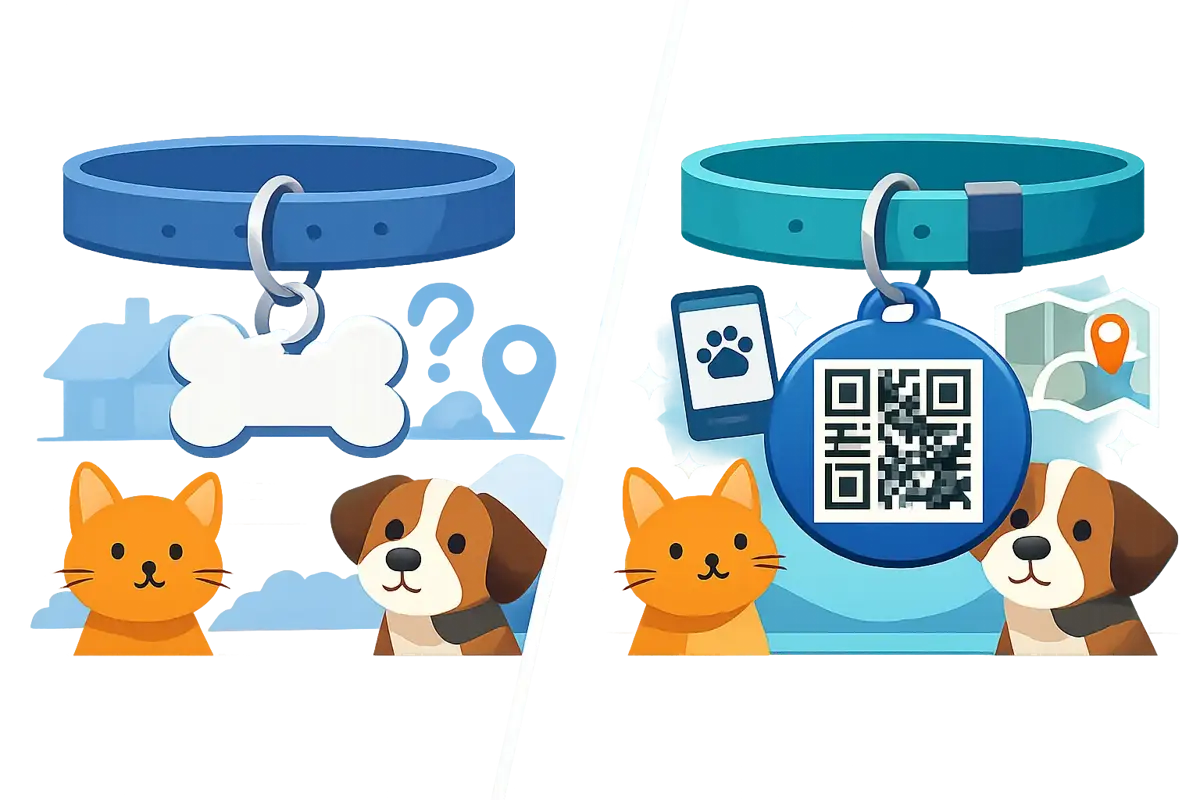
A standard pet tag usually carries a name and phone number. That still has value, but it comes with limits. There is only so much room on the tag, numbers can wear down, and some owners are uncomfortable displaying personal details in public.
A pet id qr tag works differently. When someone scans the QR code with their mobile, they are directed to a contact page that helps them reach the owner or emergency contacts straight away. Depending on the setup, this can allow a call or message without showing your private number on the tag itself. That means the finder gets a simple next step, and you keep more control over your personal information.
This matters because most people will help if the process is easy. If they have to squint at scratched engraving, type in a number manually, or wonder whether the details are still current, the delay starts there. With a QR tag, the tag does more of the work.
Why a pet id qr tag is more useful in real life
The value of any safety product comes down to what happens in a stressful moment. That is where QR contact tags stand out.
If your dog gets out during a storm, the person who finds them may be standing on the side of the road holding a wet lead and a mobile in one hand. If your indoor cat slips out while you are away, it may be a neighbour or passer-by trying to work out whose pet they have just coaxed under a car. In both cases, faster contact improves the outcome.
A pet id qr tag gives the finder a direct action. Scan. Contact. Wait for instructions. That is simpler than relying on a council check, a vet visit, or a social media post that you may not see in time.
There is also the privacy factor. Plenty of pet owners want their pets protected without putting a personal mobile number on display at the dog park, outside the local shops, or on a collar that could be seen by anyone. A QR-based contact system can bridge that gap. It helps people reach you when needed, while reducing how much of your information is publicly visible.
Basic tags still matter, but they have limits
There is no need to pretend old-fashioned tags are useless. They are familiar, cheap, and easy to understand. For some owners, a simple engraved disc may feel like enough.
But the trade-off is flexibility. If your number changes, the tag may need replacing. If you want multiple contacts listed, space runs out quickly. If the engraving fades, the tag becomes less helpful over time. And if you do not want your number on display, there is not much middle ground.
A QR tag solves many of those problems, but it also depends on one important thing: the finder needs a mobile capable of scanning QR codes. In Australia, that is common enough that it is rarely a barrier, but it is still worth acknowledging. For that reason, many pet owners prefer a setup that combines visible ID with QR access rather than treating it as an either-or decision.
What to look for in a pet id qr tag
Not all QR tags are equal, and this is where practical details matter more than gimmicks.
Durability should be high on the list. A pet tag needs to survive rain, mud, rough play, beach trips, and the daily knock of bowls, fences, and kennel doors. If the print fades or the code becomes hard to scan, the tag stops doing its job.
The contact process also needs to be simple. In an urgent situation, no one wants to download an app, create an account, or work through extra steps just to help a lost dog. A good QR system should let the finder act immediately.
Privacy should not be an afterthought either. If the whole point is easier contact, the setup should still protect your details where possible. That means looking for a system that can route calls or messages without forcing your mobile number into public view.
It also helps if the contact details can be updated online. Pets go to sitters, family members help with pickups, and routines change during holidays. A tag that stays useful over time is better value than one that is fixed from day one.
How setup usually works
One of the strengths of a QR safety tag is that setup is usually quick. You activate the tag online, add your preferred contact details, and decide who should be reachable if your pet is found. That might be you first, followed by a partner, neighbour, or family member.
This flexibility matters more than many people expect. If you are at work, on a flight, or simply miss a call, a second contact can keep things moving. The finder does not need to guess whether to hold onto the pet, take them to a vet, or keep walking the streets asking around. They get a clear path to someone who can help.
For households with multiple carers, this can make a real difference. It turns the tag into more than a label. It becomes part of a practical recovery plan.
Why privacy changes the decision for many owners
A lot of pet owners hesitate to put a personal number on a collar, and that concern is reasonable. A collar is public. Anyone can read it, photograph it, or use the details in ways you did not intend.
That does not mean you should avoid identification. It means the method matters. A privacy-first QR system can help strike the balance between being reachable and staying protected. That is especially relevant for families with children, people living alone, and anyone who prefers not to broadcast personal contact details.
When safety and privacy work together, owners are more likely to keep the system active and up to date. That consistency is what makes the tag useful when every scan counts.
A better fit for everyday Australian pet life
Australian conditions are not gentle on gear. Heat, rain, dust, salt air, and daily wear can all shorten the life of a cheap tag. Add in energetic dogs, adventurous cats, and the occasional bushwalk or beach run, and durability starts to matter very quickly.
That is why the best pet ID tools are built for ordinary chaos, not just neat product photos. A tag should be easy to attach, comfortable for your pet to wear, and tough enough to handle real use. It should also support the way people actually respond when they find an animal: with a mobile in hand, looking for the fastest way to help.
This is where ContactMeTag fits naturally. The idea is simple and useful - a durable physical tag paired with a digital contact system that helps the right person get through quickly, without putting private details on display.
Is a pet id qr tag worth it?
If your pet never slips a lead, never squeezes through a side gate, and never gets startled by thunder, you might feel a basic tag is enough. But most owners know pets are unpredictable. Good safety systems are not built for perfect days. They are built for the one moment things go wrong.
A pet id qr tag is worth it when you want faster contact, more flexible emergency details, and better privacy than a standard engraved tag can offer. It is not magic, and it does not replace microchipping or good fencing. It simply closes a gap between “someone found my pet” and “they reached the right person straight away”.
That gap is often where stress, delay, and risk build up. If a small tag can reduce that, it is doing exactly what a safety product should do. When your pet cannot tell someone where they belong, their tag should make that part easy.