Why a Travel Safety QR Contact Tag Matters
By ContactMeTag · · 7 min read
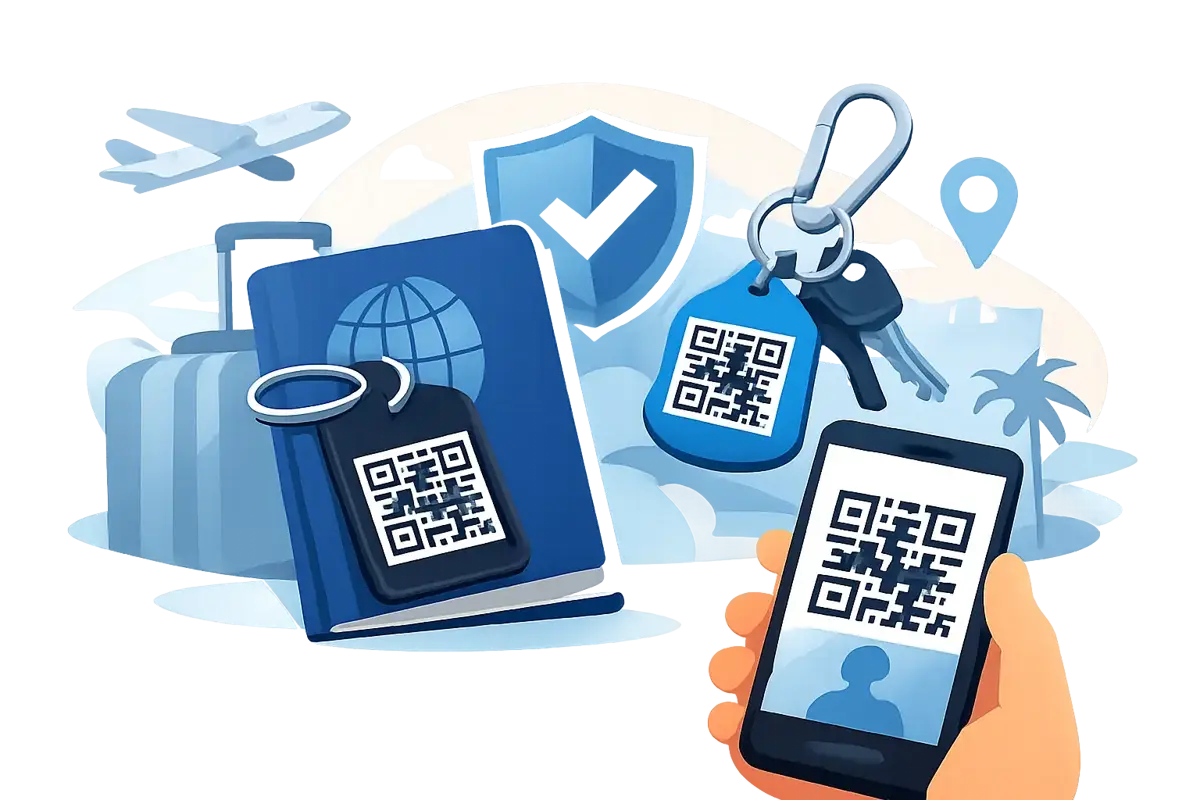
Missed connections, lost bags and medical surprises do not wait until you are standing calmly at a help desk. They happen when your phone battery is flat, your luggage is somewhere between terminals, or you are too shaken to explain who to call. That is exactly where a travel safety QR contact tag earns its place. It gives airport staff, hotel teams, transport workers, Good Samaritans or emergency responders a fast way to reach you or your nominated contact without displaying your private phone number to the world.
What a travel safety QR contact tag actually does
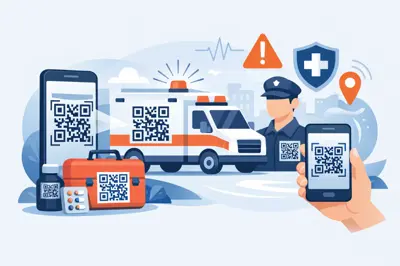
At its simplest, the tag turns a scan into contact. Someone sees the QR code, scans it with their mobile, and is guided to a secure contact pathway. That pathway can let them call or message the owner or an emergency contact, depending on how the tag is set up.
The practical value is not the QR code itself. It is what happens after the scan. A good system removes friction at the exact moment speed matters. No app download. No guessing whose number is current. No need for the finder to handle a wallet, unlock a device or search through a suitcase for clues.
That matters on the road and in the air, but it matters just as much in everyday travel moments. A child gets separated in a busy attraction. A cyclist comes off on a rail trail. A hotel bag mix-up leaves someone else holding your case. If a stranger can scan and make contact in seconds, the situation changes quickly.
Why ordinary luggage labels and paper notes fall short
Traditional labels still have a role, but they come with trade-offs. If you print your full name, mobile number and home address on a bag tag, that is simple for staff to read. It is also simple for anyone else. For many travellers, that level of exposure is not worth it.
Paper inserts and handwritten notes can also become outdated. People change numbers, add a new emergency contact, or want a different contact while travelling overseas. Reprinting details every time is annoying, so many people do not bother. Then the tag is technically there, but the information is wrong when it matters.
A travel safety QR contact tag solves a more modern problem. Travellers want fast contact, but they also want control. They want to be reachable without broadcasting private details on every bag, helmet, backpack or keyring.
Where this tag helps most while travelling
Travel safety is not just about major emergencies. Most of the time, the useful moments are smaller, messier and very real.
Lost luggage and mixed-up bags
This is the most obvious use case, and for good reason. Bag tags get torn off. Similar suitcases get picked up by the wrong passenger. Staff often need a clear path to the owner, especially when an item has been found away from the check-in counter. A QR contact tag gives them a direct next step instead of forcing a slow manual process.
If you are injured or unable to speak
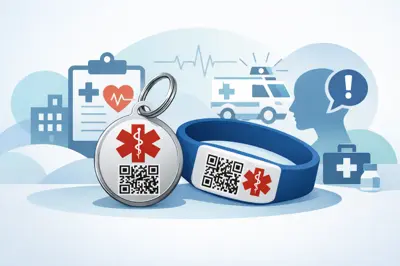
A fall in an airport bathroom, a scooter crash near your accommodation, dehydration on a day trip, or a medical episode on a platform can leave you unable to explain much. A visible tag on a bag, helmet, keychain or wearable item can help a responder or bystander reach the right person quickly.
Children, older travellers and vulnerable family members
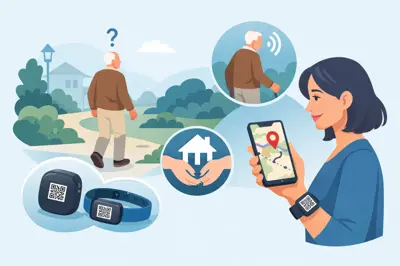
Travel adds noise, crowds and stress. Children wander. Older relatives can become disoriented. People living with dementia, diabetes, severe allergies or other conditions may need quick support when travelling. In those situations, speed and privacy both matter. You want someone to help immediately, but you do not want sensitive details on public display.
Phones go missing too
Many people assume their mobile is the backup plan. Until it is lost, flat, locked or left in the rideshare. A travel safety QR contact tag works around that dependency. It gives another person a way to reach you or your contact even when your own device is not helping.
Privacy is the feature most travellers overlook
A lot of safety products promise convenience. Fewer handle privacy properly. That distinction matters.
If your full contact details are printed on a visible label, anyone who sees the item has them. If the tag uses a contact-routing system instead, the scanner can still call or message through the platform without seeing your actual number. That is a much smarter fit for travel, where your bag might be handled by dozens of strangers across airports, hotels, buses and attractions.
This is where the better systems stand out. They protect the owner while still being easy for the finder. If a product is too technical, requires account creation by the scanner or asks for an app download, people will not use it in the moment. Safety tools only work when they ask very little from the person trying to help.
What to look for in a travel safety QR contact tag
Not every QR tag is built for travel. Some are little more than a code sticker. Others are durable, private and ready for real use.
Start with the material. Travel gear gets thrown into boots, dragged through terminals and exposed to rain, heat and rough handling. A flimsy tag may not survive the first trip. Weatherproof materials and a secure attachment point matter more than flashy design.
Next, look at the contact experience. The scan should open quickly on any standard mobile camera. It should be obvious what the finder needs to do next. Confusion costs time, and time is the whole point.
Then consider setup and updates. Can you add multiple contacts? Can you change details before a trip? Can you nominate a family member while travelling solo, then switch back later? Flexibility matters because travel plans change.
Finally, think about visibility. A tag hidden inside a suitcase helps less than one fixed to the outside. The same applies to backpacks, helmets and keyrings. If a finder cannot see it, they cannot use it.
How to set one up properly before a trip
A good tag only takes minutes to activate, but setup deserves a bit of thought. Add the contact details you would want used if you were delayed, injured or separated from your belongings. For some travellers that is their own number. For others it is a partner, parent, adult child or travel companion.
If you are travelling with kids, it is sensible to include the adult most likely to answer immediately. If you are travelling alone, consider adding a backup contact in Australia as well as your own mobile. If your trip involves medical risk, make sure the contact chosen understands what to do if they receive an urgent call.
Keep the information current. Before each trip, check names, numbers and preferences. This takes less time than replacing a lost bag or dealing with hours of uncertainty because the wrong contact was listed.
The best use is often more than one tag
One tag on one suitcase is a start, but many travellers benefit from thinking in layers. Your checked luggage, carry-on, wallet, laptop sleeve, child’s backpack or helmet all create different risk points.
That does not mean tagging everything blindly. It means looking at where separation or urgent contact is most likely. A family airport day looks different from a solo motorbike trip, and both look different again from an older couple heading off on a cruise. The right setup depends on the trip.
For that reason, the strongest travel safety approach is practical, not perfect. Cover the items and people where a quick scan would make the biggest difference.
Why this is becoming an everyday travel essential
A travel safety QR contact tag sits in the same category as a power bank or travel insurance. You hope not to need it, but if things go sideways, you are glad it is there. The difference is that this tool helps in both emergencies and ordinary mix-ups.
That blend is why products like this are gaining traction with Australian families. People want preparedness without complexity. They want safety that works when the person helping them knows nothing about them and has only a few seconds to act. That is exactly the kind of moment a well-designed QR contact system is built for.
ContactMeTag fits that need because it keeps the process simple - scan, connect, act - while protecting personal details behind the scenes. For travel, that balance is hard to beat.
The smartest travel gear is not always the biggest or most expensive. Sometimes it is the small item that speaks for you when you cannot, and helps the right person reach you before a problem gets bigger.