Best Contact Tags for Motorcyclists
By ContactMeTag · · 7 min read
A rider can do everything right and still end up on the side of the road unable to speak. That is exactly why the best contact tags for motorcyclists are not a nice extra. They are part of being ready when seconds matter, whether it is a crash, a medical event, or simply a bike or helmet left behind.
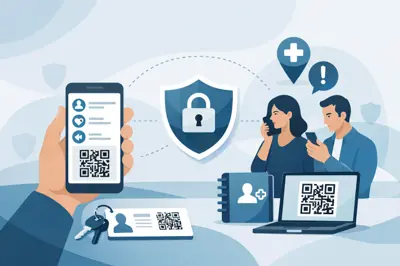
For motorcyclists, the stakes are different from everyday drivers. You do not have a glovebox full of paperwork or a large cabin where emergency details are easy to find. Your gear is exposed to weather, vibration and impact. And if your mobile is locked, flat or thrown clear, the people trying to help you may have no fast way to reach the right person. A good contact tag closes that gap quickly, without putting your private number on display.
What makes the best contact tags for motorcyclists?
The short answer is simple. A useful tag has to work fast, stay readable outdoors and give the finder or first responder a clear next step.
That means durability comes first. Motorcycles live in sun, rain, dust and road grime. A flimsy sticker that fades after a few months is not much use when you actually need it. Riders need tags made from weatherproof materials with print or codes that stay scannable after regular exposure to the elements.
The second factor is visibility. If a tag is too small, hidden under accessories or stuck in a spot no one checks, it loses value. On a helmet, it needs to be easy to notice without getting in the way. On the bike, it should sit where a helper can see it quickly if the rider is separated from their gear.
The third factor is privacy. Old-school contact labels often mean putting your name and mobile number in plain view. That creates a trade-off many riders do not love. It may help in an emergency, but it also exposes personal details every time the bike is parked. The better option is a contact tag that lets someone scan and reach you or your emergency contacts without seeing your number.
Why QR contact tags suit riders better than basic ID labels
A printed emergency contact sticker is better than nothing, but it is limited. It can only show a small amount of information, and once that information changes, the sticker is out of date.
A QR contact tag gives riders more flexibility. Instead of relying on one phone number printed forever on a tag, the code can route a scan to current contact details, emergency contacts or recovery instructions. That matters if you change your mobile, update a partner's number, or want different contacts for different situations.
It also matters for privacy. A stranger can get the right message to the right person without you having to publish personal details on your helmet or motorbike. For riders who commute daily, park in public places or travel regularly, that is a practical safety benefit, not just a nice feature.
Some systems also work without forcing the finder to download an app. That is important. In a real roadside situation, no one wants extra steps. The best setup is simple: scan, view, call or message.
Where riders should place contact tags
Placement depends on what problem you are trying to solve. If the priority is emergency response after a crash, your helmet is often the smartest starting point. It stays close to you, and responders or bystanders are more likely to check it than to search through luggage.
A tag on the bike helps with a different scenario. If the motorcycle is found unattended after an incident, or if the bike itself needs to be identified and reunited with the owner, a visible contact point on the motorcycle can save time. This is especially useful for touring riders and commuters who leave their bike in public parking.
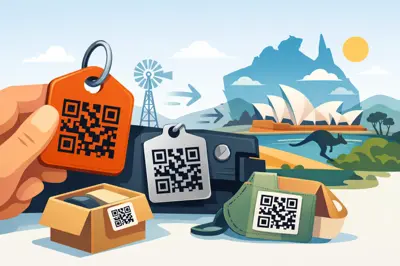
Luggage is the third place many riders overlook. Panniers, tail bags and top boxes get separated, misplaced or picked up by the wrong person more often than most riders expect. A contact tag on riding gear or luggage is not just about crashes. It is also about getting important property back without hassle.
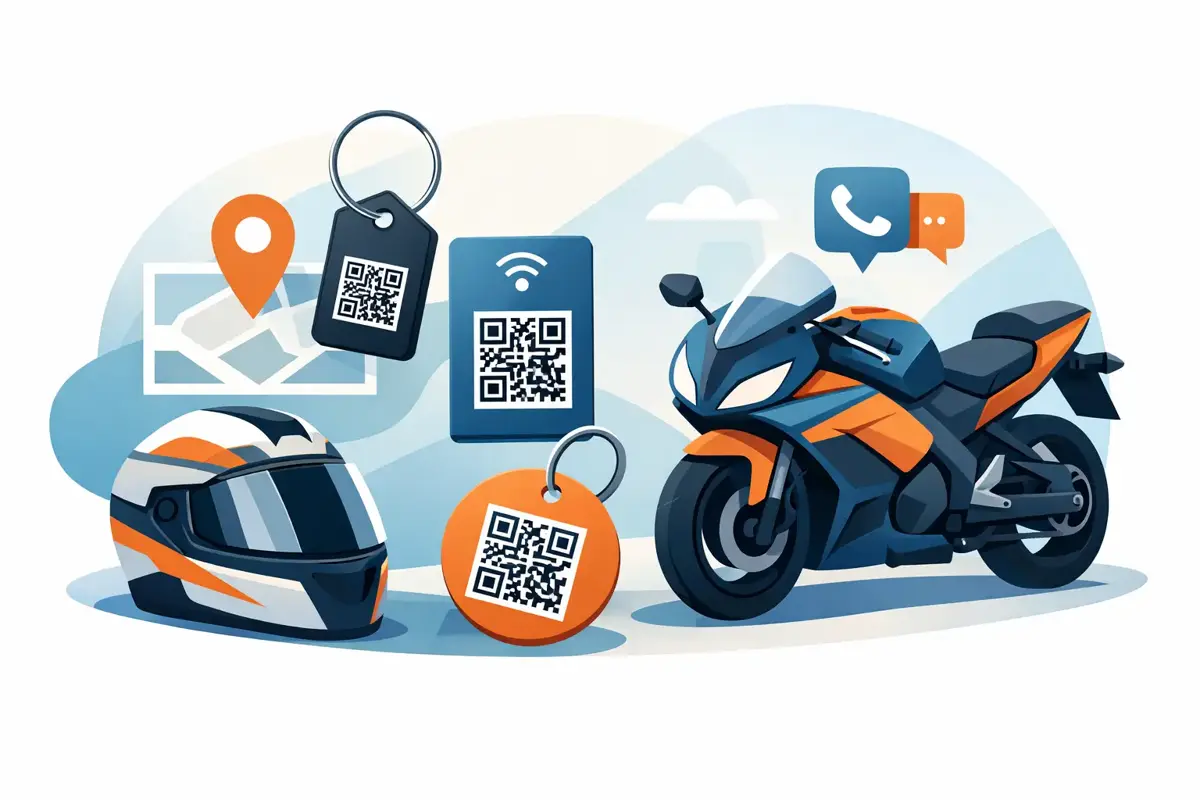
In practice, the best setup is usually not one tag, but a small system. Helmet first, bike second, luggage or keys where it makes sense.
Best contact tags for motorcyclists by use case
Not every rider needs the same tag. A daily commuter has different needs from a weekend group rider or someone crossing the country.
Helmet contact tags
For emergency use, helmet tags are often the most effective. They are close to the rider and easy for a helper to find. The ideal helmet tag is compact, strongly adhesive and built to handle sun, rain and regular wear. It should also be readable at a glance, with a clear cue that invites scanning.
A helmet tag makes the most sense if your top concern is what happens when you cannot speak for yourself. If a passer-by finds you before your mobile is accessible, a scan can point them to the right contact path immediately.
Motorcycle contact tags
Bike-mounted tags are ideal for identification and recovery. They help when the motorcycle is found parked, damaged, moved or separated from the rider. These tags need stronger weather resistance because they face constant exposure and washing.
For adventure riders, tourers and anyone who leaves their bike in public places, this type of tag adds another layer of practicality. It gives a finder an easy way to make contact without touching your private details.
Gear and luggage tags
Riding jackets, backpacks, tank bags and panniers often carry expensive equipment and personal items. A contact tag here is less about trauma response and more about quick return and simple identification.
This matters on group rides, overnight stays and longer trips where gear gets unloaded, stacked or left temporarily unattended. One missed bag can derail a whole day.
Features worth paying for and features that are not
The best contact tags for motorcyclists are not the ones with the longest feature list. They are the ones that work reliably under pressure.
Weatherproof construction is worth paying for. So is a platform that lets you update contact details later. Privacy protection is another feature that earns its keep because it removes the need to print your personal number where anyone can see it.
Ease of setup also matters. If activation takes too long or feels too technical, many riders will put it off. A useful tag should be live in minutes, not buried in a to-do list for months.
What matters less? Fancy extras that slow down the scan process. In an emergency, simple wins. A finder should not need instructions longer than a sentence or two. The more direct the path, the better the outcome.
Common mistakes riders make when choosing a contact tag
One mistake is treating any QR sticker as good enough. General labels may not be designed for long-term outdoor use, and some lead to clunky pages or outdated information. A motorcycle is a harsh environment, so the tag has to be built for it.
Another mistake is relying only on printed personal details. That can feel straightforward, but it creates an avoidable privacy risk. It also means every change requires replacing the tag.
The third mistake is poor placement. A tag hidden under the seat might help during maintenance, but not in an urgent situation. If the goal is fast contact, the tag must be where people naturally look.
A practical setup that covers real riding scenarios
For most Australian riders, the strongest setup is straightforward. Put a QR contact tag on your helmet for emergencies. Add one to the bike for identification and recovery. If you tour, commute with luggage or carry expensive gear, add tags there too.
That combination covers the most likely problems without overcomplicating anything. It helps after a crash. It helps if your bike is found before you are. It helps if your gear goes missing at a servo, a campsite or a mate's place.
This is where a privacy-first system stands out. ContactMeTag, for example, is designed so a scan can connect the finder with you or your nominated contacts without exposing private mobile numbers. No app is required for the person scanning, which is exactly how this kind of safety tool should work.
Motorcycling always involves a level of risk. You manage it with the right gear, the right habits and the right planning. A contact tag will not prevent an accident, but it can make the next few minutes less chaotic and far more useful when help is already trying to find you.